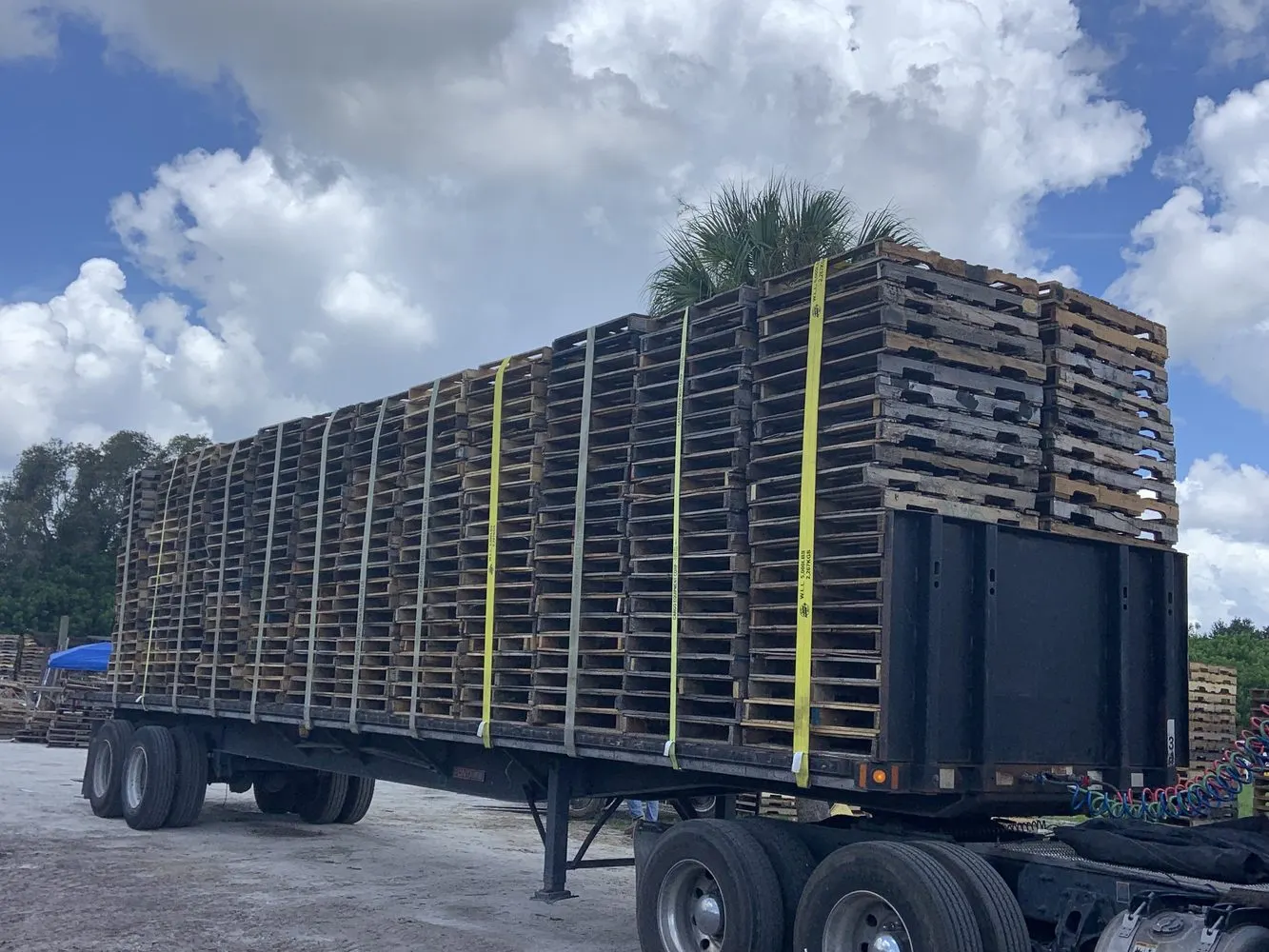
Stacking pallets directly on top of one another without rack support, used for high-density same-SKU storage.
Detailed Definition
Block stacking, also called floor stacking, places unit loads directly on the floor and stacks additional loads on top of them, arranged in deep lanes or blocks with no rack structure. It suits products with many pallets per SKU and loads strong enough to bear the weight above them, such as many canned, bottled or bagged goods. Because each lane is reached from one face, the last load in is usually the first out. Stack height is limited by the compression strength of the bottom load and pallet, load stability, floor condition and building clearances.
What limits safe stack height
The bottom load carries everything above it, so the weakest element in the stack sets the limit. Corrugated cases lose strength in humid conditions and over long storage times, and pallet top decks that flex can concentrate weight on the case edges. Leaning stacks, overhang, broken deck boards and uneven floors all reduce stability. OSHA 29 CFR 1910.176 requires material stored in tiers to be stacked, blocked, interlocked and limited in height so that it is stable and secure against sliding or collapse. Fire code and the sprinkler design also set clearance limits below the ceiling, so check with the fire authority before raising stack heights.
Lane design and stock rotation
Block stacking gives high storage density with no rack cost, but it has tradeoffs. Within a lane, older stock is buried behind newer stock, which makes first-in, first-out rotation hard. Partly emptied lanes cannot easily take a different SKU, a problem called honeycombing that wastes floor space. Lane depth should match how many pallets of a SKU you usually hold. When SKU counts rise, loads cannot support weight, or rotation matters, operations often move to drive-in rack, push-back rack or selective rack.
Related Glossary Terms
Frequently Asked Questions
How high can pallets be block stacked?
There is no single safe number. The limit depends on how much weight the bottom load and pallet can carry over time, how stable the stack is, the floor, the lift height of your trucks, and fire code clearance to sprinklers. Many operations set a maximum tier count per SKU after testing or after reviewing packaging compression data, then post it at the lane. Recheck the limit when packaging, pallet type or storage time changes.
What pallet condition matters most for block stacking?
The top deck of each lower pallet becomes the support surface for the load above, and the bottom deck of each upper pallet rests on that load. Broken or missing deck boards, protruding nails and uneven boards create point loads that can crush cases and cause leaning. Use pallets with complete, flat decks for stacked storage, and avoid mixing pallet footprints or heights within the same stack.