Unloading inbound pallets directly to outbound trailers without long-term storage.
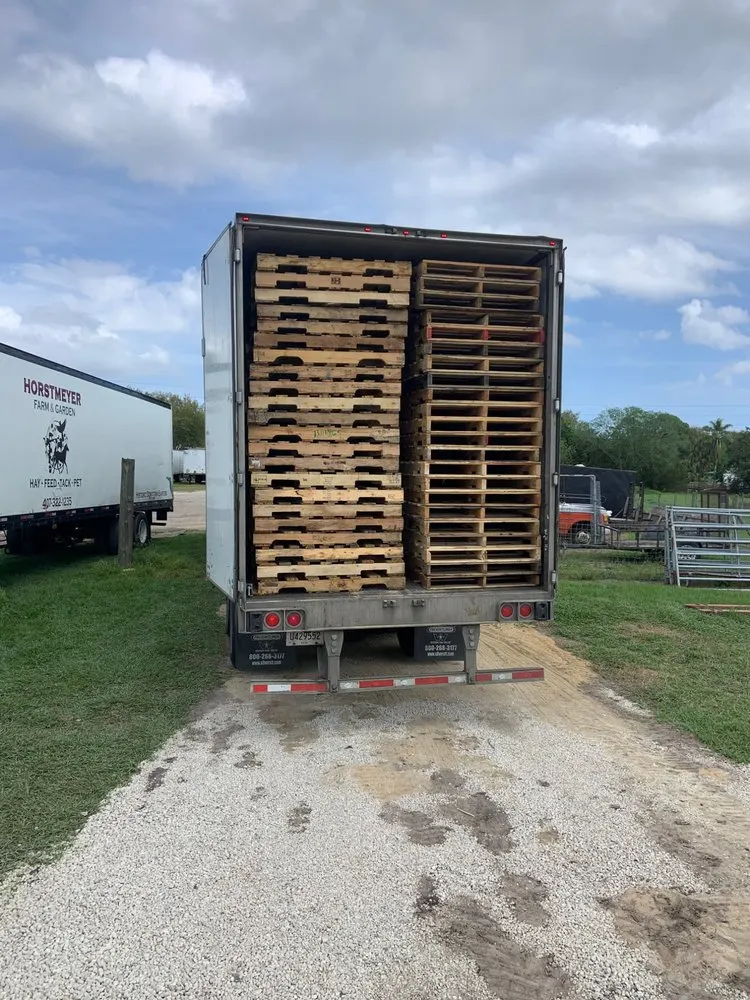
Detailed Definition
Cross-docking is a distribution practice in which inbound freight is received, sorted and loaded onto outbound trailers with little or no time in storage. Pallets may move across the dock intact, or be broken down and rebuilt into mixed pallets for individual stores or customers. The method depends on accurate advance information about what is arriving, such as an ASN, and on pallet labels that can be scanned quickly. It trades storage cost for tight coordination of carriers and dock schedules.
Pallet-level and case-level cross-docking
In the simplest form, a full pallet built for one destination is moved straight from the inbound trailer to the matching outbound trailer. This works well when suppliers build store-ready pallets in advance.
In the more complex form, inbound pallets are broken down and cases are sorted, often on a conveyor or sortation system, then rebuilt into new mixed pallets for each destination. That adds labor and requires the building to handle both break bulk and rebuilding of pallets in a short time.
When cross-docking makes sense
It tends to suit products that move quickly and in predictable volumes, such as grocery, perishables, promotional goods and items already allocated to stores. It suits slow or unpredictable items less well, because they need somewhere to wait.
- Inbound and outbound carriers must be reliable on arrival times.
- Product data and labels must be accurate before the truck arrives.
- The dock needs enough doors and staging lanes for peak waves.
Where those conditions are missing, a conventional warehouse with storage is usually the safer choice, even if it costs more to run per pallet handled.
Related Glossary Terms
Frequently Asked Questions
What is the difference between cross-docking and warehousing?
Warehousing holds inventory for days, weeks or longer, so the building is designed around storage such as racking and pick locations. Cross-docking is designed around flow: freight arrives, is sorted, and leaves the same day or soon after. A single distribution center can do both, with a cross-dock area for fast moving or pre-allocated freight and a storage area for everything else.
What information does a cross-dock need before a pallet arrives?
At minimum it needs to know what is on the trailer, how many pallets or cases there are, and where each one is going. This usually comes from an advance shipping notice sent electronically and linked to the label on each pallet. Without it, staff must open and check freight on arrival, which slows the dock and defeats much of the purpose of cross-docking.