Cross-docking moves pallets from inbound to outbound dock without intermediate storage.
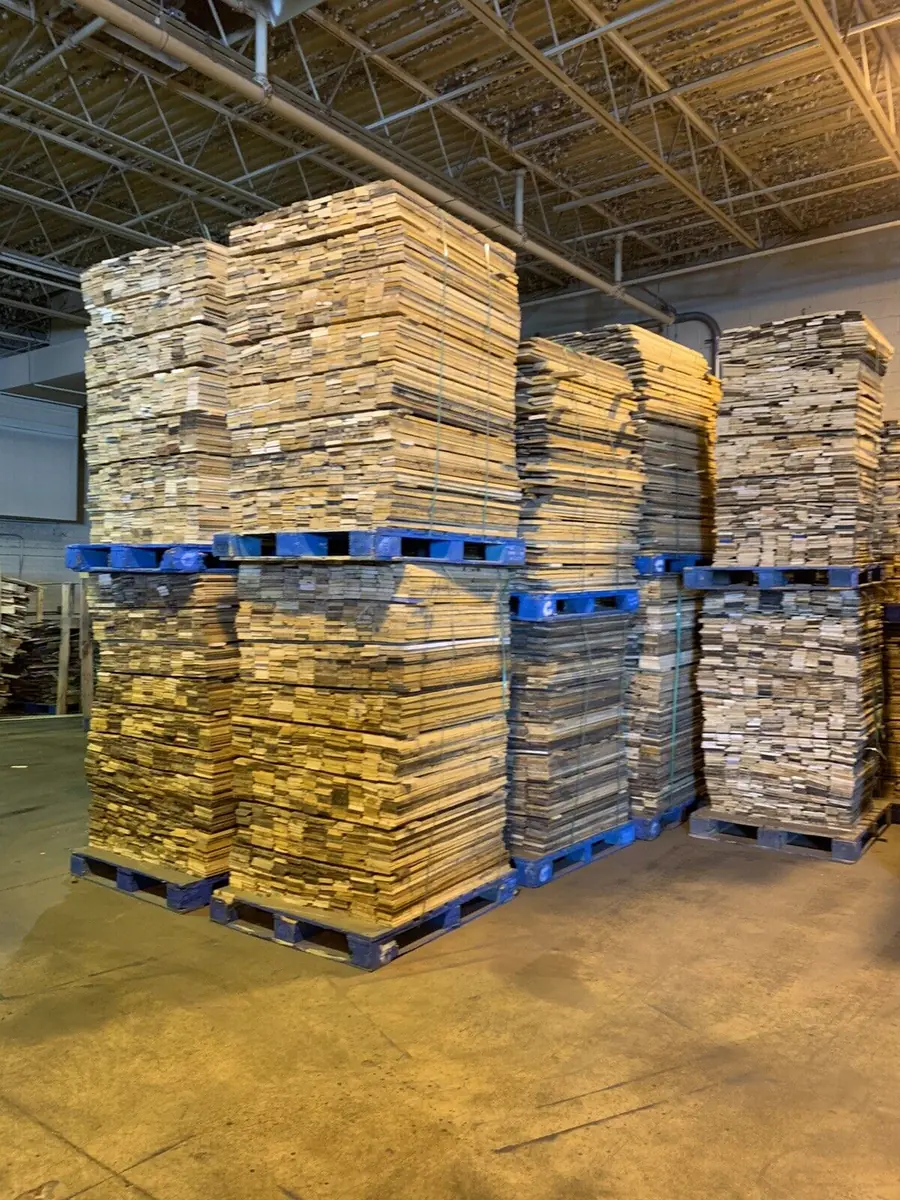
Detailed Definition
Effective cross-docking requires matched inbound and outbound timing, enough dock door capacity, and a reliable way to identify each unit load, typically a GS1 SSCC label scanned at receiving and shipping. Freight is moved across the dock, sorted or consolidated, and loaded out, usually within hours rather than days. It reduces dwell time and the need for storage space and is common in retail distribution, grocery, parcel and e-commerce networks.
What has to line up for a cross-dock to work
A cross-dock only works when inbound and outbound schedules are planned together. Inbound trailers are booked to arrive shortly before the outbound loads they feed, and the receiving team needs to know the destination of each pallet before it comes off the trailer. That information usually arrives ahead of the freight in an advance shipping notice tied to the pallet labels.
The building itself is usually long and narrow with doors on both sides, so pallets travel a short straight path from receiving to shipping with little or no racking in between.
What shippers sending freight into a cross-dock should check
- Label placement and format required by the receiver, often an SSCC label on two adjacent sides.
- Pallet footprint and condition, since pallets are handled several times in a short window and broken boards slow the dock.
- Load stability, because a leaning or poorly wrapped pallet may be rejected or restacked at the receiver's cost.
- Appointment windows. A late inbound truck can miss its outbound connection entirely.
Read the receiver's routing guide closely. Cross-dock facilities tend to be strict because one bad pallet can hold up a whole outbound trailer.
Authoritative Sources
- Material Handling Institute (MHI): the largest US trade association for material handling, logistics, and supply chain technologies.
- Retail Industry Leaders Association (RILA): the trade association representing large US retailers; pallet receiving requirements are set by each retailer in its own vendor routing guide, not by RILA.
Related Glossary Terms
Frequently Asked Questions
How long do pallets stay in a cross-dock facility?
The goal is to move freight from the inbound door to an outbound trailer the same day, often within a few hours. There is no fixed rule, and many operators allow a short staging window, for example overnight, when an outbound route only runs once a day. If pallets regularly sit for days, the operation is really functioning as short-term storage, and it should be planned and costed that way.
Does cross-docking require special pallets?
No special pallet type is required, but the pallet has to suit the receiver's equipment and handling. Many retail cross-docks expect a standard 48 x 40 inch footprint, good fork entry from the sides they handle, and correct labels. Pallets that are damaged, oversized or poorly wrapped slow the dock because they have to be repaired, restacked or set aside, so check the receiver's routing guide before shipping.