Export pallets are pallets used in international trade, typically requiring ISPM-15 compliance.
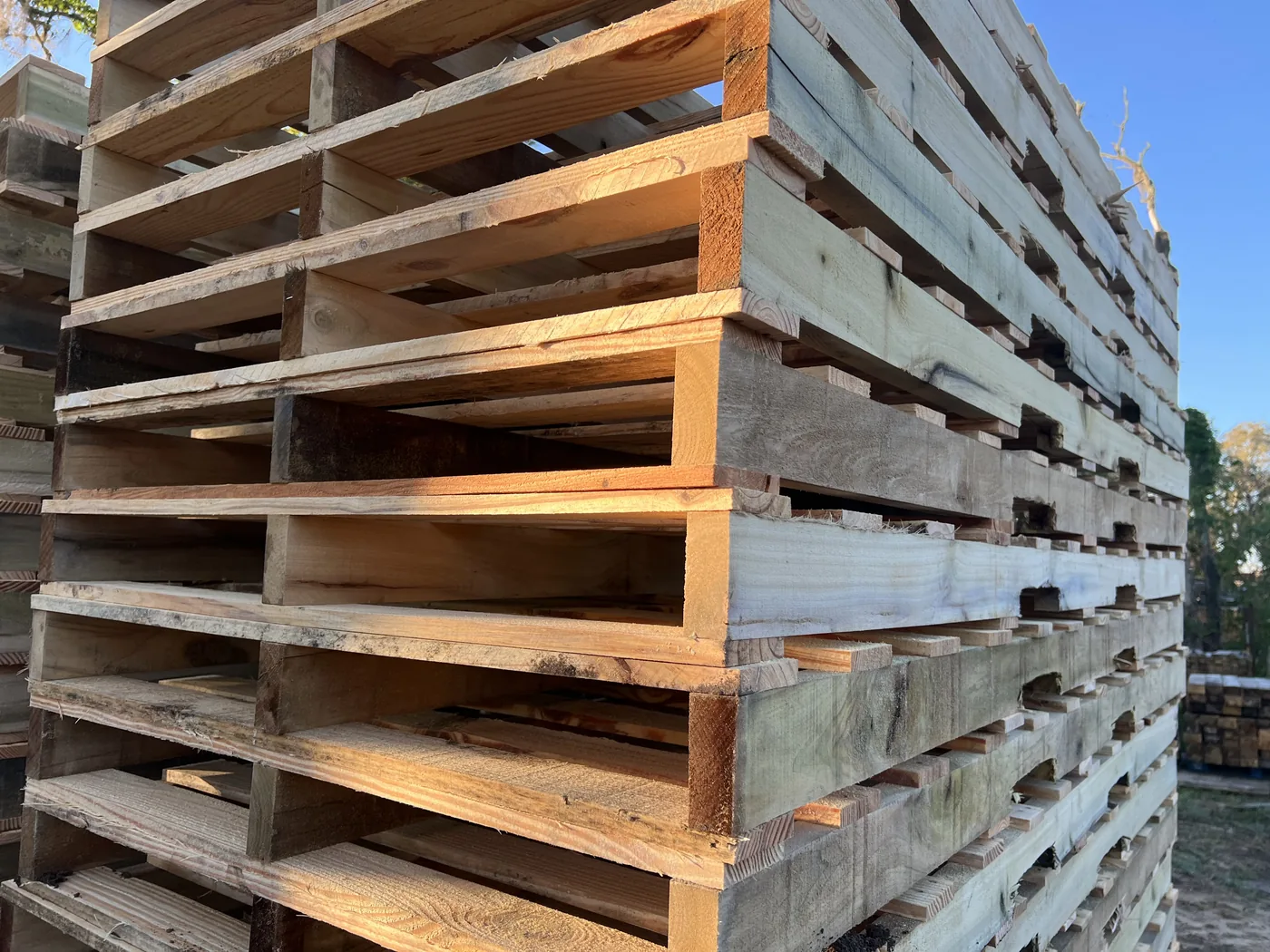
Detailed Definition
An export pallet is any pallet that leaves the country carrying goods. If it is made of raw solid wood thicker than 6 mm it must meet ISPM 15: debarked wood, an approved treatment such as heat treatment (56 C core temperature for 30 continuous minutes), and a legible IPPC mark on at least two opposite sides. Some importing countries add inspection rules of their own. Under ISPM 15 the mark itself is the evidence of treatment; a phytosanitary certificate covers the goods and should not be required for marked wood packaging.
Which export pallets need ISPM 15 treatment
The rule follows the material, not the label. Solid wood pallets, skids, crates and dunnage made from raw wood over 6 mm thick need treatment and marking. Pallets made entirely of plastic, metal, corrugated board or processed wood such as plywood, OSB or presswood are outside ISPM 15. A pallet with a plywood deck on solid wood blocks or stringers is still in scope, because the solid wood parts must be treated and marked.
What to check before an export pallet ships
- The mark shows the IPPC symbol, the two-letter country code, the producer or treatment provider number and the treatment code, such as HT.
- Marks are legible, permanent and on at least two opposite sides, and not in red or orange.
- There is no bark beyond the small tolerance and no sign of live insects.
- Repaired pallets follow the standard's rules for re-treatment and re-marking.
- The destination has no extra rules for your goods. Your forwarder or customs broker can confirm.
Common export pallet mistakes
A frequent mistake is reusing a domestic pallet that looks clean but carries no mark. Noncompliant wood packaging can lead to the shipment being held, treated or sent back at the importer's cost. Another is assuming kiln-dried lumber is automatically compliant; drying and ISPM 15 heat treatment are different things unless the mark says HT. Methyl bromide use is restricted or being phased out in many places, so heat treatment is the more widely used option.
Authoritative Sources
- International Plant Protection Convention (IPPC): the United Nations body that maintains the ISPM-15 international wood packaging standard.
- USDA Animal and Plant Health Inspection Service (USDA-APHIS): the USDA agency that serves as the US national plant protection organization for ISPM 15; wood packaging on imports is inspected at ports of entry together with US Customs and Border Protection.
- FAO ISPM-15 Standard (ISPM-15): the international phytosanitary standard for wood packaging used in international trade, published by the FAO.
Related Glossary Terms
Frequently Asked Questions
Do plastic pallets need ISPM 15 certification for export?
No. ISPM 15 covers wood packaging made of raw wood thicker than 6 mm. Plastic, metal and corrugated pallets are outside its scope, as are pallets made only of processed wood such as plywood or molded wood fiber, so they do not need an IPPC mark. Some exporters still describe the pallet material on shipping documents to help inspectors clear the load. Confirm that every part of the pallet, including blocks and runners, is non-wood or processed wood.
Does an export pallet need a phytosanitary certificate?
Not for the pallet itself when it carries a valid ISPM 15 mark. The standard treats the mark as the evidence of treatment, and importing countries should not ask for a separate certificate for marked wood packaging. A phytosanitary certificate may still be needed for the goods you ship, for example plants, seeds or some agricultural products, depending on the importing country. Ask your customs broker or check the destination country's import requirements.
Can I stamp my own pallets for export?
Only if your facility is enrolled in an approved program. In the United States the ISPM 15 mark is applied under the wood packaging program administered by the American Lumber Standard Committee through accredited inspection agencies, and each enrolled facility receives its own number. A company outside that program is not authorized to apply the mark. Buy from an enrolled producer or treatment provider and keep their details with your shipping records.