Deck boards between the lead boards, typically narrower and providing primary load surface.
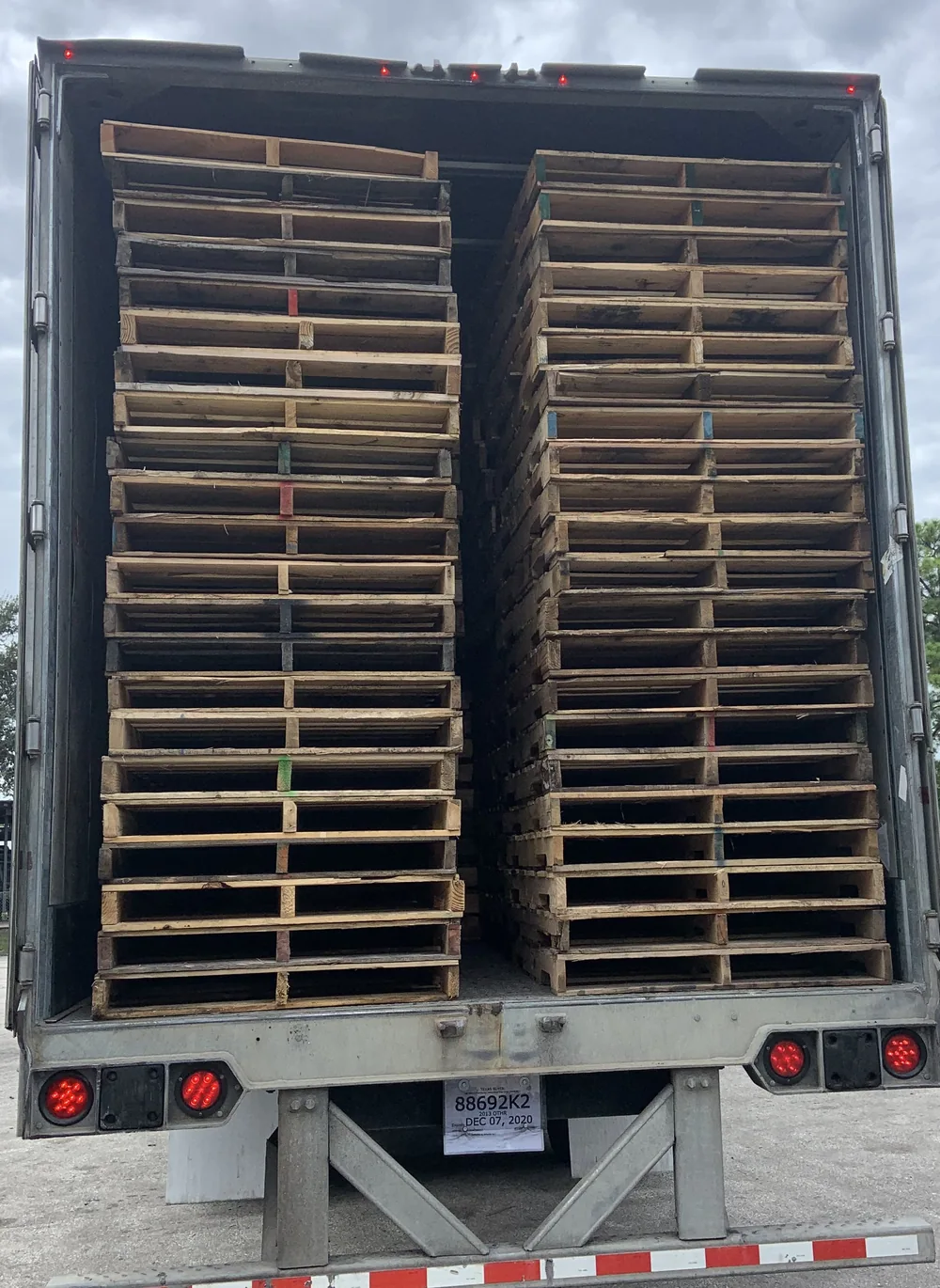
Detailed Definition
Inner deck boards are the boards between the two lead (end) boards on the top or bottom deck of a pallet. On a common 48 x 40 stringer pallet built to GMA-style specifications, the inner top deck boards are often narrower than the lead boards. Together they form most of the load-bearing surface, and their number, width, thickness and spacing set deck coverage and how well the deck spreads load across each stringer or block. See also lead deck board.
How inner deck boards are specified
A pallet specification lists each deck board by thickness, width and length, plus the number of boards and the gaps between them. Inner boards are usually the same thickness as the lead boards but may be narrower. Board spacing sets how much of the deck is covered, which matters for small cartons, bags or loads with concentrated weight. Each inner board is fastened to every stringer or block it crosses, so the fastener pattern is part of the specification too.
Inspecting inner deck boards
Inner boards take less fork impact than lead boards, but they still crack, split along nail lines or loosen over time, especially under point loads. When grading or receiving used pallets, look for:
- Cracked or broken boards and missing pieces.
- Protruding nails or loose boards that can damage product.
- Gaps wider than the specification after a repair.
- Replacement boards that are thinner or a different species group than the rest of the deck.
Grade A and Grade B are trade terms whose limits vary by supplier, so write down how many repaired or replaced inner boards you will accept.
Related Glossary Terms
Frequently Asked Questions
Why are inner deck boards narrower than lead boards?
Lead boards sit at the pallet edges where forks, clamps and conveyors hit first, so designers often make them wider to resist impact and support the edge of the load. Inner boards mainly carry and spread the load across the stringers, and narrower boards can do that while saving lumber and weight. Not every design follows this pattern, and some pallets use one width throughout. The customer's drawing or specification is what counts.
Do the gaps between inner deck boards matter?
Yes. Wide gaps reduce deck coverage, so small packages, bag corners or container feet can drop between boards and be damaged or tip. Narrow gaps add lumber and weight. The right spacing depends on what sits on the deck. If your load has small footprints, state a maximum board gap or a minimum deck coverage on the purchase order rather than relying on a standard pattern.