The first deck board at each end of a stringer pallet, often wider for end-load support.
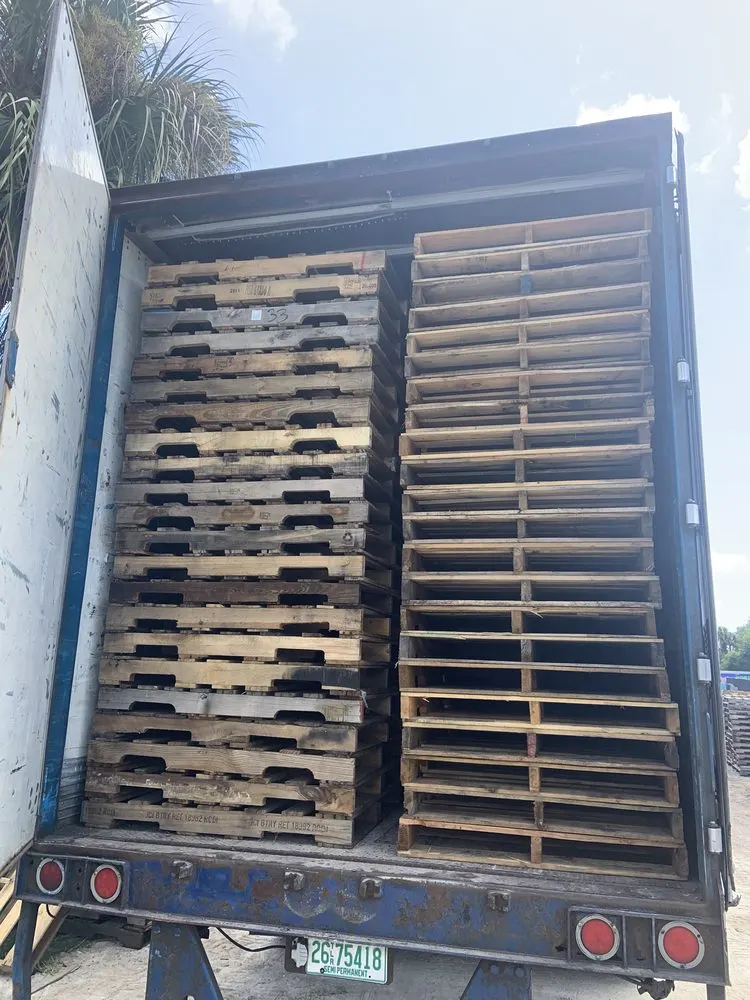
Detailed Definition
Lead deck boards, also called end boards, are the outermost boards at each end of the top and bottom decks, running across the stringers or blocks at the edges where forks enter. Because they take most of the impact from forks, conveyors and clamps, specifications often call for them to be wider than the inner deck boards. On a common GMA-style 48 x 40 stringer pallet, the top lead boards are typically wider than the interior boards. Block pallets have lead boards too. See top deck board.
Why lead boards fail first
Every time a forklift or pallet jack enters a pallet, the lead board is the part most likely to be struck. Fork tips, pallet jack wheels and push-pull or clamp attachments can crack lead boards, split them along the nail line or pull fasteners loose. Damage often shows as a broken edge or a board sagging between stringers. Because lead boards also support the edge of the load, a broken one can let cartons crush or hang over the side, and loose pieces can jam conveyors or automated storage equipment. Operators who enter pallets square and at the right height reduce lead board damage, which is a training issue as much as a pallet design issue.
Specifying and inspecting lead boards
- State lead board width and thickness separately from inner boards on the drawing.
- Consider a chamfered bottom lead board where pallet jacks are used, to ease wheel entry.
- Check fastener count and end distance, since nails too close to a board end can split it.
- At receiving, reject pallets with cracked, missing or loose lead boards.
- On repaired pallets, check that replacement lead boards match the original width and thickness.
Related Glossary Terms
Frequently Asked Questions
What is the difference between a lead board and an inner board?
Lead boards are the end boards on each deck, at the edges where handling equipment enters and where the load's edge sits. Inner boards are everything between them. Lead boards take more impact, so they are often wider or sometimes thicker, while inner boards mainly spread the load. A pallet drawing or specification should list both, because a substitution in either one changes how the pallet performs.
Why are some bottom lead boards chamfered?
A chamfer is a bevel cut along the edge of a board. On bottom lead boards it gives pallet jack wheels a ramp to roll over as the forks enter and leave, which reduces impact on the board and makes the jack easier to push in. Chamfers are common on pallets handled with pallet jacks. Specify them on the drawing if your operation uses manual or powered pallet jacks.