No. 2 is a common visual grade of softwood dimension lumber that permits moderate knots and other defects; it is one of several grades used for pallet components.
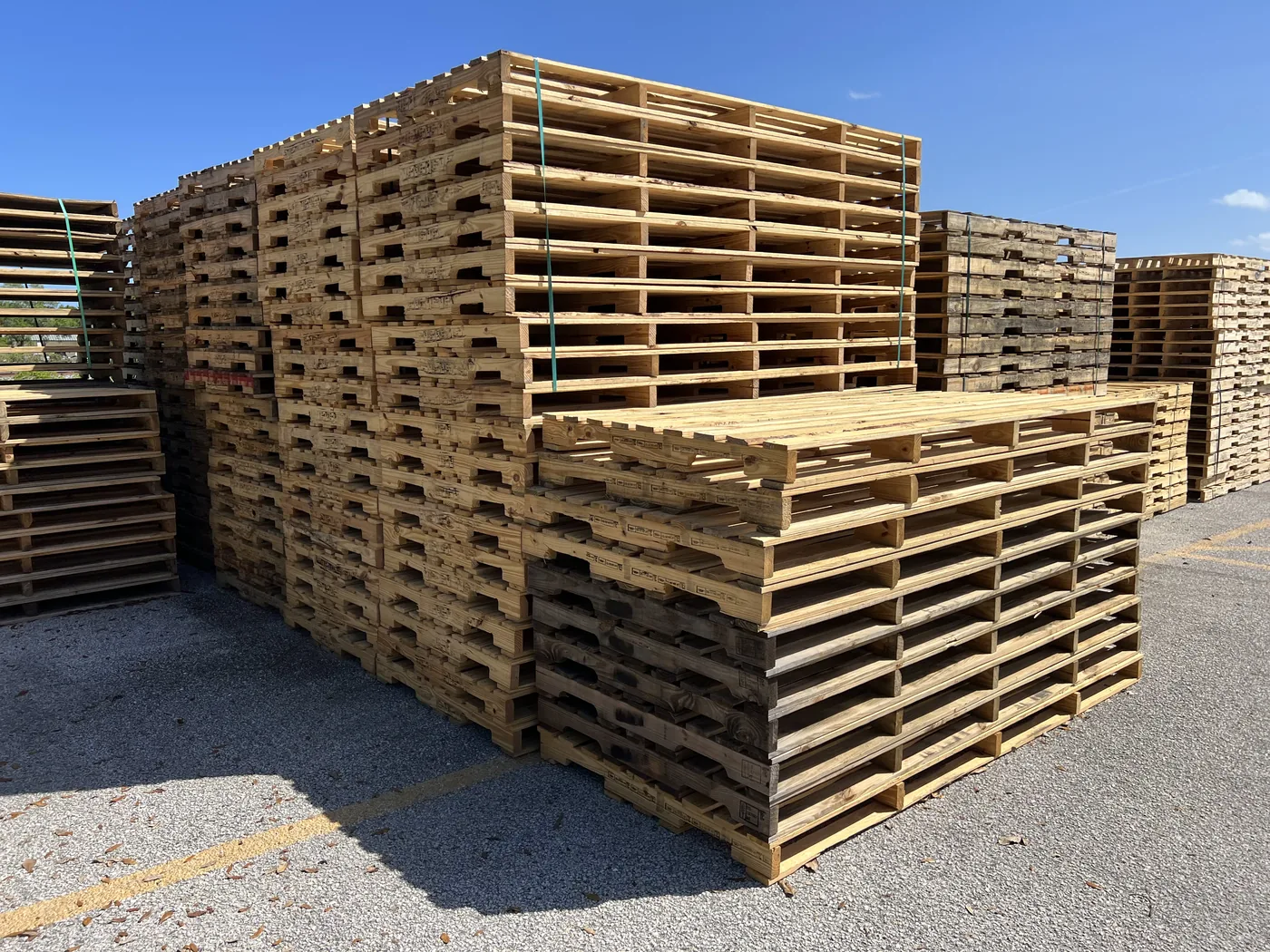
Detailed Definition
No. 2 is a visual grade written into the grading rules of agencies such as SPIB, PLIB, WWPA and WCLIB and applied under the American Lumber Standard system overseen by the ALSC. It permits knots of limited size, some wane, and splits and checks within set tolerances, and it carries published design values for each species. Pallet makers may specify No. 2 softwood for stringers or deck boards when they need predictable strength, but many pallets use lower grades, and much hardwood pallet stock is sold ungraded.
What a No. 2 grade stamp tells you
Graded softwood lumber carries a stamp showing the grading agency mark, the mill number, the grade, the species or species group, and the moisture condition at the time of surfacing, such as S-GRN for green or S-DRY and KD19 for dried lumber. The grade sets the worst piece allowed, not the average, so a bundle of No. 2 contains many pieces that look better than the limit.
Design values for No. 2 in bending, tension, compression and stiffness are published by species group in the American Wood Council's NDS Supplement. That is why engineers and pallet design software can estimate capacity from the grade.
No. 2 versus lower grades in pallet work
Compared with No. 3 lumber, No. 2 allows smaller knots and fewer serious defects, so a board of the same size is stiffer and less likely to break at a knot. That matters most for stringers and for deck boards that span rack beams. For a pallet that only carries floor loads, the extra cost of No. 2 may not be justified, and many specifications call out a lower grade instead.
What to put in a specification
- Species or species group and grade, for example No. 2 Southern Pine or No. 2 and better.
- Required moisture condition, since the grade does not say whether wood was dried.
- Whether pieces must be grade stamped or only described as equivalent.
- Any extra limits beyond the grade rules, such as no knots at nail lines.
Authoritative Sources
- American Lumber Standard Committee (ALSC): the committee that accredits lumber grading agencies under the US Department of Commerce voluntary product standard PS 20.
- Pacific Lumber Inspection Bureau (PLIB): the lumber grading agency accredited by the American Lumber Standard Committee for Pacific softwoods used in pallet production.
- Southern Pine Inspection Bureau (SPIB): the lumber grading authority for Southern Yellow Pine, the most common pallet stock in the US Southeast.
Related Glossary Terms
Frequently Asked Questions
Is No. 2 lumber strong enough for racked pallets?
It can be, but grade alone does not settle it. Racked capacity depends on stringer or block size, species, rack span, board thickness and fastening as well as grade. No. 2 gives a known minimum strength, which lets a designer or pallet design software estimate capacity, but the pallet should be designed or tested for the actual rack span and load. Ask the supplier how the rated racked capacity was determined.
Does No. 2 mean the lumber is kiln dried?
No. Grade and moisture are separate. The grade stamp shows moisture condition with marks such as S-GRN for green lumber, or S-DRY and KD19 for lumber dried to 19 percent moisture content or less. A No. 2 board can be green or dry. If your pallets must be dry for food, export or mold control, specify the moisture condition, and the heat treatment if ISPM 15 applies, in addition to the grade.
Who decides what No. 2 means?
Rules-writing agencies such as SPIB for Southern Pine, and WWPA and WCLIB for western species, publish the grading rules that define No. 2 for the species they cover. The American Lumber Standard Committee approves those rules and accredits the inspection agencies under the American Softwood Lumber Standard, PS 20, so stamps from different accredited agencies follow a consistent framework. Hardwood lumber is graded under separate rules.