A pallet jack (also called a pump truck) is the simplest powered or manual pallet handling device.
Detailed Definition
A pallet jack, also called a pallet truck or pump truck, has two forks that slide into a pallet's openings and lift it just enough to clear the floor. A manual jack is raised by pumping the handle and is pushed or pulled by the operator. Powered versions include the electric walkie and rider pallet trucks, which use a motor to lift and travel. Pallet jacks only lift a few inches, so they are used for horizontal moves such as loading trailers and staging, not for stacking or rack storage.
Pallet jacks and pallet design
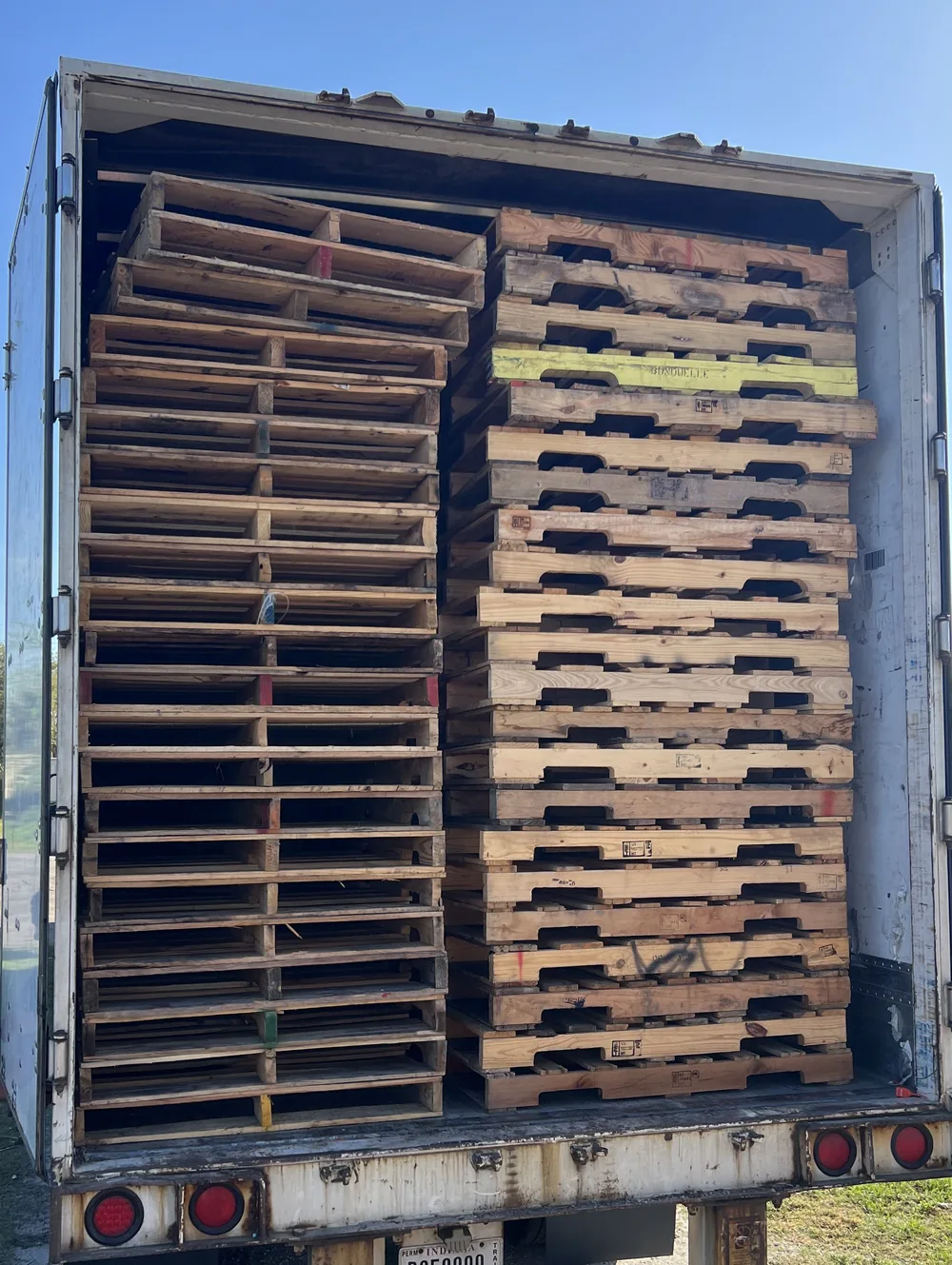
Because pallet jack load wheels must reach the floor through openings in the bottom deck, not every side of a pallet accepts a jack. On a typical stringer pallet the jack enters from the ends. The notched sides of a partial four-way pallet take forklift tines but not pallet jacks. Block pallets can allow jack entry from more sides, depending on the bottom deck layout. Check that the pallets you buy have openings that suit the jacks you use.
Choosing between manual and electric
Manual jacks suit short, occasional moves on smooth, level floors. Electric walkie or rider trucks make sense for longer travel, heavier loads, frequent moves, ramps or dock plates, where pushing a loaded manual jack is hard work. Electric pallet jacks are powered industrial trucks under OSHA 29 CFR 1910, section 1910.178, so operators need training and evaluation. Manual jacks are not covered by that section, though safe-use training is still wise.
Daily checks
- Forks and wheels are free of damage and of debris such as stretch wrap.
- The jack holds a raised load without slowly lowering.
- The load is centered and within the rated capacity shown on the jack.
Authoritative Sources
- Material Handling Institute (MHI): the largest US trade association for material handling, logistics, and supply chain technologies.
- Occupational Safety and Health Administration (OSHA): the US federal agency whose 29 CFR 1910 standards govern warehouse pallet handling and storage.
- National Institute for Occupational Safety and Health (NIOSH): the federal research institute publishing the NIOSH Lifting Equation and pallet handling ergonomic guidance.
Related Glossary Terms
Frequently Asked Questions
What is the difference between a pallet jack and a forklift?
A pallet jack lifts a pallet only a few inches off the floor so it can be moved horizontally. A forklift has a mast that raises loads to stacking or rack heights, and the operator usually rides on it. Forklifts cost more and need more aisle space. Many operations use both: forklifts for putaway and high storage, pallet jacks for docks, trailers and staging areas.
Can a pallet jack lift any pallet?
No. The forks must fit the pallet openings, and the load wheels must reach the floor through the bottom deck. Stringer pallets usually accept jacks only from the ends, and some block pallets limit entry through their bottom board layout. Fork length should suit the pallet depth, and the load must be within the jack's rated capacity. Very low pallets or damaged bottom boards can also block entry.