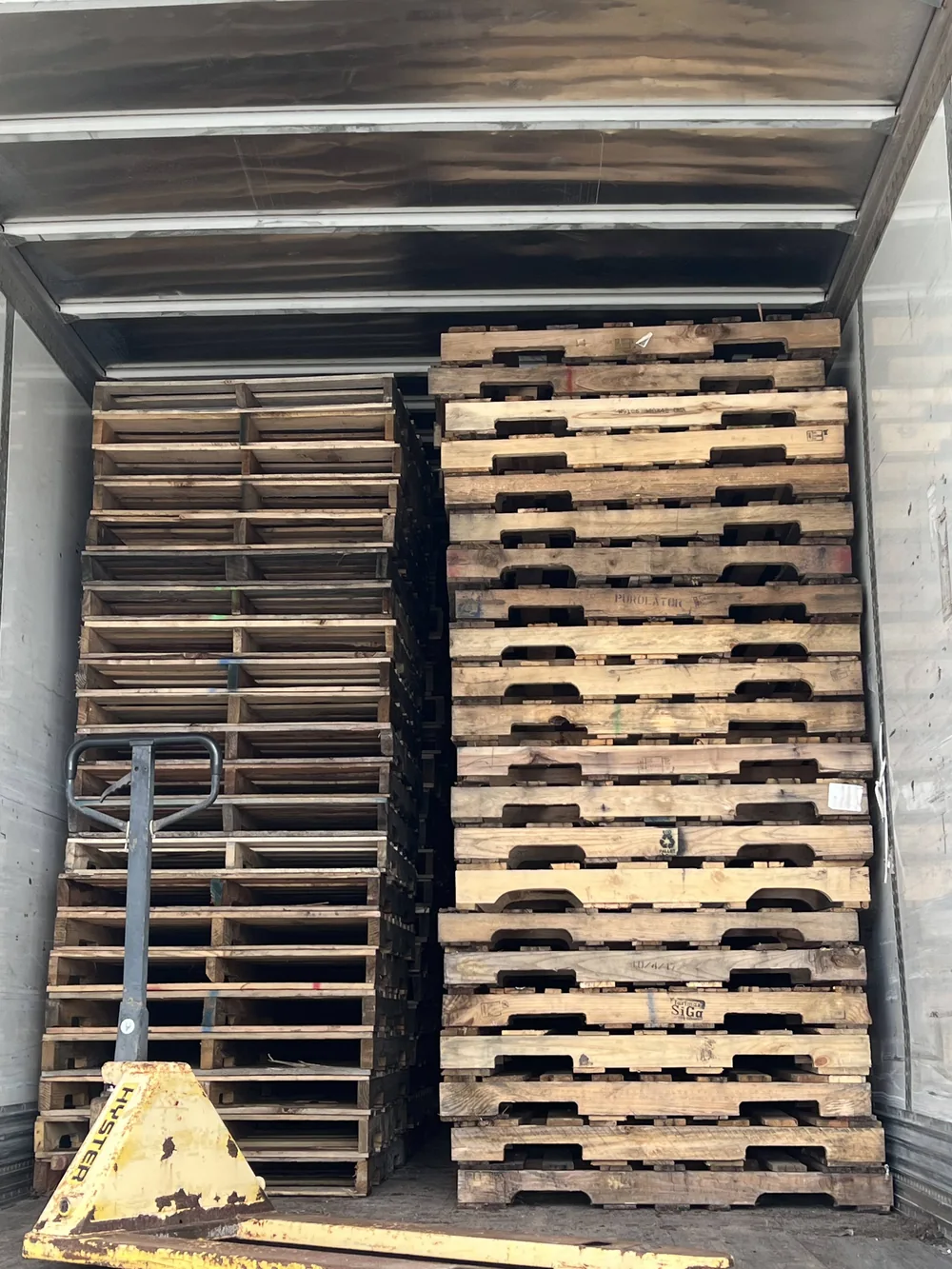
An ITA Class III pedestrian-operated electric pallet jack, the workhorse of food retail and 3PL operations.
Detailed Definition
A walkie pallet jack is a battery-powered pallet truck that the operator controls on foot with a tiller handle. Industry classification places it in Class III, electric motor hand trucks. The controls drive the truck and raise the forks a few inches, enough to lift the pallet off the floor for travel. It is used heavily in grocery and retail distribution, store back rooms and warehouse docks, where pallets are moved short distances many times a day.
Specifications to compare
- Rated capacity, which applies to a load centered on the forks at the manufacturer's stated load center.
- Fork length and outside fork width, which must suit the pallets you handle; some models have long forks to carry two pallets end to end.
- Battery type and charging, such as lead-acid or lithium-ion, and the shift length it must cover.
- Travel speed, ramp rating and turning radius for your aisles, docks and trailers.
- Load wheel material, which affects floor wear and rolling over dock plates.
Pallet compatibility
A pallet jack's load wheels drop through openings in the bottom deck as the forks rise. On a stringer pallet that means entering from the stringer ends; side notches are for forklift forks only. On a block pallet the jack can enter from any side with suitable bottom openings. Broken or hanging bottom boards can block the wheels or be split by them.
Daily checks
Before each shift, check the battery charge, horn, brakes, reversing switch, forks and wheels, and report problems instead of using a faulty truck. OSHA requires trucks that are not in safe operating condition to be removed from service until repaired.
Related Glossary Terms
Frequently Asked Questions
How long are walkie pallet jack forks?
Fork length varies by model and should match the pallets handled. Single-pallet forks are commonly sized for a 48-inch pallet, and longer forks are available on models built to carry two pallets end to end. Forks that are too short leave the far end of the pallet unsupported, while forks that are too long can push into the next pallet or a trailer wall.
Is a lithium-ion walkie better than lead-acid?
It depends on how the truck is used. Lithium-ion batteries can usually be opportunity charged during breaks and need no watering, which suits multi-shift work. Lead-acid batteries cost less up front and are well understood, but need full charging cycles, watering and a properly ventilated charging area. Compare duty cycle, shifts, charging space and total cost over battery life before choosing.