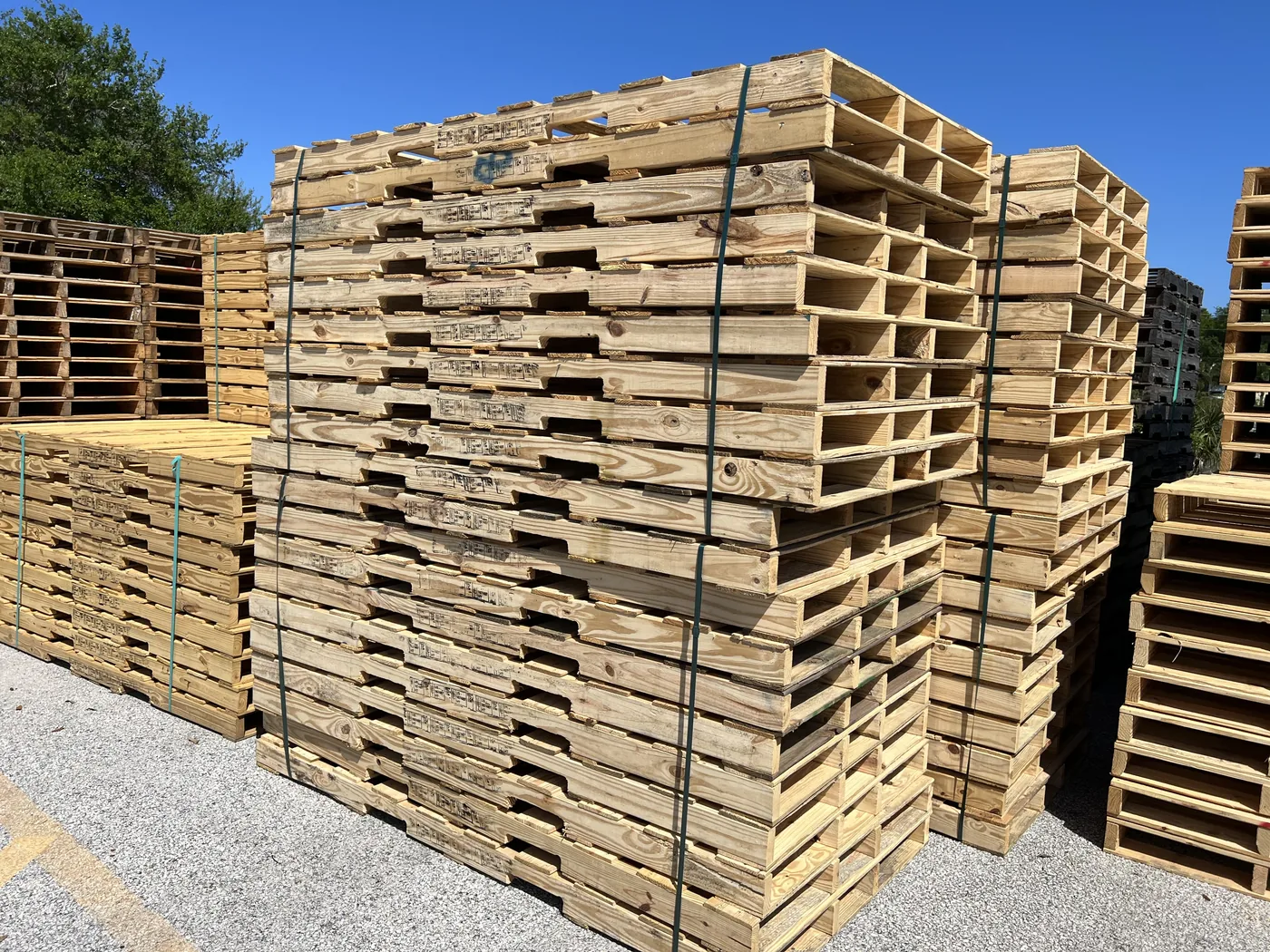
As of June 2026, the USP Pallet Price Index puts a used Grade A 48x40 GMA pallet at about $7.00 per unit nationally, Grade B at about $4.75, a new GMA 48x40 at about $11.50, and a recycled composite at about $5.25. The Northeast and coastal California run 20 to 25 percent above these benchmarks; the rural Midwest and South run below. Lumber tariffs are pushing prices up week to week in 2026, so the index is dated and refreshed monthly.
The Index at a Glance (June 2026)
The USP Pallet Price Index reports one current per-pallet number for each of the four products that move in volume. These are national benchmarks for the standard 48x40 GMA footprint; apply the regional multiplier below for a local figure.
Table 1 - USP Pallet Price Index, national benchmarks, as of June 2026
| Index component | Footprint | Benchmark / unit | Typical range | Trend |
|---|---|---|---|---|
| Used Grade A (#1) | 48x40 GMA | $7.00 | $5.00 - $9.00 | Rising |
| Used Grade B (#2) | 48x40 GMA | $4.75 | $3.00 - $6.00 | Rising |
| Used Grade C / core | 48x40 GMA | $2.00 | $1.00 - $3.00 | Flat |
| Recycled composite | 48x40 GMA | $5.25 | $4.00 - $7.00 | Rising |
| New GMA | 48x40 | $11.50 | $9.00 - $15.00 | Rising |
Sources: UsedPalletRecycling.com per-state 2026 price data; Repackify pallet market figures 2026; 48forty recycled-pallet benchmarks. Recycled composite is an A/B/C volume-weighted blend. Trend reflects 2026 lumber-tariff pressure. Figures are current ranges as of June 2026, not transaction quotes.
Regional Multipliers
Used pallets are heavy and cheap to make but expensive to ship, so each metro clears on its own supply and demand. Multiply the national benchmark by the regional factor below to estimate a local per-pallet price.
Table 2 - Regional multiplier vs national benchmark, Grade A 48x40, as of June 2026
| Region | Multiplier | Grade A 48x40 (local) | Why |
|---|---|---|---|
| Northeast (NY, NJ, Boston) | 1.20x - 1.25x | $8.40 - $8.75 | Dense demand, tight supply |
| Coastal California | 1.20x - 1.25x | $8.40 - $8.75 | High throughput, port volume |
| Southeast | 1.00x - 1.10x | $7.00 - $7.70 | Balanced, growing demand |
| Texas / Gulf | 0.95x - 1.05x | $6.65 - $7.35 | Near national average |
| Rural Midwest / South (AR, MS) | 0.70x - 0.95x | $4.90 - $6.65 | More supply than demand |
Source: UsedPalletRecycling.com per-state 2026 data. Northeast and coastal California pay 20-25% above the national benchmark; rural states pay below. Multipliers apply to the Grade A benchmark in Table 1.
New vs Used vs Recycled: What Each Component Means
The index separates three buying decisions that get blurred together. The right choice depends on whether a pallet ships once or cycles for years.
Table 3 - Component definitions and per-unit economics, as of June 2026
| Component | What it is | Benchmark / unit | Best for |
|---|---|---|---|
| New GMA | Freshly built, full-spec, no prior use | $11.50 | Export, food-grade, brand-facing, heavy single-use |
| Used Grade A | Sound, reusable, clean, no major repair | $7.00 | Standard B2B shipping at lower cost than new |
| Recycled composite | Sorted, repaired, regraded mix | $5.25 | Cost-driven internal handling, non-critical loads |
| Used Grade B | Repaired / companion stringer, usable wear | $4.75 | One-way and disposable shipments |
Source: USP buy/sell desk, June 2026, reconciled to cited recycler and Repackify data. New-pallet prices track softwood lumber directly; used prices follow with a lag.
How the Index Is Built (Methodology)
- Inputs: published per-state recycler price data (UsedPalletRecycling.com), Repackify pallet market figures, 48forty recycled-pallet benchmarks, and the USP buy/sell desk's confirmed transaction ranges.
- Reference unit: the 48x40 GMA pallet, the most liquid footprint, which sets the market for all other sizes.
- National benchmark: the mid-point of the current national range for each component, rounded to the nearest $0.25.
- Regional multiplier: the ratio of a region's typical price to the national benchmark, from per-state data.
- Cadence: reviewed monthly; each table carries an "as of" date. The figures are current ranges, not a fixed rate card.
Frequently Asked Questions
What is the current pallet price index in 2026?
As of June 2026, the USP Pallet Price Index puts a used Grade A 48x40 at about $7.00, Grade B at about $4.75, a new GMA at about $11.50, and a recycled composite at about $5.25 per unit. It is built from published recycler data, Repackify figures, and 48forty benchmarks, dated and updated monthly because lumber tariffs are driving weekly movement.
How much does a used 48x40 pallet cost in 2026?
About $5 to $9 nationally for Grade A, with the index benchmark near $7.00. Grade B runs $3 to $6 (benchmark ~$4.75) and Grade C/core $1 to $3. The Northeast and coastal California run 20-25% above the national benchmark; the rural Midwest and South run below.
How much does a new pallet cost in 2026?
A new GMA 48x40 averages about $11.50, typically $9 to $15 depending on lumber grade, board count, heat treatment, and volume. New prices track lumber directly, so they have moved more than used prices through 2026 as tariffs raised input costs.
Why do pallet prices vary by region?
Used pallets are heavy and low-value-per-unit, so shipping them far is uneconomic and each market clears locally. Dense markets such as the Northeast and coastal California pay 20-25% above benchmark; rural states with surplus supply pay below. The index publishes a regional multiplier table for this reason.
What drives pallet prices up or down?
Softwood lumber cost is the biggest driver - it sets new-pallet prices and pulls used prices with it. Then grade mix, size uniformity, load volume, ISPM-15 export demand, fuel and freight, and seasonal retail demand. In 2026 lumber tariffs are the dominant force, causing weekly upward pressure.
How often is the index updated?
Monthly, with each table carrying an "as of" date. Because 2026 tariffs cause weekly swings, the published benchmark is a current monthly reference, not a locked rate. For a transaction price, request a live quote, confirmed before pickup or delivery.
Related
- Pallet Pricing by Type and State (granular reference)
- We Buy Pallets - Buy-Back Rate Table
- Pallet Industry Index - Market Data by State
- 48x40 GMA Pallet Specs
Get a Live Pallet Quote
Sub-2-hour response. Tell us what you need to buy or sell.