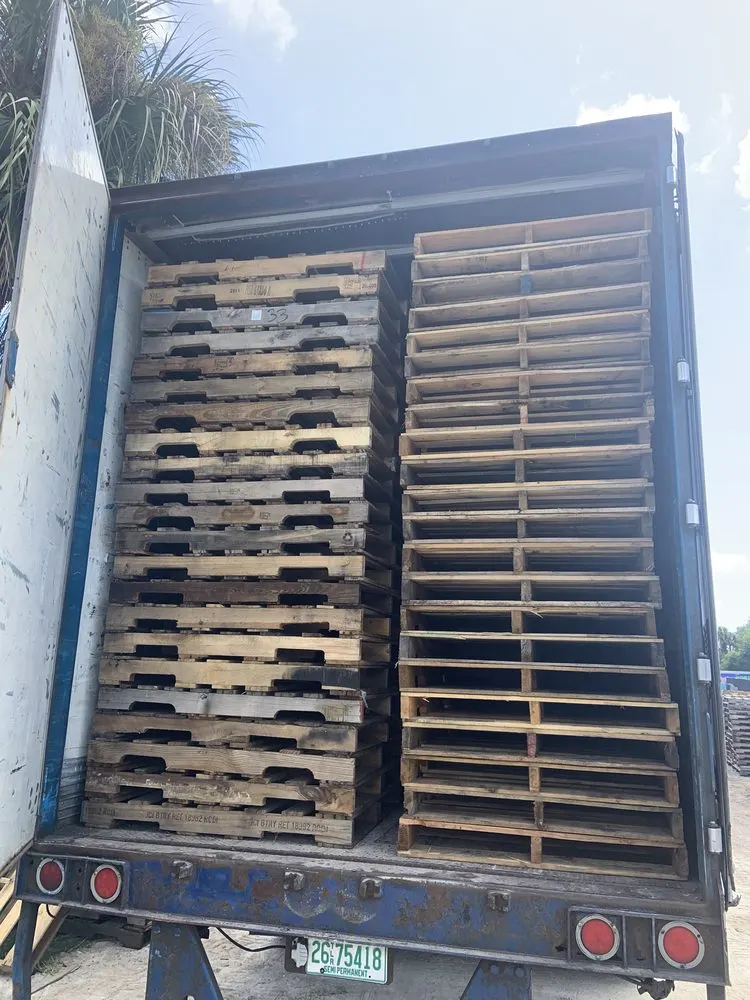
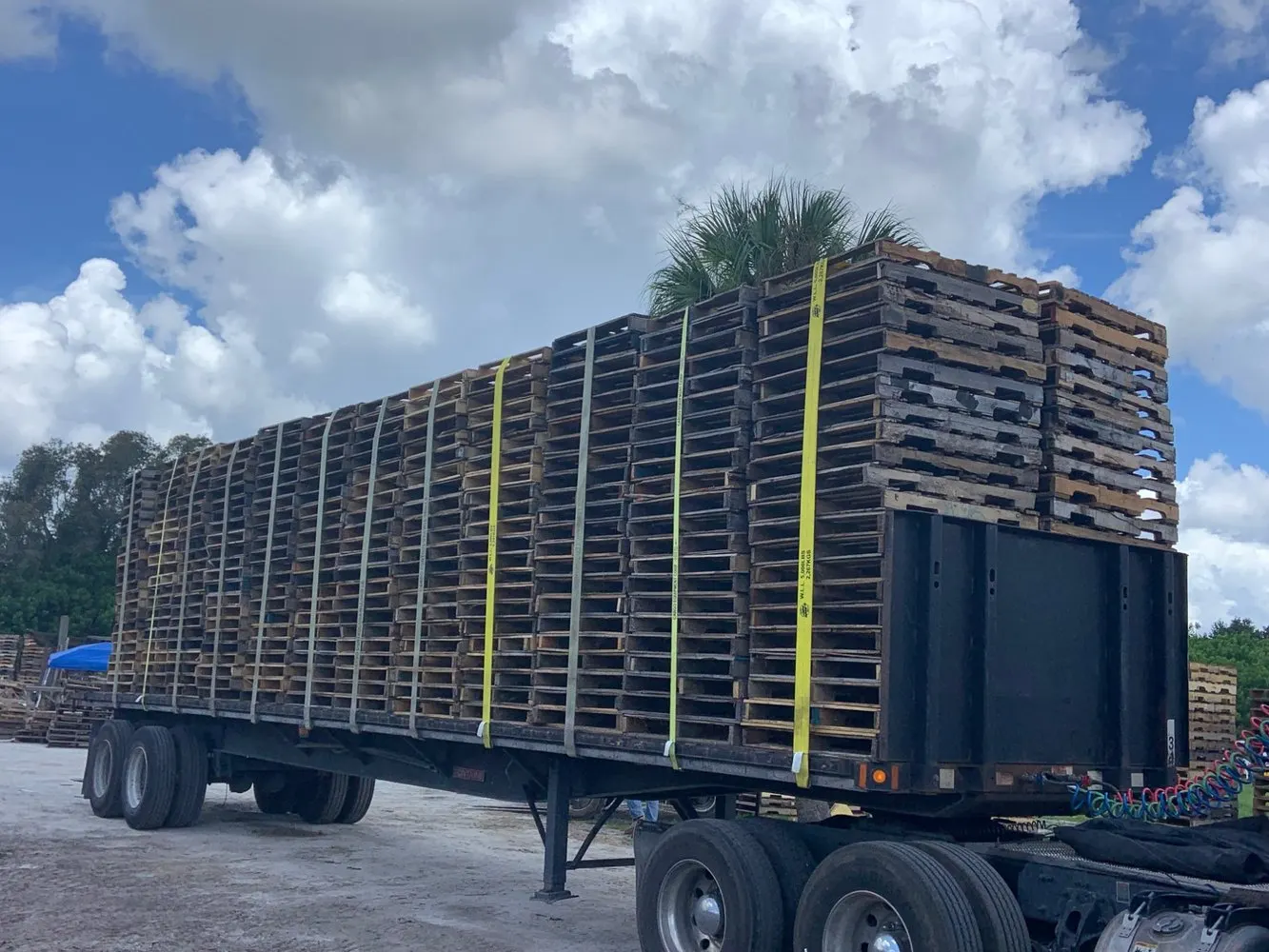
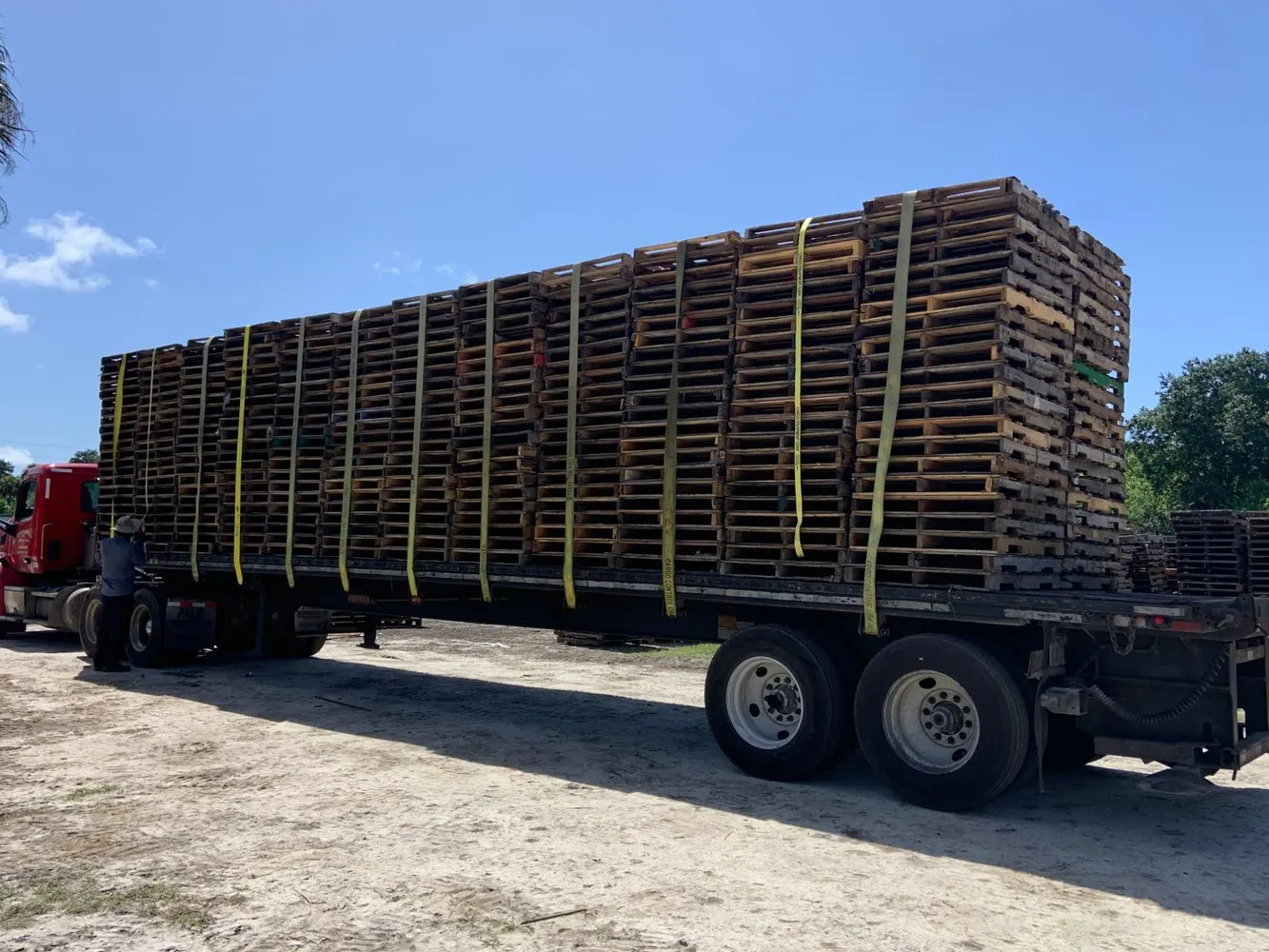
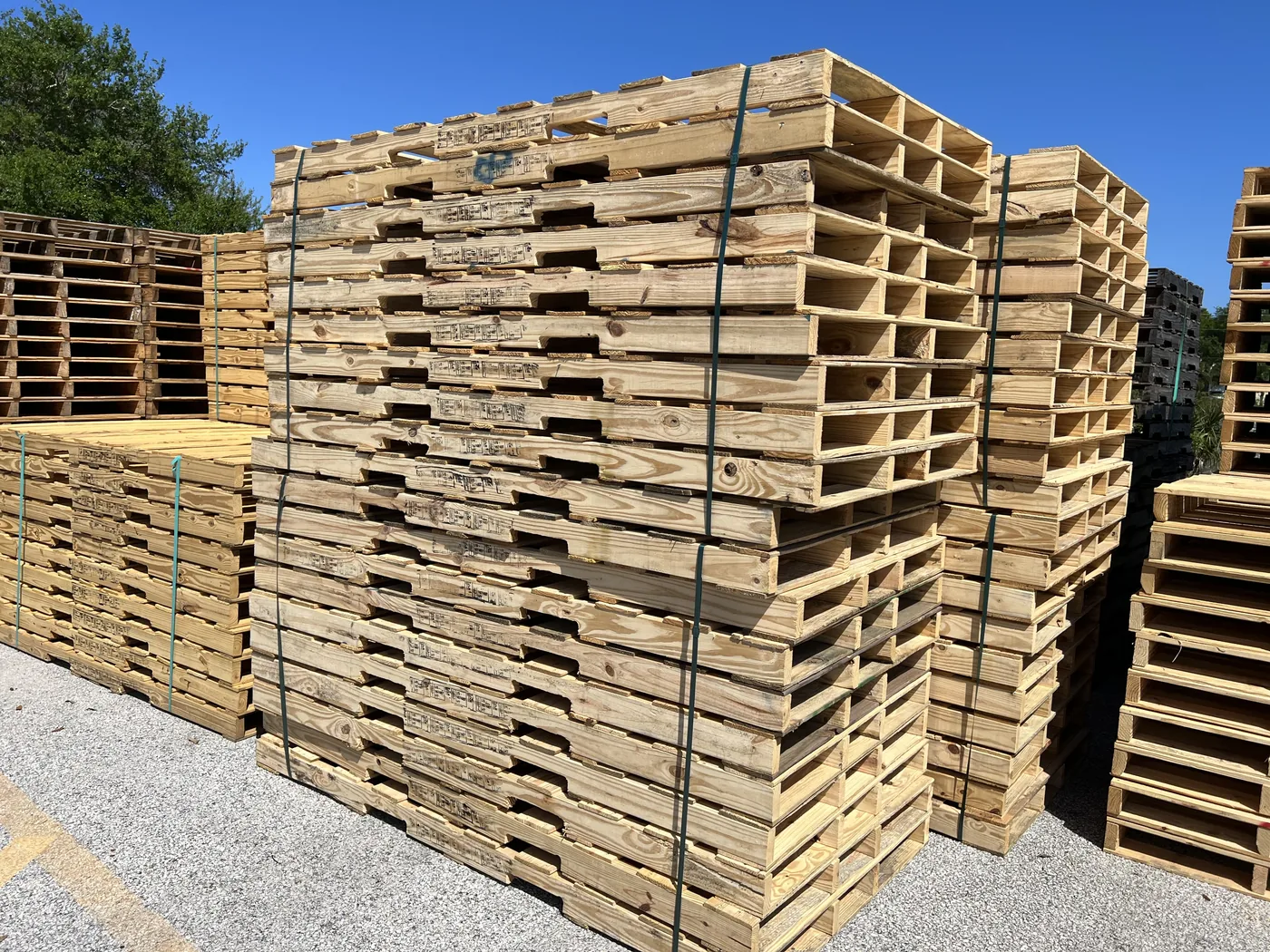
48x40 pallets - the most common US pallet dimension, 80%+ of US retail distribution. New GMA spec, recycled Grade A/B, custom variants, ISPM-15 HT for export.
About 48x40 Pallets
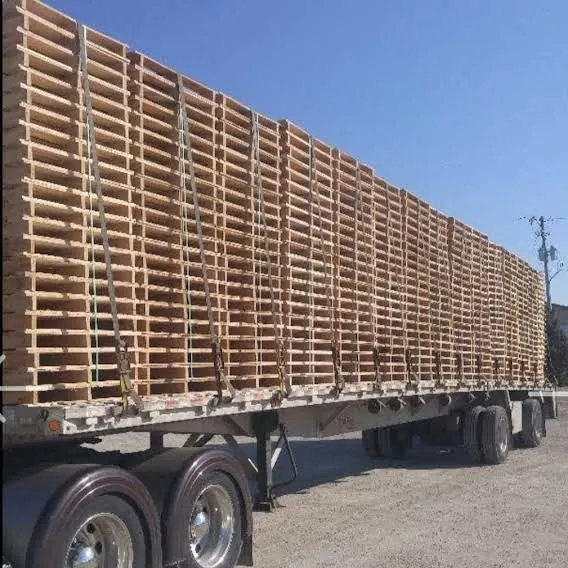
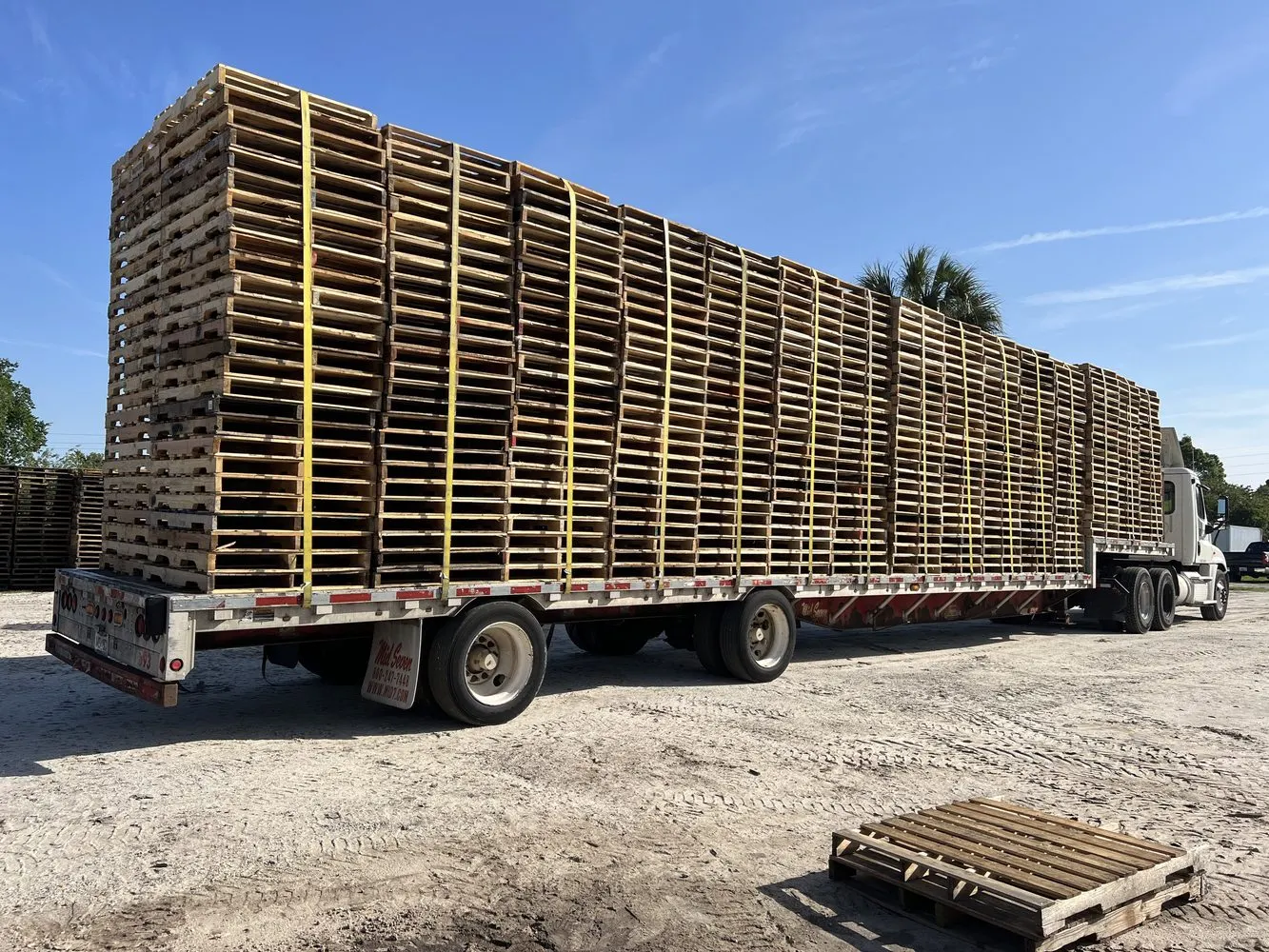
48x40 pallets - the most common US pallet dimension, 80%+ of US retail distribution. New GMA spec, recycled Grade A/B, custom variants, ISPM-15 HT for export. USP supplies 48x40 pallets across all 50 US states with same-day delivery in core footprint, scheduled weekly delivery elsewhere, sub-2-hour quote response, and audit-ready compliance documentation pre-attached electronically.
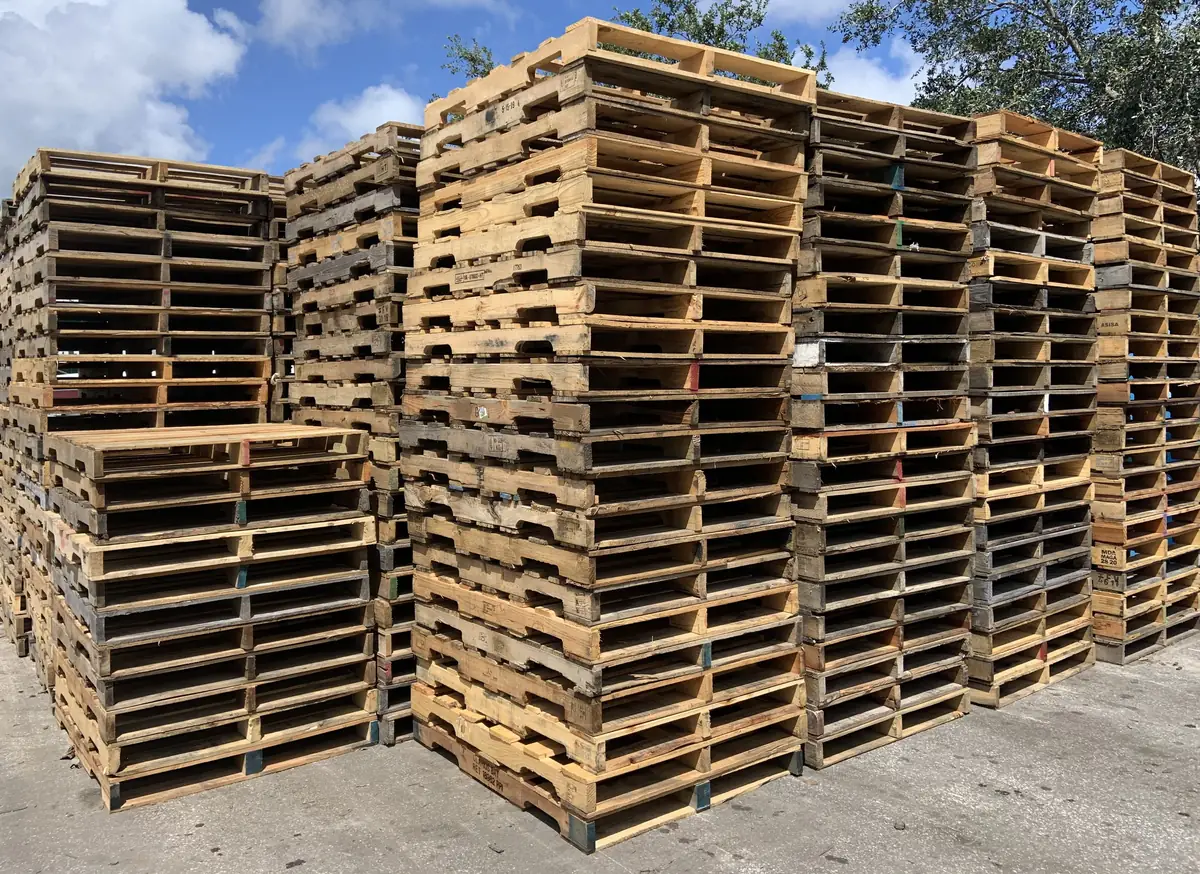
A 48x40 GMA pallet is 48″ long × 40″ wide × ~6.5″ tall, has 7 top and 5 bottom deck boards, is four-way entry, and carries a 2,500 lb minimum load (about 2,800 lb racked, up to 4,600 lb dynamic, up to ~7,500 lb static for Grade A). Empty weight is roughly 30 to 48 lb.
48x40 GMA Specifications
The full spec sheet for the standard 48x40 GMA pallet, as reviewed July 2026. Exact board sizing varies slightly by manufacturer; these are the GMA-standard values.
Table 1 — 48x40 GMA spec sheet · as of July 2026
| Specification | Standard value | Notes |
|---|---|---|
| Length | 48 in (1219 mm) | Stringer direction |
| Width | 40 in (1016 mm) | Deck-board length |
| Overall height | ~6.5 in (165 mm) | Top deck to floor |
| Entry | Four-way | Forks enter all 4 sides |
| Top deck boards | 7 | Two 5.5″ lead + five 3.5″ |
| Bottom deck boards | 5 | Two 5.5″ ends + three 3.5″ |
| Stringers (stringer style) | 3 | ~1.375″ × 3.5″ |
| Empty weight | 30 – 48 lb | By species, grade, moisture |
Sources: PalletOne and PECO GMA spec sheets 2026; FreightAmigo and Repackify GMA dimension guides 2026.
Weight Capacity (Grade A)
Table 2 — 48x40 GMA load capacity, standard stringer, per ASME MH1 (2016) · figures re-verified 19 August 2026
| Load type | Capacity | Meaning |
|---|---|---|
| Static | 4,600 lb | Sitting on a flat floor |
| Dynamic | 2,500 lb | Being moved by forklift / jack |
| Racked (edge-supported) | 2,800 lb | On beam racking |
| Rated minimum | 2,500 lb | GMA minimum load standard |
Ratings above are the standard-stringer figures specified by ASME MH1 (2016), the North American pallet standard, and are the same figures published on our own pallet weight and load capacity guide. Racked capacity is the binding limit for warehouse storage.
Why published 48x40 load figures disagree
Searching for this pallet returns two different sets of numbers, and the gap between them is large enough to matter. The set in Table 2 is the conservative one: 2,500 lb dynamic and 4,600 lb static, which is what ASME MH1 specifies for a standard 48x40 GMA stringer pallet. A higher set, usually quoted as 4,600 lb dynamic and 7,500 lb static, circulates widely in supplier listings. Those higher figures sit at or above what Table 4 below attributes to a heavy-duty reinforced build, not to a standard stringer, so quoting them for ordinary GMA stock overstates what the pallet under your load is actually rated to carry.
We publish the conservative set, because the failure mode of getting this wrong is a dropped load rather than a lost sale. Two practical rules follow, and they are our operating judgement rather than part of the standard. First, if you are specifying a pallet, spec to the racked number. Racking is the only condition in which the deck spans unsupported, it is the rating that fails first and most dramatically, and both conventions agree it is 2,800 lb on a standard GMA pallet. Second, recycled Grade B stock should be derated below the Grade A figures above; most warehouse safety programs we work with run 1,800 lb to 2,500 lb dynamic on Grade B rather than the full rating. When the load is near any of these limits, ask your supplier for the spec sheet for the exact build you are buying, not for the category.
Common Pallet Footprints (Reference)
The 48x40 GMA pallet is the North American standard, but several other footprints stay common in specific industries. The table below lists the most-used sizes and where they show up, so you can confirm 48x40 is the right spec for your load before you order.
Table 3 — common North American pallet footprints · as of July 2026
| Size | Primary industries | Notes |
|---|---|---|
| 48 x 40 (GMA) | Grocery, retail, general distribution | The North American standard; about 80% of US retail distribution |
| 42 x 42 | Telecom, paint, dairy | Suited to round containers and cable reels |
| 48 x 48 | Drums and chemicals | Square deck sized for 55-gallon drums |
| 40 x 48 | Retail, general distribution | The 48x40 footprint loaded the other way; identical size |
| 48 x 42 | Chemical, beverage, grocery | Common secondary grocery footprint |
| 44 x 44 | Drums, chemical | Alternate square drum footprint |
| 36 x 36 | Beverage | Compact direct-store-delivery loads |
| 48 x 45 | Automotive | Parts and components handling |
| 1200 x 1000 mm (47.2 x 39.4 in) | Export, ISO | ISO pallet; the closest metric size to 48x40 |
| 1200 x 800 mm (47.2 x 31.5 in) | Europe (EUR / EPAL) | The standard Euro pallet |
Sizes per GMA and ISO standards and industry references (Millwood, Repackify, 1-800-Pallets), 2026. Dimensions in inches unless noted.
48x40 Pallet Load Ratings by Construction (as of July 2026)
A 48x40 pallet does not have one weight limit. Its safe load depends on construction and on how the load is supported. Dynamic load is the weight it can carry while a forklift moves it, static load is the weight it can hold stacked on the ground, and racked load is the weight it can hold when supported only at the ends in racking. The figures below are typical values based on ASME MH1 2016; always verify against your own racking and handling spec.
| Construction | Dynamic load | Static load | Racked load | Typical use |
|---|---|---|---|---|
| Standard stringer GMA | 2,500 lb | 4,600 lb | 2,800 lb | General distribution |
| Block pallet (4-way) | 2,800 lb | 5,500 lb | 3,000 lb | Automated handling, retail pool |
| Heavy-duty reinforced | 4,000 lb | 7,500 lb | 5,000 lb | Machinery, dense product |
| Lightweight export | 1,500 lb | 3,000 lb | 1,800 lb | Air freight, light goods |
48x40 Pallets Volume Tier Pricing
- 50-pallet minimum - small-batch friendly
- 500+ pallets: 3-5% volume discount
- 1,000+ pallets: 5-10% volume discount
- 5,000+ pallets: 10-15% volume discount + scheduled delivery
- 10,000+ standing-order: 15-25% volume discount + reserved capacity + fixed pricing
48x40 Pallets by State
- 48x40 Pallets in Alaska
- 48x40 Pallets in Alabama
- 48x40 Pallets in Arkansas
- 48x40 Pallets in Arizona
- 48x40 Pallets in California
- 48x40 Pallets in Colorado
- 48x40 Pallets in Connecticut
- 48x40 Pallets in Delaware
- 48x40 Pallets in Florida
- 48x40 Pallets in Georgia
- 48x40 Pallets in Hawaii
- 48x40 Pallets in Iowa
- 48x40 Pallets in Idaho
- 48x40 Pallets in Illinois
- 48x40 Pallets in Indiana
- 48x40 Pallets in Kansas
- 48x40 Pallets in Kentucky
- 48x40 Pallets in Louisiana
- 48x40 Pallets in Massachusetts
- 48x40 Pallets in Maryland
- 48x40 Pallets in Maine
- 48x40 Pallets in Michigan
- 48x40 Pallets in Minnesota
- 48x40 Pallets in Missouri
- 48x40 Pallets in Mississippi
- 48x40 Pallets in Montana
- 48x40 Pallets in North Carolina
- 48x40 Pallets in North Dakota
- 48x40 Pallets in Nebraska
- 48x40 Pallets in New Hampshire
- 48x40 Pallets in New Jersey
- 48x40 Pallets in New Mexico
- 48x40 Pallets in Nevada
- 48x40 Pallets in New York
- 48x40 Pallets in Ohio
- 48x40 Pallets in Oklahoma
- 48x40 Pallets in Oregon
- 48x40 Pallets in Pennsylvania
- 48x40 Pallets in Rhode Island
- 48x40 Pallets in South Carolina
- 48x40 Pallets in South Dakota
- 48x40 Pallets in Tennessee
- 48x40 Pallets in Texas
- 48x40 Pallets in Utah
- 48x40 Pallets in Virginia
- 48x40 Pallets in Vermont
- 48x40 Pallets in Washington
- 48x40 Pallets in Wisconsin
- 48x40 Pallets in West Virginia
- 48x40 Pallets in Wyoming
Companion Resources
- USP Pallet Pricing Reference
- USP Pallet Supplier Hub
- Pallet Total Cost Calculator
- Volume Tier Discount Calculator
- National Pallet Supplier Guide
What are the dimensions of a 48x40 GMA pallet?
48 inches long by 40 inches wide, with a standard overall height of about 6.5 inches. It is four-way entry and the most common pallet in North America, used in roughly 80% of US retail distribution. The 48-inch dimension runs along the stringers; 40 inches is the deck-board length.
How many deck boards and what weight capacity?
A standard 48x40 GMA pallet has 7 top deck boards and 5 bottom deck boards, riding on three stringers (stringer style). A Grade A unit carries a 2,500 lb minimum rated load, about 2,800 lb racked, up to 4,600 lb dynamic, and up to ~7,500 lb static. Empty weight is roughly 30 to 48 lb.
Can United States Pallets handle 48x40 pallets for high-volume United States operations?
Yes. Standing-order programs for United States operations running 500+ pallets/week lock in tiered pricing, reserve delivery slots, and run on autopilot in the background. Custom contract terms available for accounts running 2,000+/week.
What documentation accompanies 48x40 pallets loads?
BOL, packing list, grade certifications standard. Heat-treated loads add IPPC stamps and ISPM-15 documentation. Pharma-grade loads add batch records. Food-grade loads add FSMA Sanitary Transportation Rule certifications. All documentation ships electronically before delivery.
Does United States Pallets buy back used pallets in United States?
Yes. We buy back used pallets from United States collectors, recyclers, and warehouses - 250-pallet minimum per load, single-size only (no mixed-size loads). Fast ACH payment, typically same-day or net-7 depending on volume. Pickup arranged on standard outbound delivery routes.
Does United States Pallets ship 48x40 pallets to all of United States?
Yes. We deliver to every commercial address in United States, with same-day shipping standard in our Southeast/Mid-Atlantic core and scheduled weekly delivery elsewhere. United States-area accounts are typical - submit a quote with your dock location and we route accordingly.
Can United States customers run a buyback program alongside their pallet purchases?
Yes. Backhaul logistics are coordinated on outbound delivery routes - empty or non-spec pallets get picked up on the return leg of new pallet deliveries. Per-pallet freight cost on the backhaul approaches zero for accounts running both new-pallet purchase + buyback simultaneously.
Quote: 48x40 Pallets
Sub-2-hour quote response.