A deck board with beveled edges, usually a bottom lead board, that lets pallet jack wheels ride over it more easily when entering and leaving the pallet.
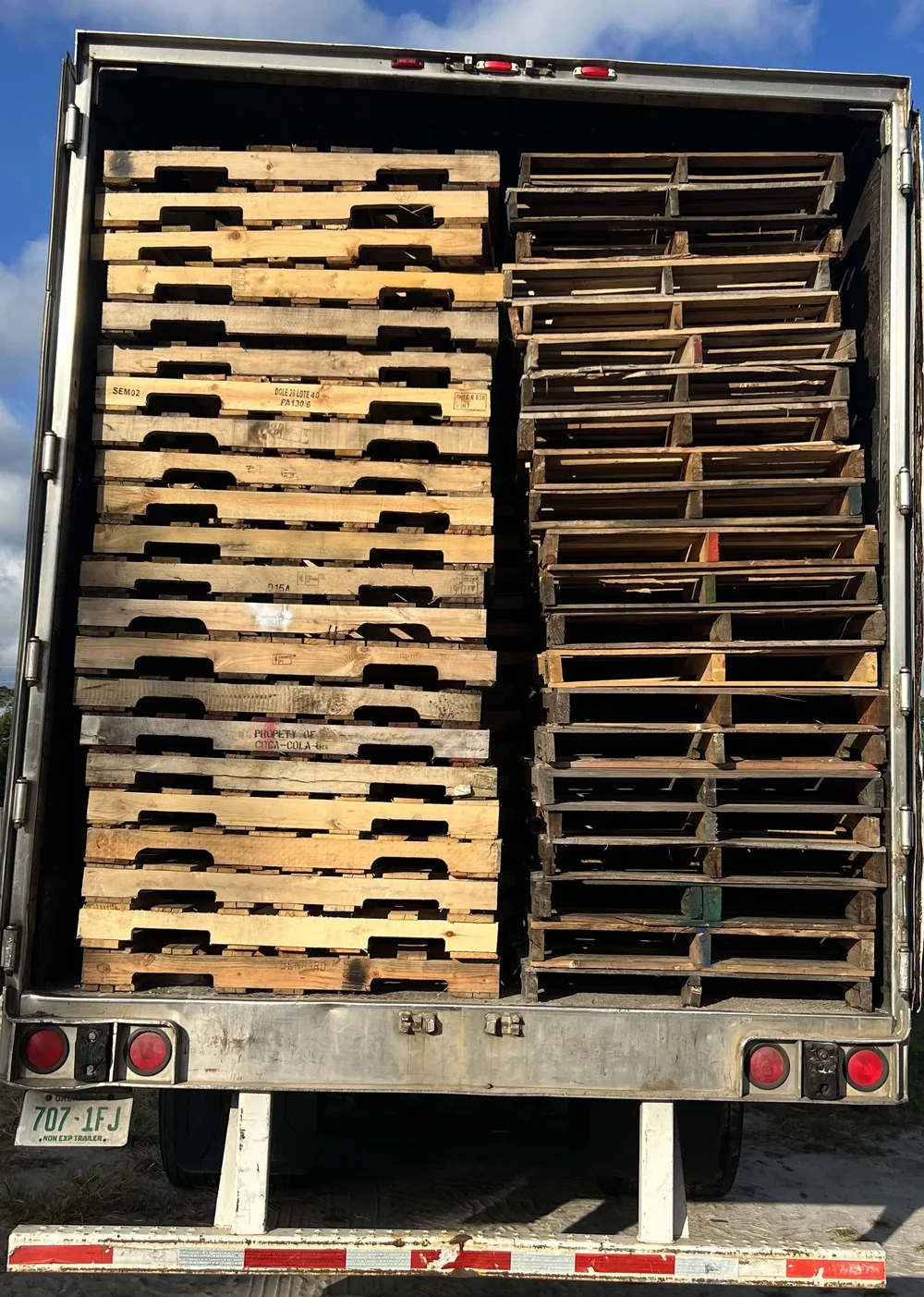
Detailed Definition
A chamfered deck board has one or both long edges cut at an angle along its length. On stringer pallets the chamfer is most often on the inside edges of the bottom lead boards, the end boards that a pallet jack passes over. When the jack enters, its load wheels roll toward the board; the bevel lets them ride over it instead of hitting a square edge. The same helps when the jack is backed out. Specifications usually state which boards are chamfered, on which edges, and the depth or angle of the cut.
Why pallet jacks need chamfered boards
A pallet jack lifts by pushing its load wheels down to the floor through the openings in the bottom deck. On entry, those wheels approach the bottom lead board at the end of the pallet. With a square edge, the wheels can catch on the board, jolt the jack, damage the board or push the pallet along the floor. A chamfered edge acts like a small ramp. That is why GMA-style stringer pallets, which are often handled by jacks in grocery and retail operations, commonly specify chamfered bottom boards.
Specifying and checking chamfers
- State which boards are chamfered, usually the bottom lead boards, and whether one or both edges
- Give the chamfer size so the cut is large enough to help jacks but does not weaken the board too much
- Check that replacement boards on repaired or recycled pallets are also chamfered
- Confirm chamfers face the correct direction, toward the pallet openings
A pallet that meets the footprint but lacks chamfers may still cause problems in jack-heavy operations.
Chamfers on recycled pallets
Recycled GMA-style pallets come from many original builders, so chamfers may vary or be missing on boards replaced during repair. If your operation relies on pallet jacks, include chamfered lead boards in the grade definition you agree with the supplier and spot check deliveries.
Related Glossary Terms
Frequently Asked Questions
Which pallet boards are normally chamfered?
Most often the bottom lead boards, which are the outermost bottom deck boards at each end of a stringer pallet. The chamfer is usually cut on the inside edge, facing the opening where the pallet jack wheels travel. Some specifications also chamfer other bottom boards that the wheels must cross. Top deck boards are rarely chamfered for this purpose. The pallet specification should list exactly which boards and edges are cut.
Do block pallets need chamfered deck boards?
Some do. Whether chamfers help depends on the bottom deck layout and which sides pallet jacks will enter. If jack wheels must roll over a bottom board to reach their lifting position, a chamfer on that board makes entry and exit smoother. Many block pallet designs include chamfered bottom boards for this reason. Check the design drawing and your handling equipment rather than assuming chamfers are present.