Material handling encompasses all equipment and processes for moving, storing, and protecting goods, including pallets.
Detailed Definition
Material handling covers how goods move through receiving, storage, picking, packing and shipping, and the equipment and controls that support those steps. It includes manual handling, industrial trucks such as forklifts and pallet jacks, conveyors and sortation, storage systems such as pallet rack, automated systems such as AGVs, AMRs and AS/RS, and the packaging and unit loads that tie them together. The Material Handling Institute (MHI) is the main US trade association for companies that make and integrate this equipment.
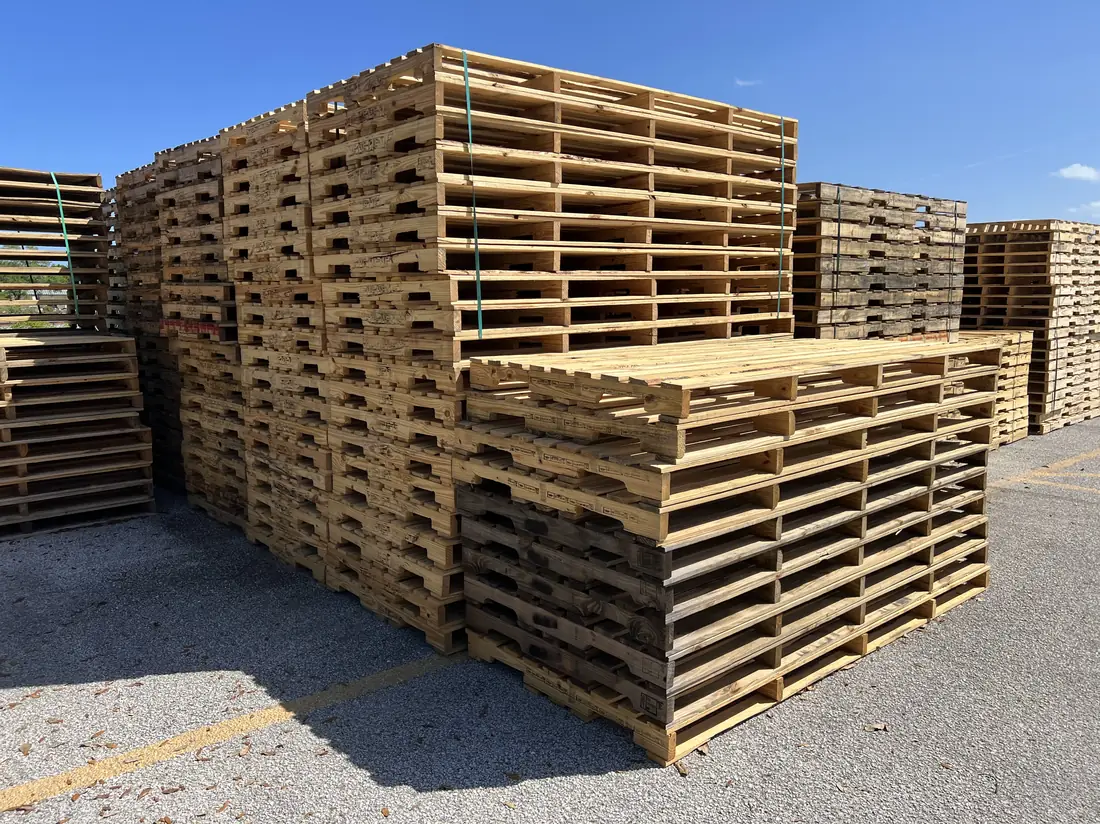
The pallet as the base of the unit load
Most warehouse systems are designed around the unit load: goods grouped on a pallet so they can be moved and stored as one item. That makes the pallet a design input for nearly every other piece of equipment. Fork openings must match trucks and pallet jacks, bottom deck boards must run the right way for roller conveyors, overall dimensions must fit rack bays and automated storage, and the pallet must be stiff enough to span rack beams without excessive deflection.
Changing pallet type, for example from stringer to block, or from wood to plastic, can affect conveyors, stretch wrappers, palletizers and racking at the same time, so test before switching.
Planning a material handling change
- Start with the product and order profile: unit loads, cases or eaches, and volumes by hour.
- Map every handling step and count how many times each load is touched.
- Check building limits such as clear height, floor flatness and column spacing.
- Confirm safety rules, including OSHA powered industrial truck training and rack loading signs.
- Compare equipment on total cost, uptime and flexibility, not purchase price alone.
Fewer touches usually means less damage and labor, which is why so many improvements focus on eliminating moves rather than speeding them up.
Authoritative Sources
- Material Handling Institute (MHI): the largest US trade association for material handling, logistics, and supply chain technologies.
Related Glossary Terms
Frequently Asked Questions
What counts as material handling equipment?
Material handling equipment is any equipment used to move, store, control or protect materials in a facility. Common categories include industrial trucks such as forklifts, pallet jacks and order pickers; conveyors and sortation systems; storage equipment such as pallet rack, shelving and mezzanines; automated systems such as AGVs, AMRs and AS/RS; and unit load equipment such as pallets, containers and stretch wrappers. Software that directs these systems is often included too.
Why does pallet choice matter to the rest of the material handling system?
Almost every piece of handling equipment touches the pallet. Forks, pallet jacks, conveyors, stretch wrappers, palletizers, racking and automated storage all assume certain pallet dimensions, entry points, bottom deck layout and stiffness. A pallet that is out of square, has broken bottom boards or uses a different design can jam conveyors, fall through rack or be rejected by automation, so pallet specs should be agreed with whoever runs the equipment.