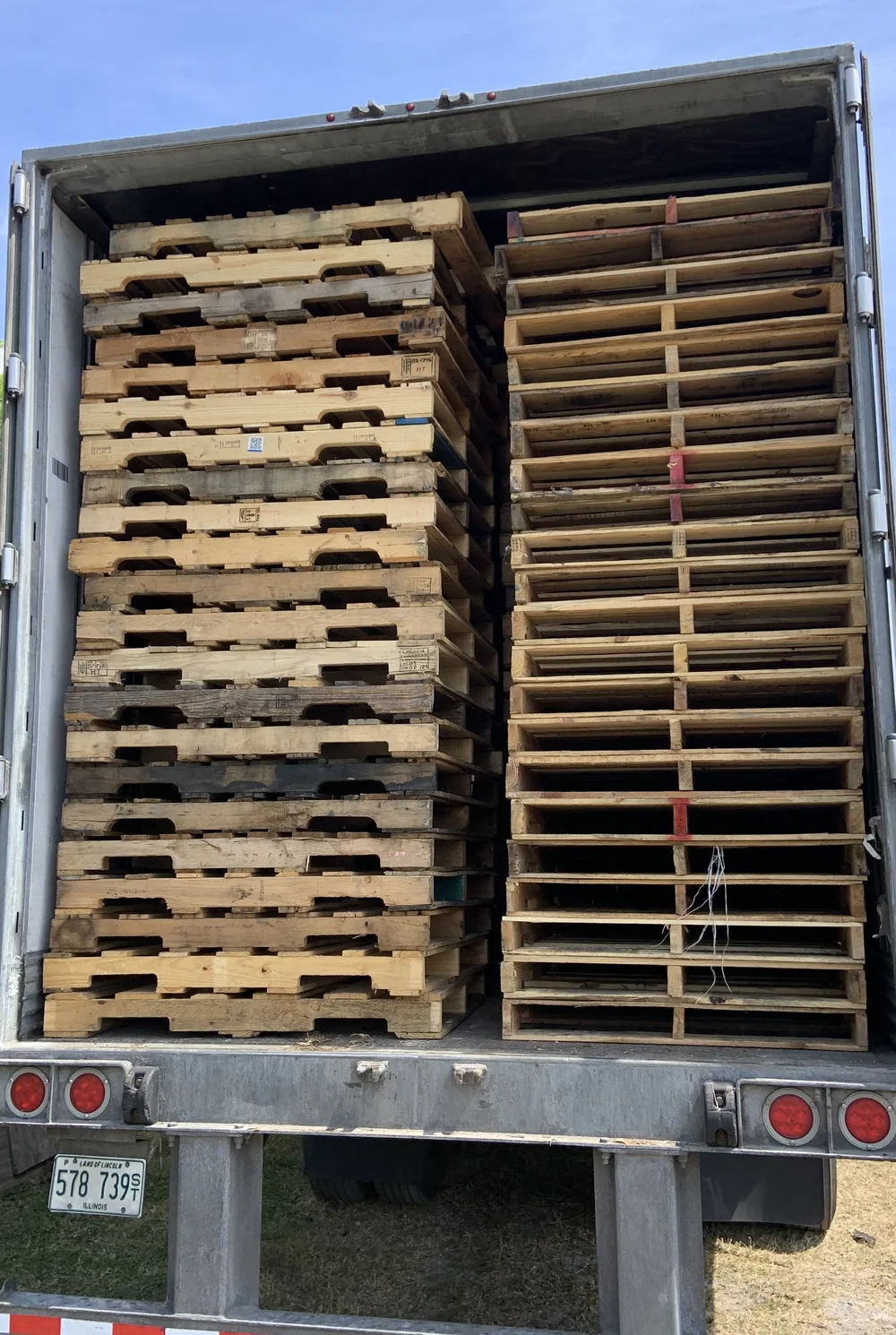
A pallet manufactured from softwood species (southern yellow pine, Douglas fir, hemlock), typically lighter than a comparable hardwood pallet, with cost depending on regional lumber markets.
Detailed Definition
A softwood pallet is built mainly from conifer lumber such as Southern Yellow Pine, Douglas fir, hemlock, spruce or western pines. Softwood is often supplied as kiln-dried, graded dimension lumber, which gives consistent board sizes and a lighter, cleaner pallet where weight, appearance or consistent dimensions matter. Whether softwood or hardwood is cheaper depends on regional lumber markets at the time of purchase. Strength depends on species, board thickness and pallet design, so specify the performance you need, not just the species.
Choosing a species
Suppliers usually build with whatever softwood is plentiful in their region: southern pine in the South, Douglas fir, hem-fir and western pines in the West, and spruce-pine-fir in the North and in Canadian supply. Southern pine and Douglas fir are relatively dense and stiff for softwoods, while spruce and some pines are lighter. If your customer specifies a species, confirm it is available locally before committing to a lead time.
Moisture, mold and weight
Green lumber holds a lot of water, so pallets built from it weigh more and can shrink, loosen at the nails and grow mold or blue stain in warm, closed spaces. Kiln-dried lumber, commonly dried to 19 percent moisture content or less, reduces those risks. Heat treatment for ISPM 15 removes some moisture but is not the same as kiln drying, and pallets can pick up water again in storage.
Checks on delivery
- Dimensions and squareness against the specification.
- Board thickness and the number of boards on each deck.
- Nails fully driven, with no points sticking out.
- Signs of mold, heavy bark or excessive wane.
- A legible ISPM 15 mark on two opposite sides if ordered heat treated.
Related Glossary Terms
Frequently Asked Questions
Can softwood pallets be used in pallet rack?
Yes, if they are designed for it. A pallet resting on two rack beams carries the load across an unsupported span, which is usually its most demanding condition. Ask the supplier for a racked capacity for your rack orientation and load type, ideally from a design tool such as the NWPCA Pallet Design System or from testing. Thicker deck boards, larger stringers or more stringers can raise racked capacity.
Do domestic softwood pallets need heat treatment?
Generally no for purely domestic US shipments, because ISPM 15 applies to wood packaging moving in international trade. Some customers still ask for heat-treated pallets for domestic use to standardize their stock or to reduce mold and pest risk. Check your customer's specification, and remember that a pallet that later crosses a border on an export shipment must meet ISPM 15 at that point.