A pallet manufactured from hardwood species (oak, maple, poplar, mixed hardwood), typically heavier than a softwood pallet of the same design and very resistant to wear.
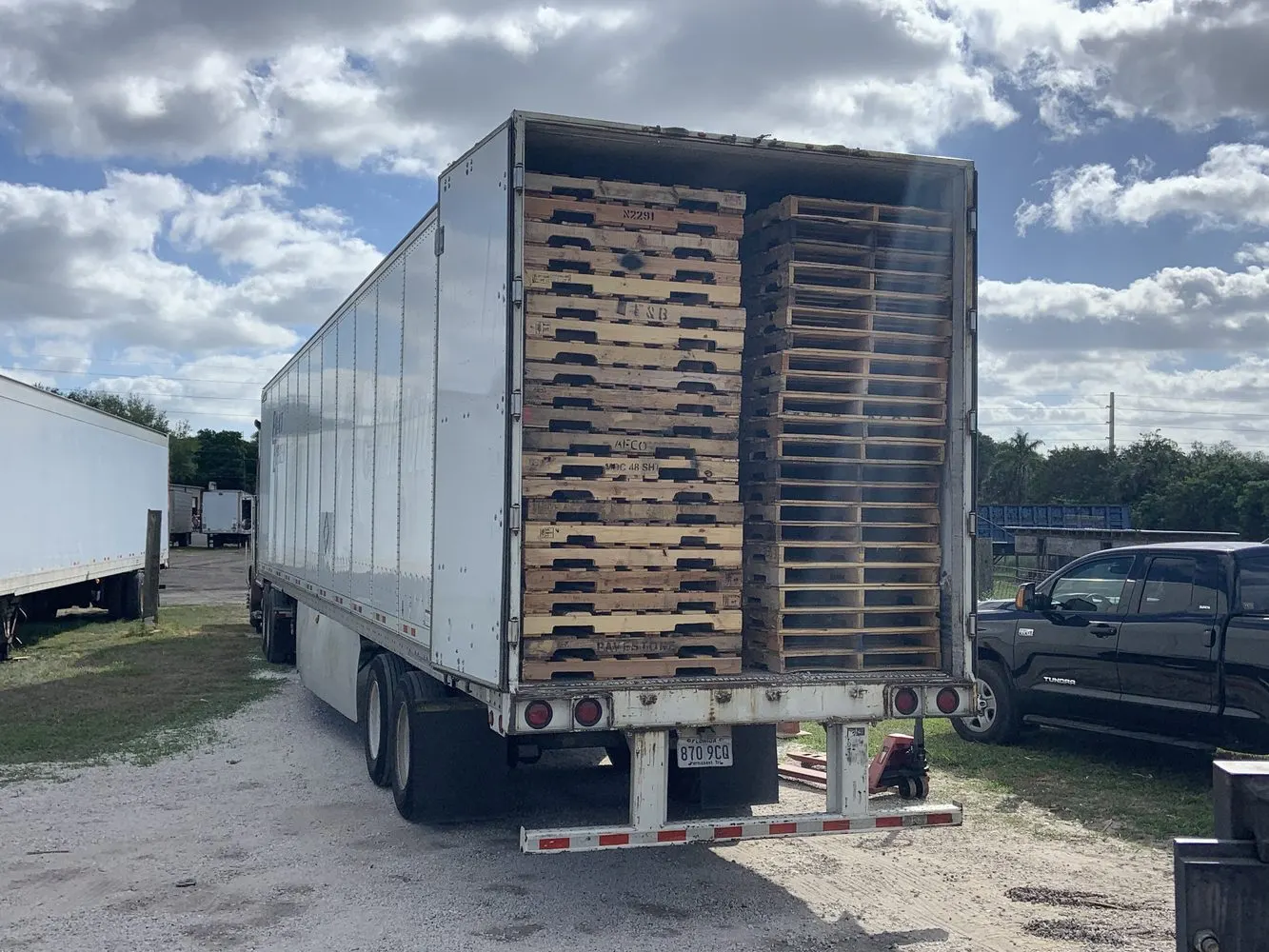
Detailed Definition
A hardwood pallet is built from hardwood lumber, usually mixed hardwood such as oak, maple, poplar, gum and ash, though some buyers specify a single species like oak. Hardwood pallets are common in the eastern half of the US near hardwood sawmills. They tend to be heavier than softwood pallets of the same design and stand up well to fork impact and rough handling. Load capacity depends on the design, lumber grade and dimensions, not only the species.
Strengths and drawbacks of hardwood pallets
Dense hardwoods hold nails well and resist crushing and edge damage, which helps in rough handling and repeated trips. Against that, hardwood pallets are usually heavier, which adds to freight weight and makes manual handling harder. Green hardwood also dries slowly, so pallets can stay wet and prone to mold in closed trailers or wrapped loads.
Specifying a hardwood pallet
- State the footprint and style, for example a 48 x 40 GMA three-stringer pallet or a block pallet.
- Say whether mixed hardwood is acceptable or a single species is required.
- Give deck board and stringer dimensions and the fastener type.
- Ask for heat treatment and an ISPM-15 mark if any pallets may be exported.
- Ask for a typical weight so you can plan freight and handling.
A common mistake is choosing hardwood for strength and then accepting thinner boards to save cost, which can cancel out the benefit. Design tools such as the NWPCA Pallet Design System can compare species and dimensions for a given load.
If pallets will be racked, ask the supplier how the design was rated for a spanned rack position, not just floor stacking.
Related Glossary Terms
Frequently Asked Questions
Are hardwood pallets better than softwood pallets?
Neither is always better. Hardwood pallets are usually heavier and very wear resistant, which suits rough handling and heavy loads. Softwood pallets are lighter and easier to handle, and well designed softwood pallets carry heavy loads too. The right choice depends on the load, handling system, freight cost and what lumber is available locally. Compare complete designs and test or analyze capacity rather than choosing by wood type.
Why are hardwood pallets heavier?
Most hardwoods used in pallets, such as oak and hard maple, have higher density than common softwoods, so the same volume of wood weighs more. Pallet hardwood is also often used green, and water adds significant weight until the wood dries. Board thickness and the number of boards matter as well, so two hardwood pallets of the same size can differ noticeably in weight.