Softwood lumber comes from coniferous trees (pine, fir, spruce, hemlock) and is generally lighter than the hardwoods commonly used in pallets.
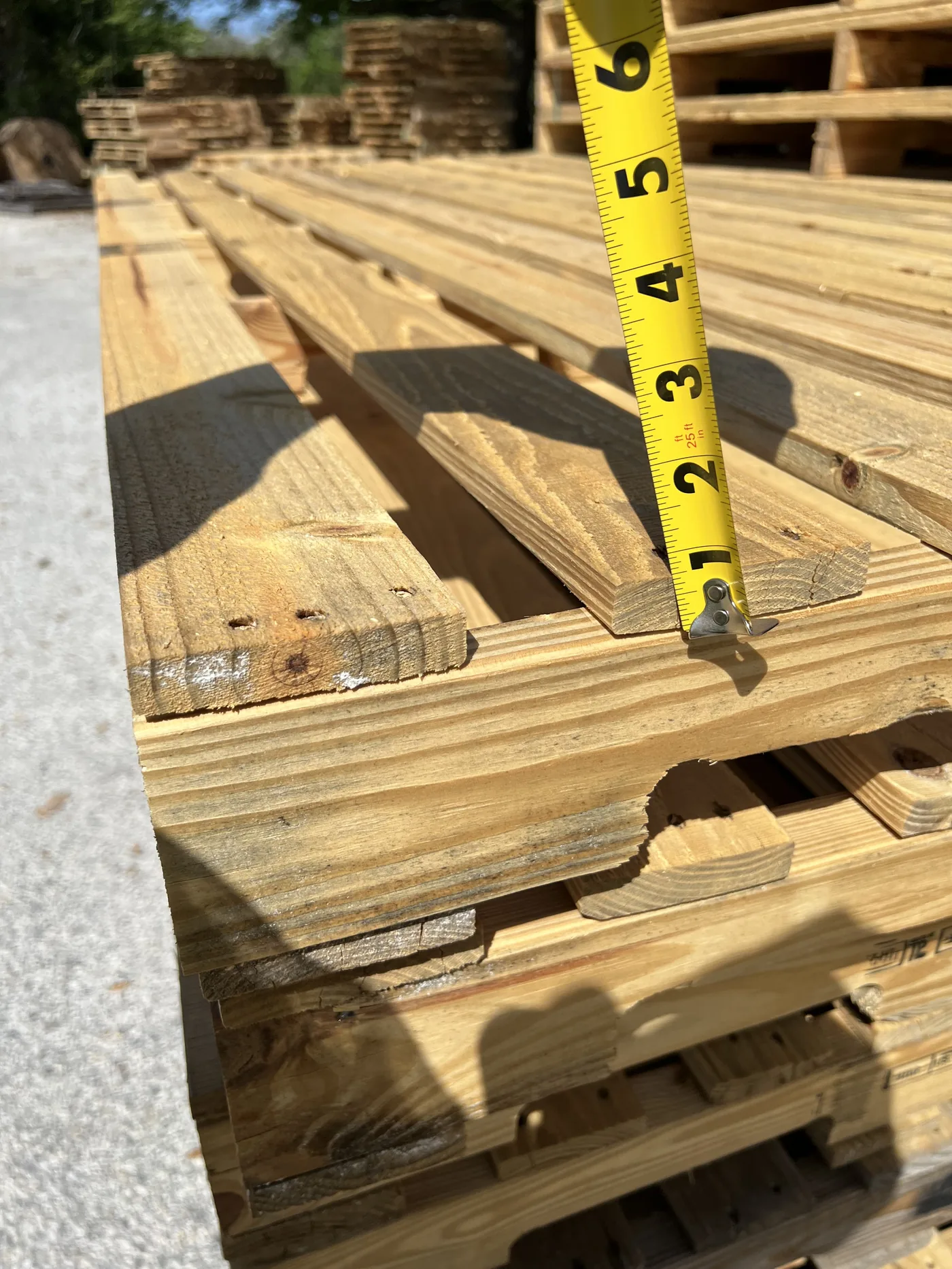
Detailed Definition
Softwood and hardwood are botanical groups, not strength ratings: softwoods come from conifers and hardwoods from broadleaf trees. Common pallet softwoods include Southern Yellow Pine (SYP), Douglas fir, hemlock, spruce and western pines, and SYP is widely used in the US Southeast. Softwood lumber is graded under rules written by agencies such as SPIB and approved by ALSC. Pallet capacity depends on species, board size, design and support conditions, so a well-designed softwood pallet can outperform a poorly designed hardwood one.
How softwood compares with hardwood in pallets
Softwood species are usually lighter than oak and other dense hardwoods, and softwood lumber is commonly sold as kiln-dried, surfaced dimension lumber with consistent sizes. Many hardwood pallets, by contrast, are built from lower-grade cants and boards from hardwood sawmills. Stiffness, nail holding and impact resistance vary by species and by grade within a species, so neither group is better for every job.
Grading and drying
Softwood dimension lumber is graded under rules approved by the American Lumber Standard Committee, and each piece of graded lumber carries a stamp showing the agency, mill, grade, species and moisture condition. Kiln-dried softwood commonly means dried to 19 percent moisture content or less, often stamped KD19. Kiln drying is not the same as ISPM 15 heat treatment, although one kiln cycle can do both if it meets the treatment schedule and is certified.
What to specify
- Species or species group.
- Board and stringer dimensions.
- Moisture condition, such as green or kiln-dried.
- Heat treatment and marking if the pallets will be exported.
- The load, support and handling conditions, so capacity can be designed rather than assumed.
Authoritative Sources
- Pacific Lumber Inspection Bureau (PLIB): the lumber grading agency accredited by the American Lumber Standard Committee for Pacific softwoods used in pallet production.
- Southern Pine Inspection Bureau (SPIB): the lumber grading authority for Southern Yellow Pine, the most common pallet stock in the US Southeast.
- US Forest Service (USFS): the federal agency that manages the National Forest System and reports on US lumber supply used in pallet production.
Related Glossary Terms
Frequently Asked Questions
Is softwood too weak for pallets?
No. Softwood is widely used for pallets, including heavy-duty designs. Strength depends on the species, grade, board thickness, number of stringers or blocks, fasteners and how the pallet is supported in use. Southern pine and Douglas fir, for example, are among the stronger softwoods. Ask for a capacity rating based on design analysis or testing for your load and support conditions rather than judging by species alone.
Do softwood pallets need heat treatment for export?
Yes, if they move in international trade to countries that apply ISPM 15. The standard covers wood packaging made of raw wood thicker than 6 mm regardless of whether it is softwood or hardwood. The wood must be debarked, treated by an approved method such as heat treatment to a 56 C core temperature for at least 30 continuous minutes, and marked by an approved facility.