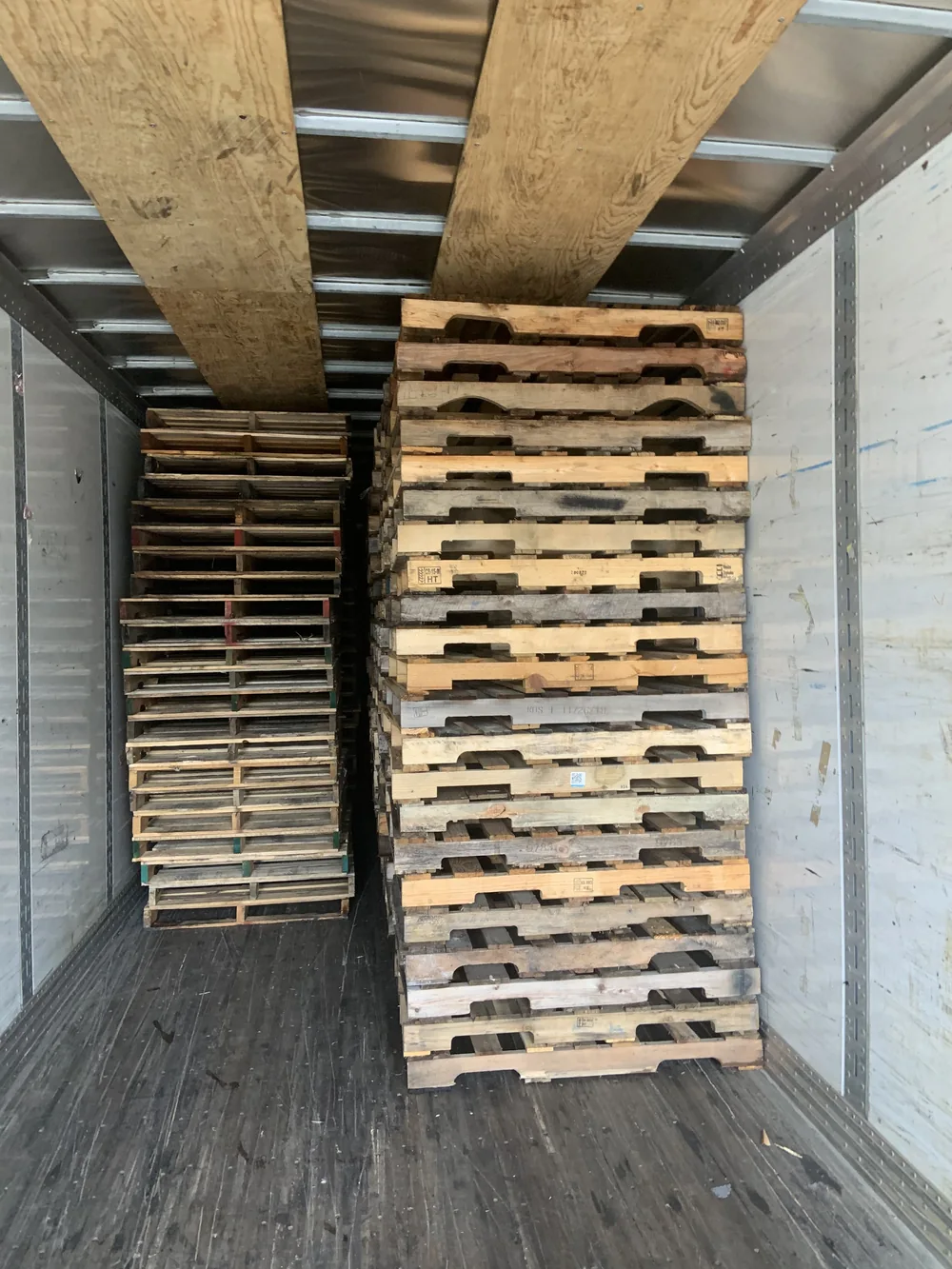
Closed-loop pallet programs return pallets from end-customer to manufacturer for refurbishment and redeployment.
Detailed Definition
In a closed-loop program, pallets owned by the shipper or a contracted provider circulate between a defined set of locations, such as a parts supplier and an assembly plant. After each delivery the empties come back, are inspected and repaired as needed, and are sent out again. Closed loops are common where flows are predictable and return freight is practical, including automotive, beverage and some grocery networks. Records of trips, repairs and retirements can support cost tracking and sustainability reporting, and durable pallets such as plastic or heavy wood block pallets often suit the repeated use.
What makes a closed loop work
Closed loops succeed when the return trip is cheap and reliable. Typical ingredients are:
- Fixed lanes with regular volume in both directions, so empties ride on backhauls
- Clear ownership markings, and often barcodes or RFID tags, on every pallet
- An agreed inspection and repair standard and a place to perform it
- Counts reconciled between sites at a regular interval
- A pallet design durable enough to survive many trips
Common failure points
The biggest risk is leakage: pallets that stay at a customer, get mixed into a third party's stock or end up with a recycler. Each lost pallet raises the cost per trip. Return freight can also cost more than expected when volumes are uneven. Programs that include receivers outside the defined network often become open loops in practice, and a pallet pool may then be the better option. Review loss rates and repair costs from your own records before expanding a program.
Tracking trips and costs
Measure cost per trip by dividing total spend on pallets, repairs, return freight and administration by the number of loaded trips completed in the same period. Track losses and retirements separately. These numbers show whether the loop is improving and give a factual basis for any sustainability or lifecycle claims.
Authoritative Sources
- National Wooden Pallet & Container Association (NWPCA): the US trade association representing wood pallet manufacturers, recyclers, and component producers, founded in 1947.
- US Environmental Protection Agency (EPA): the federal agency whose Sustainable Materials Management program publishes the non-hazardous materials and waste management hierarchy.
Related Glossary Terms
Frequently Asked Questions
How is a closed-loop program different from a pallet pool?
In a closed-loop program, the shipper or a dedicated provider owns the pallets and moves them only among known sites in its own network. A pallet pool is operated by a third party that owns a large shared fleet used by many shippers and receivers across the market. Closed loops give more control over pallet design and quality, while pools reduce the work of tracking and retrieving pallets from many different customers.
What pallet types suit a closed loop?
Pallets that survive many trips and are easy to inspect and repair, such as heavy-duty wood block pallets, well-built stringer pallets or plastic pallets. Plastic pallets are often chosen where hygiene, consistent weight or automation matters, and they may carry RFID tags molded in. The right choice depends on loads, handling equipment, return cost and expected trips, so compare total cost per trip rather than purchase price alone.