Pallet TCO (Total Cost of Ownership) accounts for unit price, freight, documentation, and lifecycle.
Detailed Definition
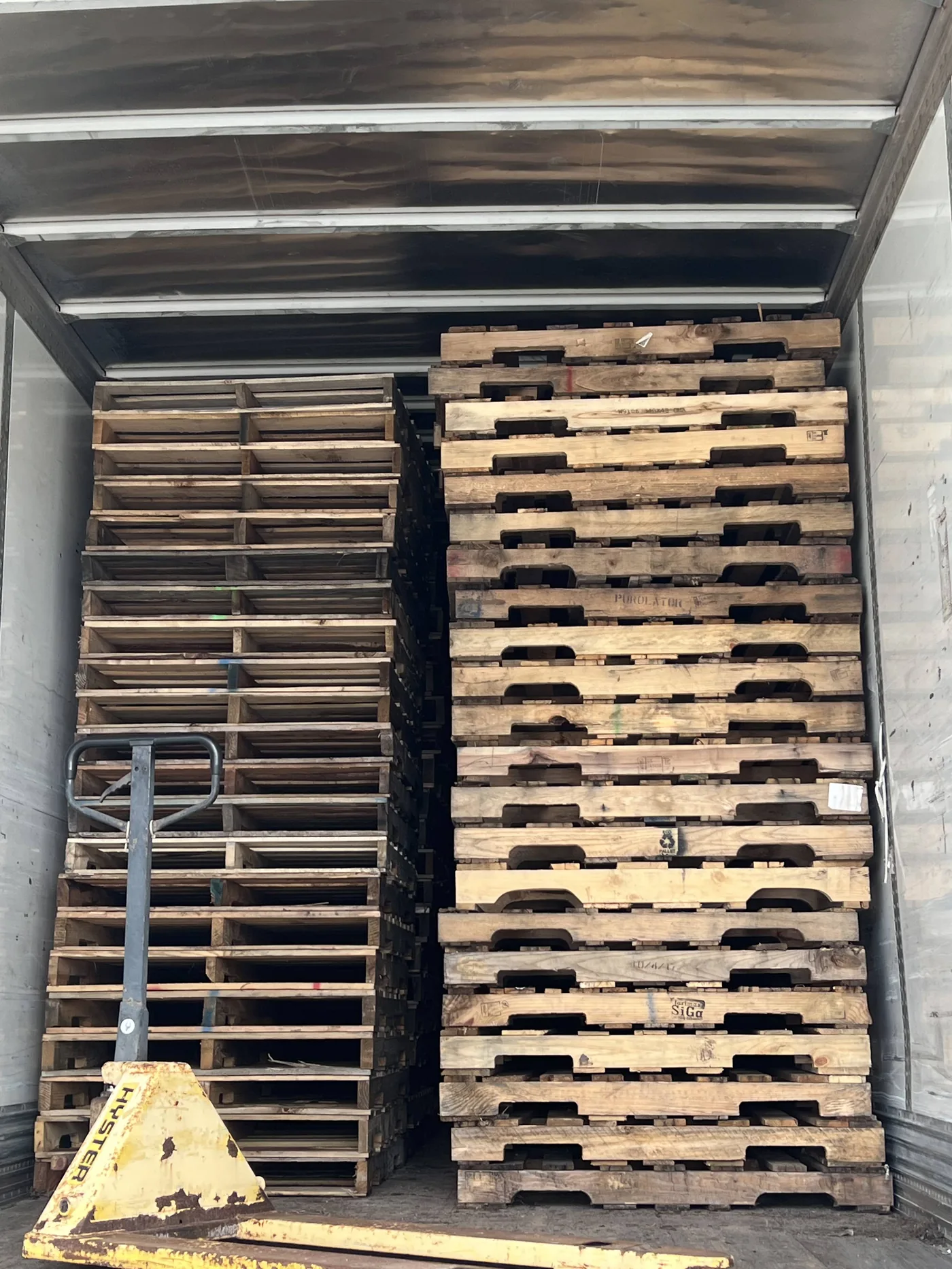
Pallet total cost of ownership (TCO) adds up every cost a pallet creates during its time in a supply chain, not just the purchase price. A TCO model usually includes unit price, inbound freight, treatment and documentation such as ISPM-15 heat treatment, receiving and handling labor, product damage linked to pallet failures, repairs, lost pallets, any buy-back or recovery value, and disposal. How much each item contributes varies widely between operations, so a useful model is built from the company's own data rather than generic percentages.
Building a pallet TCO model
- Acquisition: unit price, freight per pallet, treatment and marking.
- Use: labor to receive, sort and handle pallets, and storage space for empties.
- Failure: product damage, line stoppages on automated equipment and rejected loads caused by pallets.
- Recovery: repair costs, return freight and the value of used pallets sold or bought back.
- End of life: grinding or disposal costs.
Cost per trip versus cost per pallet
For pallets that come back, the more useful figure is cost per trip: total lifetime cost divided by the number of trips the pallet actually makes. A durable pallet with a higher price can cost less per trip than a cheap one, but only if it returns and is reused enough times. Tracking pallet turns and loss rates shows whether that is happening. The same logic sits behind the pool vs buy decision.
Where TCO comparisons go wrong
Common errors include assuming a return rate that is not measured, comparing pallets built to different specifications, leaving out return freight and sorting labor, and ignoring the cost of a pallet failure on an automated line. Run the model with low and high assumptions for the uncertain inputs to see whether the decision changes.
Authoritative Sources
- National Wooden Pallet & Container Association (NWPCA): the US trade association representing wood pallet manufacturers, recyclers, and component producers, founded in 1947.
- Material Handling Institute (MHI): the largest US trade association for material handling, logistics, and supply chain technologies.
Related Glossary Terms
Frequently Asked Questions
How is pallet TCO different from unit price?
Unit price is only what the supplier charges for the pallet. TCO adds the costs that come after purchase: freight, treatment, handling labor, damage to product or equipment caused by weak or broken pallets, repairs, losses and disposal, and subtracts any value recovered when used pallets are sold or returned. Two pallets with the same price can have very different TCO if one fails more often or never comes back.
Does a more expensive pallet always have a lower TCO?
No. A stronger or longer-lasting pallet only lowers cost per trip when it is used for many trips. In one-way shipping, such as most export loads, the pallet does not return, so a lower-cost pallet that safely carries the load is usually cheaper overall. Durable wood, plastic or pooled pallets tend to make sense in closed loops where returns are reliable and tracked.