Freshly sawn lumber that has not been dried, with a moisture content above 19 percent; much pallet lumber is used green rather than kiln dried.
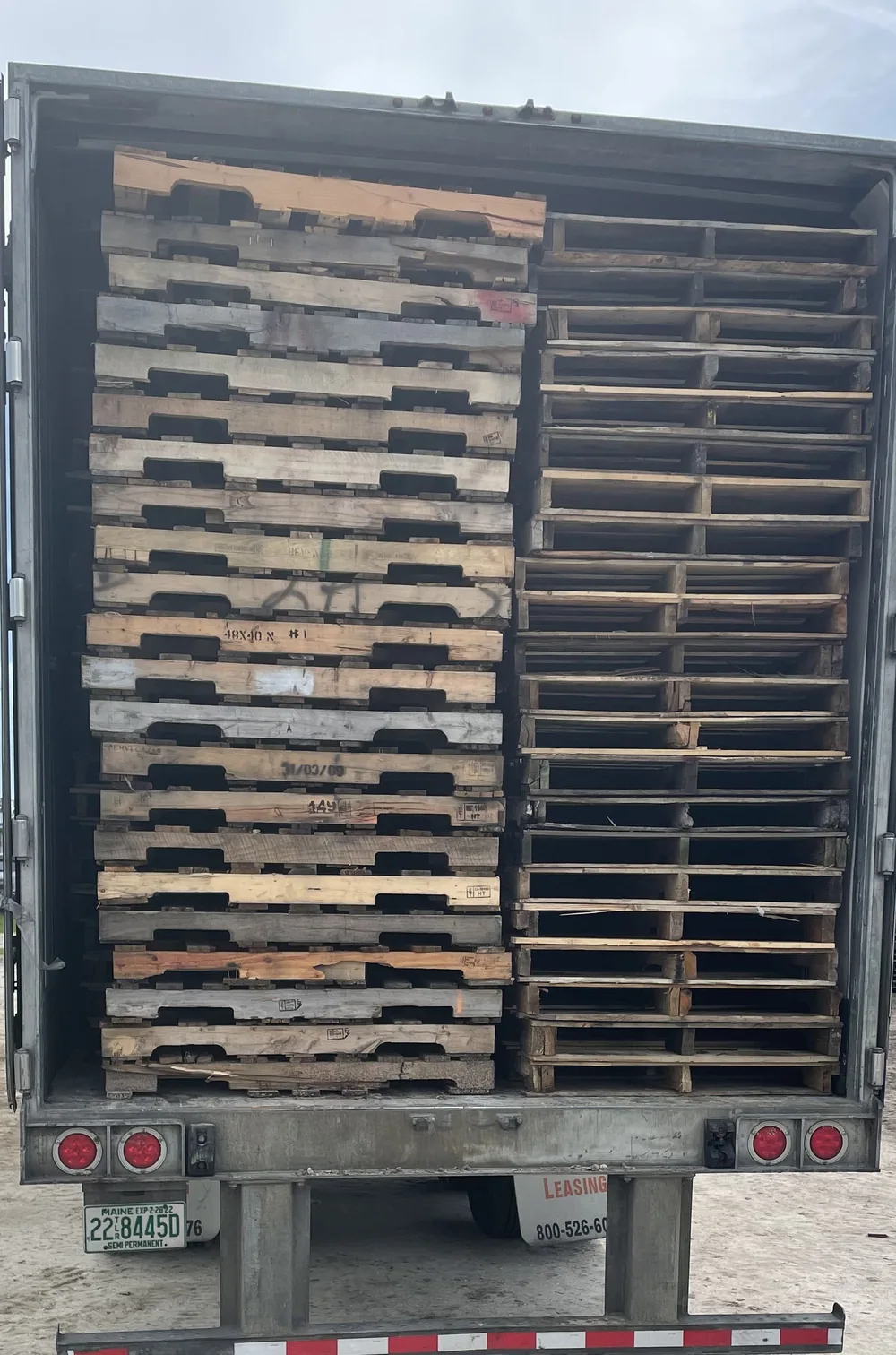
Detailed Definition
Green lumber is wood used at or near the moisture content it had when sawn from the log. In softwood lumber grading, lumber surfaced at a moisture content above 19 percent is marked as green (S-GRN), while dry lumber is 19 percent or less. Pallets are commonly built from green hardwood or softwood because drying adds time and cost. Green wood dries in service, which causes shrinkage, possible warping and loosening of fasteners. It is different from air-dried lumber, which has been stacked and dried before use.
What happens as green pallet lumber dries
Wood shrinks as it loses moisture below the fiber saturation point, more across the grain than along it. A pallet built green will lose weight over time, deck boards may cup or check, and nails can loosen slightly as the wood shrinks around them. Fastener choice matters: deformed shank nails such as helical or annular ring nails hold better than smooth nails as wood dries.
Wet wood is also a good environment for mold and stain fungi, especially when pallets are stacked tightly, wrapped or shipped in closed trailers in warm weather.
What buyers should check
- Ask whether pallets are built from green or dried lumber, and what moisture level the supplier targets if dried.
- Use a moisture meter on a sample if mold or weight is a concern.
- For food, pharma and long transit, consider kiln dried lumber or plastic pallets.
- Remember that ISPM-15 heat treatment is not the same as kiln drying; a heat-treated pallet can still be wet.
Moisture also adds weight. Wet pallets weigh noticeably more than the same pallets once dry, which can matter when freight is billed by weight or when people lift pallets by hand.
Related Glossary Terms
Frequently Asked Questions
Why are most pallets made from green lumber?
Pallet lumber is typically lower grade material, cants and boards that are cut and assembled quickly. Drying it in a kiln or by air adds time, handling and energy cost, and many pallet uses do not need dry wood. For general warehouse and shipping use, green pallets usually perform well. Applications sensitive to mold, weight or dimensional change are where dried lumber is worth specifying.
Does heat treatment dry green lumber?
Only partly. ISPM-15 heat treatment requires the wood core to reach 56 C for at least 30 continuous minutes, which kills pests but does not by itself bring the wood to a dry moisture content. Some moisture is driven off, and longer kiln schedules can both heat treat and dry the wood. If you need dry pallets, specify a moisture content target in addition to heat treatment and check it with a meter.