Lumber is the sawn wood used to construct pallets.
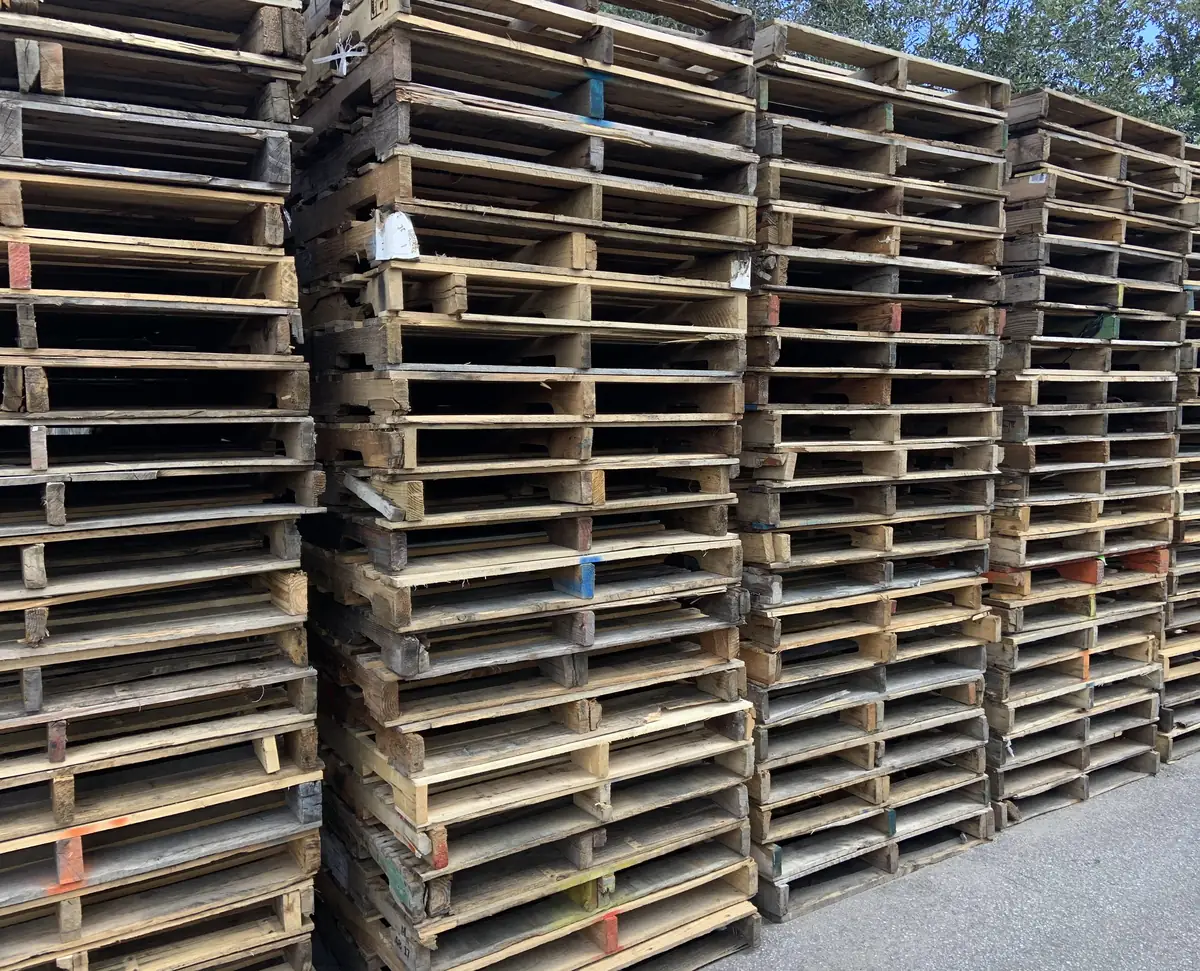
Detailed Definition
US pallet manufacturing uses mixed hardwoods (such as oak, maple and hickory), Southern Yellow Pine, Douglas fir and other Western softwoods, with species mix largely following what grows near the mill. Softwood structural lumber is graded under rules written by agencies such as SPIB, WWPA, NeLMA and WCLIB and approved by the American Lumber Standard Committee (ALSC), which accredits the agencies. Hardwood lumber is graded under separate National Hardwood Lumber Association rules. Much pallet stock is cut from lower-grade logs and cants and is bought to a pallet specification rather than to a lumber grade stamp.
What pallet buyers specify about lumber
A pallet specification usually describes the lumber by species or species group, board thickness and width, and allowed defects such as knots, wane, splits and decay. Thickness matters most: a deck board that is thinner than specified can cut load capacity noticeably. Buyers may also specify moisture condition, such as green, air-dried or kiln dried, and whether the wood must be debarked and heat treated for export.
Green versus dry pallet lumber
Many new pallets are built from green lumber because it is cheaper and nails easily. Green wood is heavier, shrinks as it dries, and can grow mold in warm, closed spaces such as containers. Drier lumber costs more but is lighter, more dimensionally stable and less likely to develop mold. Heat treatment for ISPM 15 kills pests but does not by itself guarantee low moisture content.
Regional supply
Eastern and Midwestern mills tend to cut hardwoods, Southern mills cut a lot of Southern Yellow Pine, and Western mills cut fir, pine and spruce. Lumber prices and availability move with housing demand and log supply, so pallet prices that are tied to lumber can change between quotes.
Authoritative Sources
- US Forest Service (USFS): the federal agency that manages the National Forest System and reports on US lumber supply used in pallet production.
- American Lumber Standard Committee (ALSC): the committee that accredits lumber grading agencies under the US Department of Commerce voluntary product standard PS 20.
- Pacific Lumber Inspection Bureau (PLIB): the lumber grading agency accredited by the American Lumber Standard Committee for Pacific softwoods used in pallet production.
- Southern Pine Inspection Bureau (SPIB): the lumber grading authority for Southern Yellow Pine, the most common pallet stock in the US Southeast.
- Hardwood Plywood & Veneer Association (HPVA): the trade association, now the Decorative Hardwoods Association, representing hardwood plywood and veneer manufacturers.
Related Glossary Terms
Frequently Asked Questions
Is pallet lumber the same as construction lumber?
Not usually. Construction framing lumber is graded and stamped for structural use and sold in standard sizes. Pallet lumber is often cut to pallet dimensions directly from lower-grade logs or cants, and is bought to a pallet specification that controls thickness, width, species and defects. Some pallets do use graded softwood, especially where engineered capacity matters, but a grade stamp is not normally required for general pallets.
Does the type of lumber change how strong a pallet is?
Yes. Species, density, board thickness and moisture content all affect stiffness and nail holding. Denser hardwoods generally hold nails well and resist impact, while softwoods such as Southern Yellow Pine are lighter and can perform well when the design accounts for them. Engineering tools such as the NWPCA Pallet Design System model these differences, so a design change in species should be checked against the load and racking conditions.