The NIOSH Lifting Equation is the science-based framework for evaluating manual lifting tasks including pallet handling.
Detailed Definition
The revised NIOSH Lifting Equation calculates a Recommended Weight Limit (RWL) for a specific two-handed lifting task. It starts from a load constant of 51 lb (23 kg) and multiplies it by factors for horizontal distance of the load from the body, vertical height at the start of the lift, vertical travel distance, asymmetry (twisting angle), lift frequency together with work duration, and hand-to-object coupling quality. Dividing the actual load weight by the RWL gives the Lifting Index (LI). An LI above 1.0 indicates increased risk of low back injury for many workers.
Applying it to palletizing and depalletizing
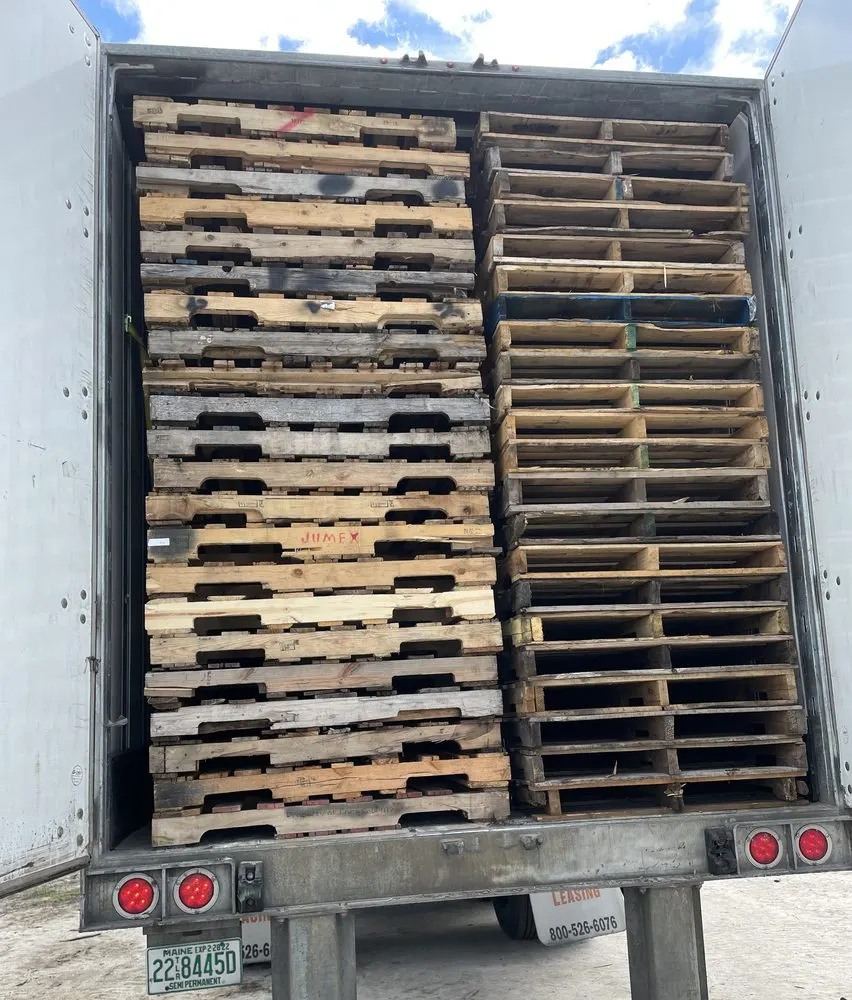
Building or breaking down pallets by hand is a classic case for the equation. The worst lifts are usually at the bottom layer of a pallet on the floor, where the vertical multiplier is low and workers bend, and at the far side of the pallet, where horizontal reach is long. Measure those positions separately. Lifting empty wood pallets by hand is also worth evaluating, since pallets are bulky, awkward to grip and often heavier than people expect.
Using the results
- Raise the pallet with a lift table or spring-loaded leveler so cases are handled near waist height.
- Use turntables so workers do not reach across the pallet.
- Reduce case weight or add handholds to improve coupling.
- Reduce frequency with job rotation or mechanized palletizing.
The equation has limits. It does not cover one-handed lifts, lifting while seated or kneeling, carrying over long distances, or pushing and pulling pallet jacks, which need other assessment methods. NIOSH's applications manual explains the multipliers and worked examples and should be used rather than estimating factors by eye.
Authoritative Sources
- National Institute for Occupational Safety and Health (NIOSH): the federal research institute publishing the NIOSH Lifting Equation and pallet handling ergonomic guidance.
- Occupational Safety and Health Administration (OSHA): the US federal agency whose 29 CFR 1910 general industry standards, including 1910.176 and 1910.178, cover warehouse materials storage and powered industrial trucks.
Related Glossary Terms
Frequently Asked Questions
What does a Lifting Index above 1.0 mean?
The Lifting Index is the actual load divided by the Recommended Weight Limit for that task. An LI of 1.0 or less means the task is within the limit NIOSH considers acceptable for most healthy workers. Above 1.0, the task carries increased risk of lifting-related low back pain for some workers, and the risk grows as the index rises. Many employers aim to redesign tasks with high LI values first.
Is the NIOSH Lifting Equation an OSHA legal limit?
No. It is a research-based assessment tool, not a regulation. OSHA has no general industry ergonomics standard that sets lifting limits. Employers and consultants use the equation to identify and prioritize risky lifting tasks and to check whether changes such as lift tables or lighter cases actually reduce risk. Using it is good practice and can support a documented ergonomics program, but it does not create a legal weight limit by itself.