Pallet weight is the tare weight of an empty pallet. A typical 48x40 wood stringer pallet weighs roughly 30 to 50 pounds, depending on species, moisture content and design.
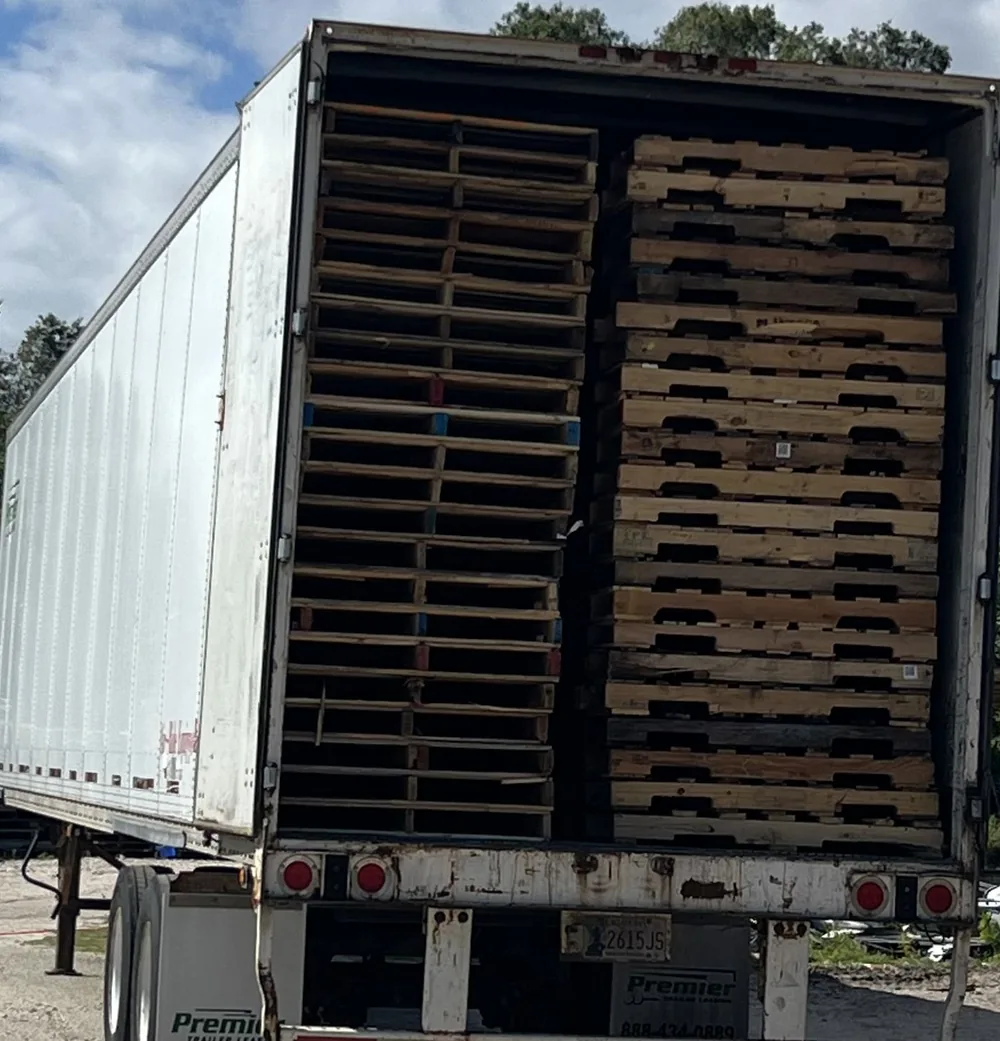
Detailed Definition
Hardwood pallets are generally heavier than softwood pallets of the same design because hardwood species are denser. Pallets built from green lumber weigh more than dried ones, because the water in the wood adds weight that is lost as it dries. Block pallets usually weigh more than stringer pallets of the same footprint. Plastic and metal pallet weights vary widely by design, from light nestable units to heavy rackable ones. Pallet weight affects trailer weight limits, freight charges and manual handling.
Why moisture changes a pallet's weight
Freshly sawn lumber holds a lot of water, so a pallet built from green wood is heavier on the day it is made than it will be after weeks in a dry warehouse. Moisture content is measured as the weight of water as a share of the oven-dry weight of the wood. Kiln-dried lumber starts lighter and changes less. When comparing weights between suppliers, ask whether the pallets are green, air dried or kiln dried.
Pallet weight in freight and loading
Pallets count toward the shipment's gross weight and the truck's legal weight. The effect adds up: 26 pallets at 40 pounds each is 1,040 pounds of pallets alone. For dense products that weigh out a trailer, a lighter pallet can leave room for more product. For LTL freight, the pallet's weight and dimensions are part of the shipment's density, which can affect freight class.
How to get an accurate number
Weigh several pallets from a normal delivery and use the average. Repeat in different seasons if your supplier uses green lumber, and update freight and labeling data when the pallet design changes.
Authoritative Sources
- National Wooden Pallet & Container Association (NWPCA): the US trade association representing wood pallet manufacturers, recyclers, and component producers, founded in 1947.
- Material Handling Institute (MHI): the largest US trade association for material handling, logistics, and supply chain technologies.
Related Glossary Terms
Frequently Asked Questions
How much does a standard 48x40 pallet weigh?
A typical wood 48x40 stringer pallet is often quoted at roughly 30 to 50 pounds, but the real figure depends on species, board thickness, number of deck boards and moisture content. Hardwood and green lumber push weight up, while softwood and dry lumber bring it down. Block pallets of the same size are usually heavier. For freight or labeling, weigh samples of the actual pallets you use.
Does the pallet weight count toward freight charges?
Yes. Carriers bill on the shipment as tendered, which includes the pallet. For truckload freight, pallets count toward the legal weight limit. For LTL freight, the pallet adds to the billed weight, and its dimensions and weight are part of the density used for many freight class determinations. Declare the total weight, including pallets and packaging, on the bill of lading to avoid reweigh and reclass charges.