A pallet dispenser, also called a pallet magazine or destacker, holds a stack of empty pallets and releases them one at a time onto a conveyor, usually to feed a palletizer or wrapping line. It removes the manual step of placing empty pallets and keeps automated end-of-line systems supplied.
How it works
A forklift loads a stack of empty pallets into the dispenser frame. Forks, clamps or arms grip the second pallet from the bottom while the stack is lowered, then the bottom pallet is set onto the conveyor and carried away. The cycle repeats on demand from the line control. Many units also work in reverse as pallet stackers that collect empties.
Pallet requirements
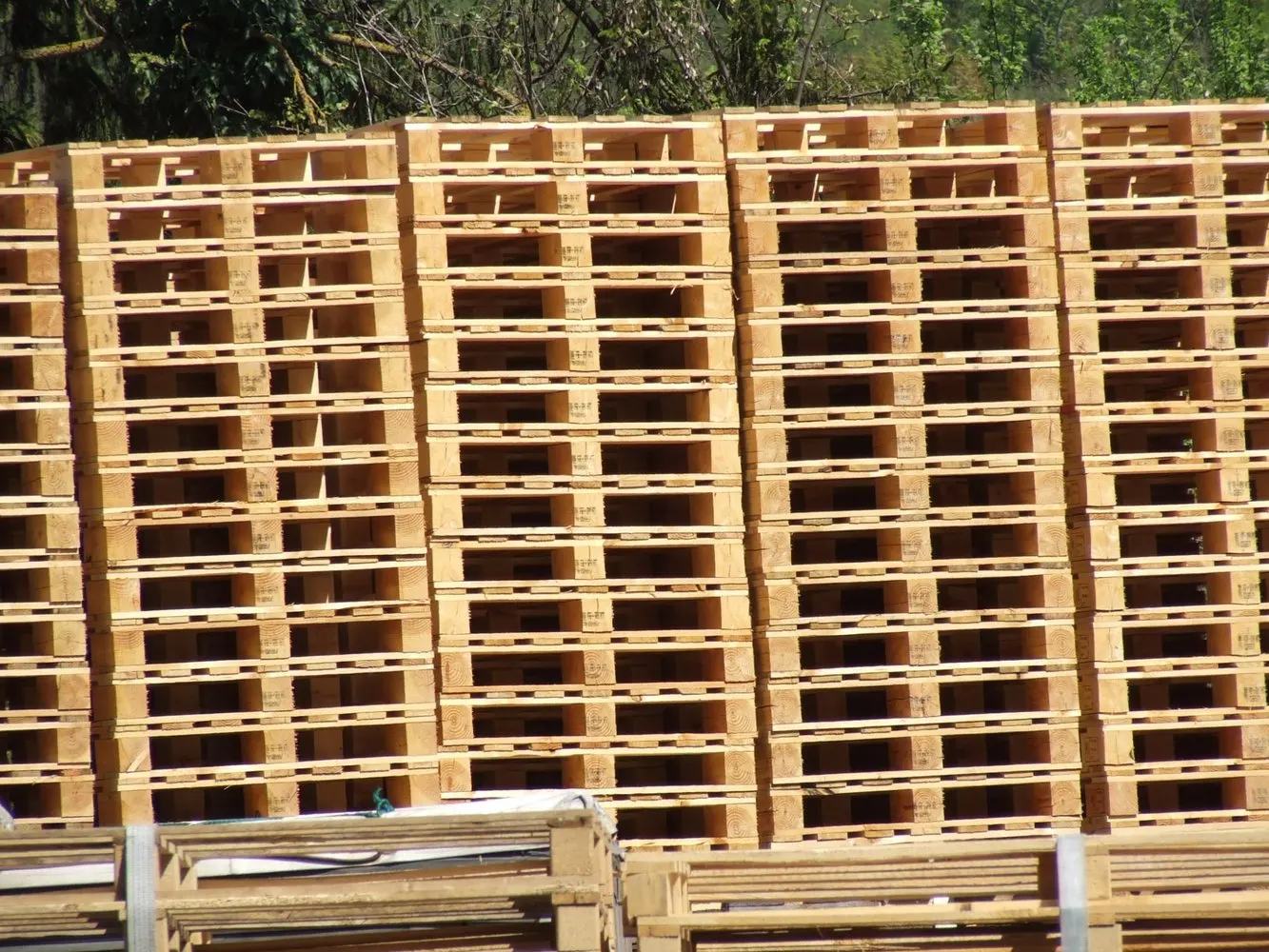
Dispensers are sensitive to pallet variation. Mixed footprints, missing or broken bottom boards, protruding nails and warped decks cause jams because the clamping points and conveyor chains expect a consistent profile. Automated lines often specify one pallet type, such as a block pallet or a specific 48x40 design, with a minimum grade.
Buying considerations
Stack capacity, cycle time, the pallet types and orientations it must handle, and whether it needs to accept both stringer and block pallets drive the choice. Pallet inspection or sorting upstream of the dispenser reduces stoppages.
Related Terms
- Palletizer
- Robotic Palletizer
- Depalletizer
- Pallet Inverter
- Block Pallet
- Grade A Pallet
- Unit Load
- Browse all glossary terms
Frequently Asked Questions
Why does my pallet dispenser keep jamming?
The usual causes are inconsistent pallets: mixed sizes, broken or missing bottom boards, nails sticking out, or warped decks. Dispensers grip and lower pallets at fixed points and expect the same profile every time. Tightening the pallet spec for the line, inspecting or sorting pallets before loading the magazine, and checking sensor alignment usually resolve most recurring jams.
Can one dispenser handle different pallet sizes?
Some can, with adjustable guides or settings for a defined range of sizes, but each change adds complexity and potential for jams. Lines running several pallet types often use separate dispensers or a changeover procedure. Confirm the exact footprints, heights and entry types with the equipment supplier before purchase.