Scrap pallets are unrepairable wood pallets sent for chip processing or biomass fuel.
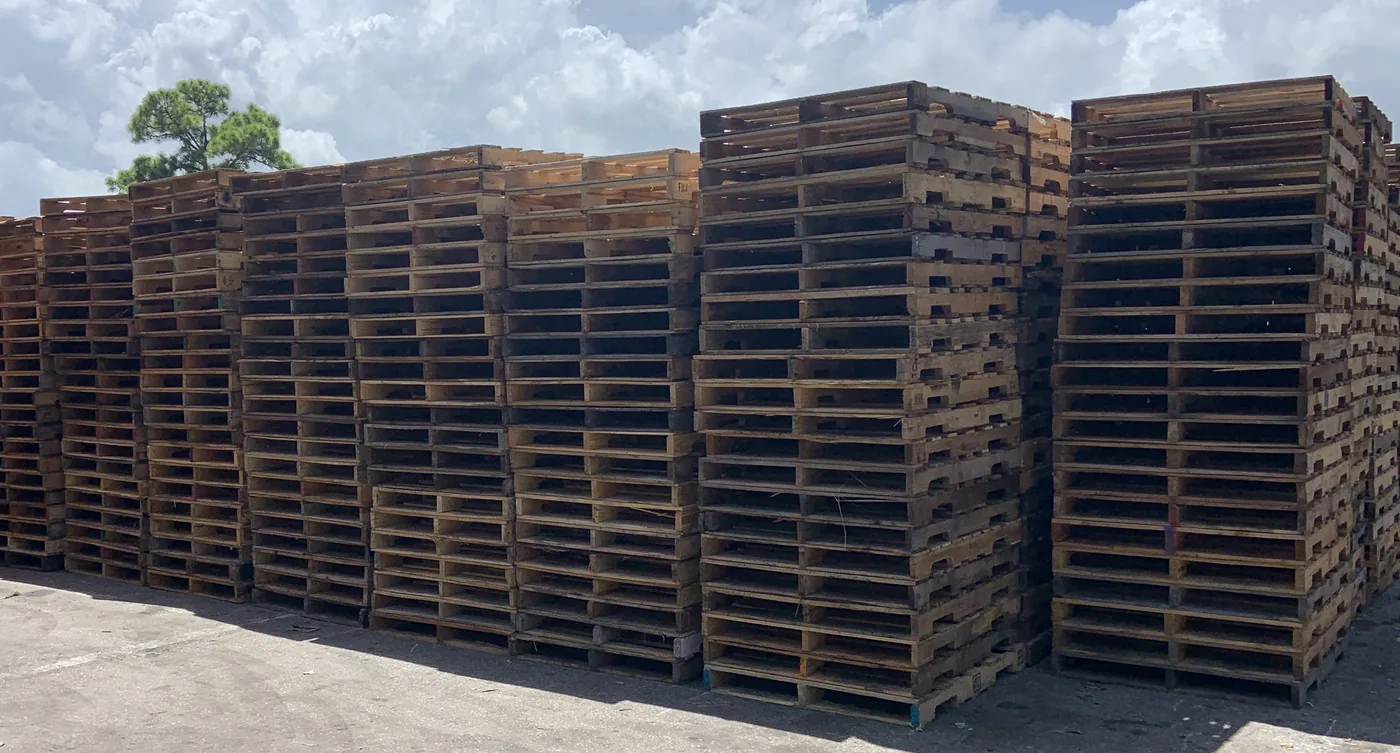
Detailed Definition
A scrap pallet is a used wood pallet that a recycler judges not worth repairing, usually because of broken stringers or blocks, widespread board damage, rot, contamination, or an odd size with little resale demand. Before grinding, recyclers often take scrap units apart to salvage sound boards and stringers for pallet repair. The rest is typically ground into wood chips for uses such as landscape mulch, animal bedding, biomass fuel or composite feedstock. The line between repairable and scrap is set by each recycler, not by a national standard.
How a used pallet ends up as scrap
Recyclers sort incoming used pallets by condition. Units that can go back into service as-is, or after a few board or stringer replacements, become cores for repair and resale. Units that would cost more to fix than they are worth are set aside as scrap. Typical reasons include several cracked or broken stringers, crushed blocks, rot, heavy oil or chemical staining, mold, and non-standard sizes that no customer is asking for.
What recyclers do with scrap wood
Most scrap pallets are dismantled first so that usable parts can be reclaimed. The leftover wood goes through a grinder, and magnets pull out nails and other metal so the steel can be recycled separately. The chips may be colored and sold as mulch, screened for animal bedding, or sold as fuel. Recovering the material this way keeps wood out of landfills, which sit at the bottom of the EPA waste management hierarchy.
What a shipper should check
- Whether the recycler buys, takes for free, or charges to haul away loads that are mostly scrap.
- Whether pallets contaminated with chemicals or food waste are accepted at all.
- That scrap pallets are kept separate on your dock so nobody puts a broken unit back into use.
- Whether the recycler can document that collected wood was reused or recycled, if you report waste diversion.
Authoritative Sources
- National Wooden Pallet & Container Association (NWPCA): the US trade association representing wood pallet manufacturers, recyclers, and component producers, founded in 1947.
- US Environmental Protection Agency (EPA): the federal agency whose Sustainable Materials Management program publishes the waste management hierarchy, which ranks source reduction and reuse above recycling, energy recovery and disposal.
Related Glossary Terms
Frequently Asked Questions
Do recyclers pay for scrap pallets?
Usually little or nothing for scrap on its own. Terms vary by market, by recycler, by volume, and by the mix of good and broken pallets in a pickup. Many recyclers pay for reusable cores and accept some scrap as part of the same load, while others charge a disposal fee when a load is mostly scrap. Ask for written terms that cover each condition category and any hauling fees before you commit.
Is a grade C pallet the same as a scrap pallet?
No. Grade labels for recycled pallets are trade terms that vary by supplier, but a grade C pallet is generally still usable, even if it looks rough, has mismatched boards or carries visible repairs. A scrap pallet is one the recycler has decided should not go back into service at all. If a supplier offers very low-grade pallets, ask what defects are allowed and whether the units are suitable for your loads and handling equipment.
Can scrap pallets be burned for heat?
Some people burn untreated pallet wood, but take care. Many guides advise avoiding pallets marked MB for methyl bromide fumigation, painted or stained pallets, composite pallets, and any pallet that carried chemicals, because you cannot be sure what is on or in the wood. Nails and other metal remain in the ash. Local and state rules on open burning and wood-fired appliances also apply, so check them first.