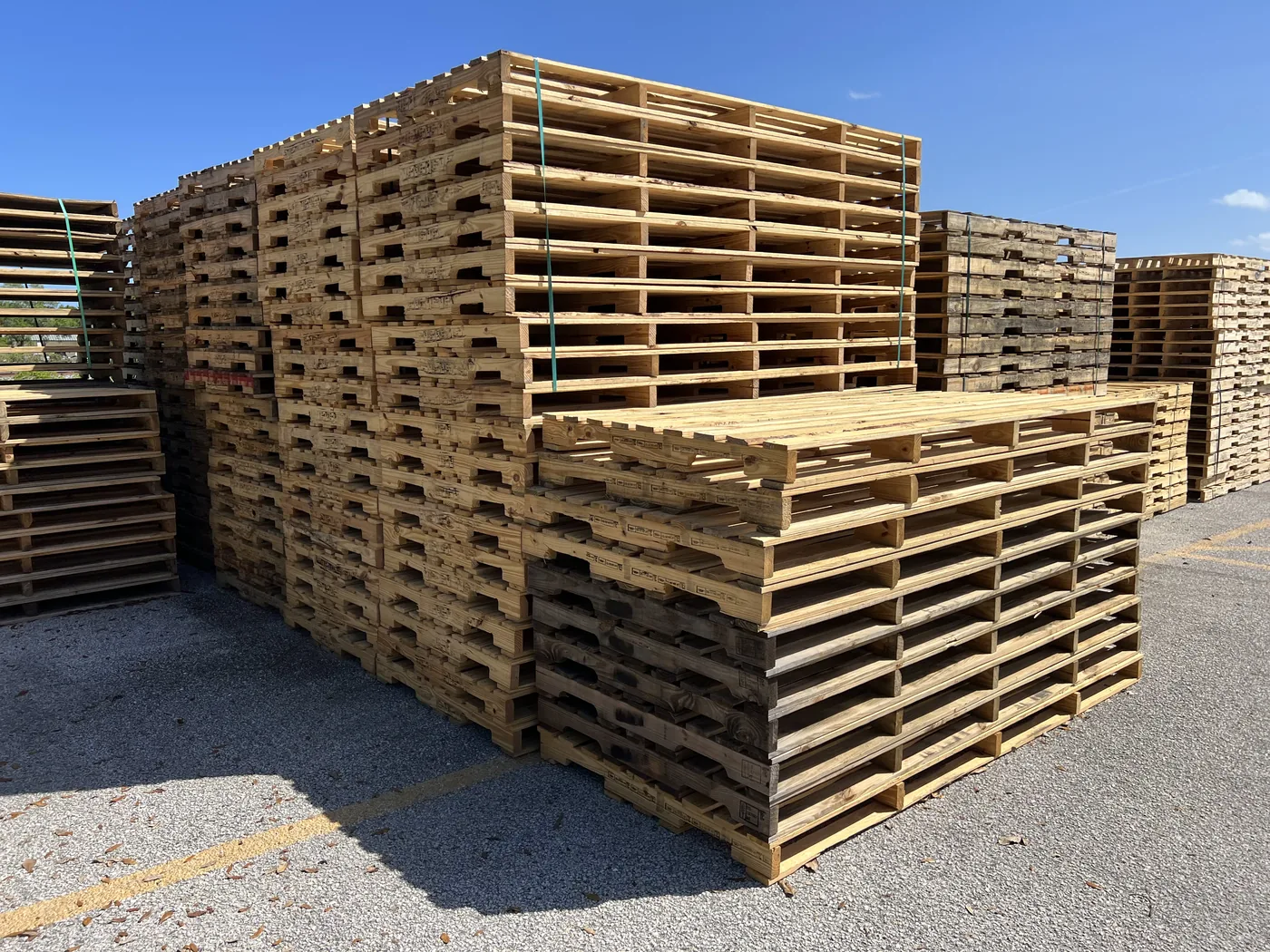
Pallet lumber with bark removed, required for ISPM-15 compliance.
Detailed Definition
Debarking removes bark from logs or sawn pieces before the wood is used for pallets and other packaging. ISPM-15 requires wood packaging to be made from debarked wood because bark can harbor insects and disease. The standard does not require every trace of bark to be gone: small, visually separate pieces of bark are tolerated within limits set in the standard. Debarking is a separate step from heat treatment or fumigation, and both are needed for an ISPM-15 mark.
Debarked versus bark-free
The two terms are often confused. Debarked wood has had its bark removed by machine or by hand, but a few small remnants may remain, for example at a knot or along a wane edge. Bark-free wood has no bark at all apart from ingrown bark and similar features. ISPM-15 uses the debarked standard and sets a tolerance for remaining pieces, so a few small patches do not by themselves make a pallet noncompliant. Some importing countries or customers may ask for stricter cleanliness, so check the destination requirements.
What pallet buyers should look for
- Edges of boards and stringers, where wane often carries leftover bark.
- Larger strips or patches of bark, which can exceed the tolerance and lead to rejection.
- Any signs of insect holes or frass, which matter more to inspectors than a tiny bark fleck.
Most bark is removed at the sawmill before lumber reaches a pallet mill, but cants and low grade boards can still carry wane. For export pallets, ask the supplier how they control bark on components, and inspect a sample before loading.
Related Glossary Terms
Frequently Asked Questions
Will a small piece of bark cause an export pallet to be rejected?
Not necessarily. ISPM-15 allows small, visually separate pieces of bark within defined size limits, so a tiny fleck on a board edge is normally within tolerance. Larger strips or patches can exceed the limit, and inspectors may also look for signs of pests. Because enforcement can vary by country, it is sensible to remove any obvious bark before loading and to use a supplier that controls bark on export components.
Is debarking done before or after heat treatment?
ISPM-15 requires the wood to be debarked before treatment, and in practice most bark is removed at the sawmill when logs are processed. Heat treatment or another approved treatment is then applied to the lumber or to the finished pallets, depending on the producer's program. The ISPM-15 mark on a pallet indicates that the wood was debarked and treated under an approved program.