A pallet mill is a facility focused on new pallet manufacturing from raw lumber.
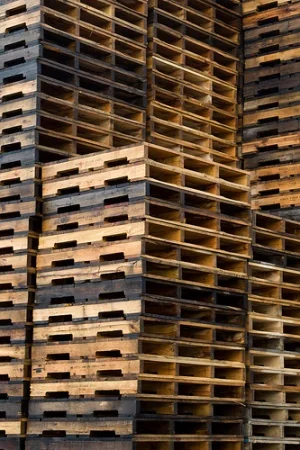
Detailed Definition
A pallet mill is a plant that builds new pallets from lumber. Typical steps include receiving lumber or cants, cutting to length, resawing cants into deck boards and stringers, notching or chamfering where specified, assembling and nailing, often on automated nailing machines, and then heat treatment if required, marking and shipping. Some pallet mills run their own sawmills, while others buy precut components. A pallet mill differs from a pallet yard, which mainly sorts, repairs and resells used pallets.
From cants to finished pallets
Much pallet lumber, especially hardwood, arrives as cants: the square center of the log left after higher-grade boards are sawn off. The mill resaws cants into stringers and deck boards on gang saws or band resaws, trims them to length and may add notches or chamfers. Assembly may be by hand with pneumatic nailers or on automated nailing machines that hold parts in a jig and drive fasteners in a set fastener pattern. Heat treatment for export takes place in a chamber or kiln.
What to ask a pallet mill
- Can it build to your written specification, including lumber grade, moisture and fasteners?
- Is it registered to apply ISPM 15 marks, and through which inspection agency?
- How does it check dimensions and nailing quality during production?
- Can it provide design reports or capacity ratings for your pallet?
- How does it handle changes in lumber supply, such as species substitutions?
Consistency of new pallets
Because a mill builds from new components, it can hold dimensions, board counts and nailing to a written specification, which matters for automated equipment and racking. For a new design, ask for first-article samples and check them against the drawing before approving a full production order.
Authoritative Sources
- National Wooden Pallet & Container Association (NWPCA): the US trade association representing wood pallet manufacturers, recyclers, and component producers, founded in 1947.
Related Glossary Terms
Frequently Asked Questions
What is the difference between a pallet mill and a pallet recycler?
A pallet mill makes new pallets from lumber, so it controls the full specification: species, grade, dimensions and fasteners. A pallet recycler or yard collects used pallets, sorts them, repairs some and resells them, so its supply depends on what comes in. Many companies do both. New pallets give tighter consistency, while recycled pallets are often cheaper in common sizes.
Do all pallet mills heat treat their pallets?
No. Heat treatment is needed for pallets used in international shipments that require ISPM 15, and some buyers ask for it for domestic use. A mill may have its own heat treatment chamber, use a separate treatment provider, or not offer it. Only facilities registered under the program run through an accredited inspection agency may apply the ISPM 15 mark, so ask to see the registration if you need export pallets.