Grade B pallets are recycled pallets that have been repaired, typically with a replaced deck board or a reinforced stringer, but remain structurally sound. Definitions vary by supplier.
Detailed Definition
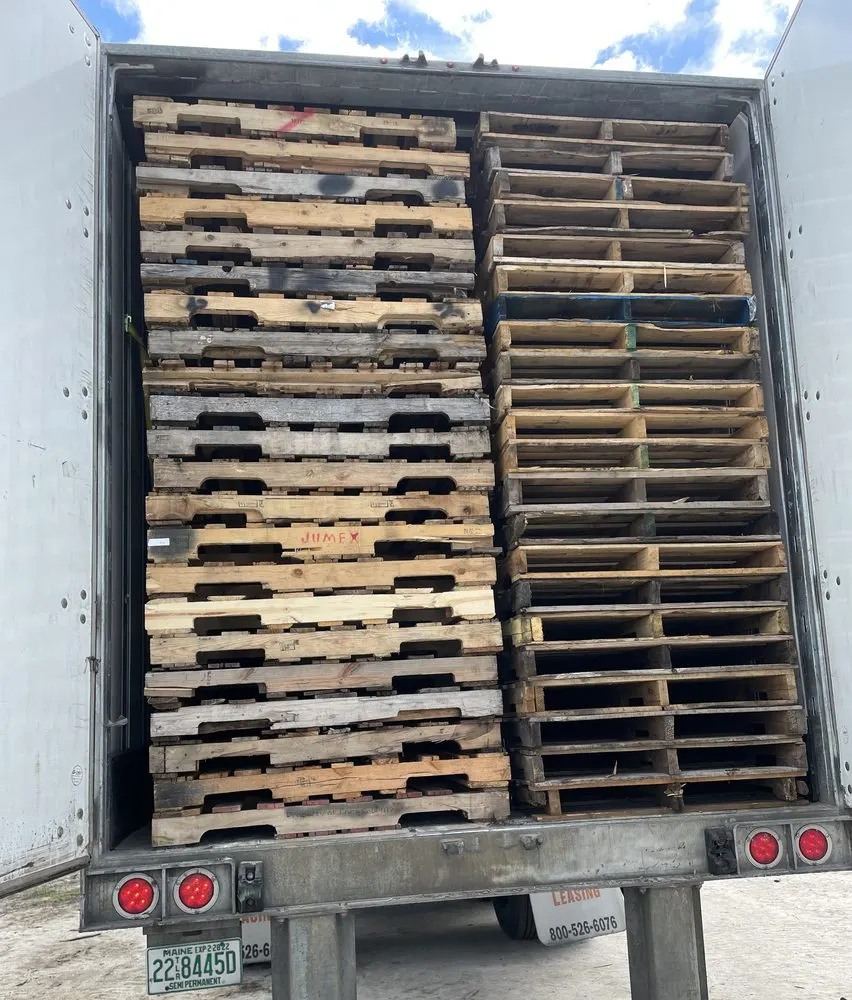
Grade B, also called #2, is the repaired grade of recycled pallet. Typical repairs include replaced deck boards, which may differ in color or thickness, and companion stringers or metal plates fastened alongside a cracked stringer. The pallet should still be structurally serviceable. Grade B pallets are widely used for warehouse storage, internal handling and many one-way shipments where appearance matters less. Like other recycled grades, the criteria are set by each supplier rather than by a national standard.
What repairs are common on Grade B pallets
Pallet repair usually starts with removing broken boards and fasteners. Replacement boards are often salvaged from dismantled pallets, so a Grade B unit may have boards of mixed species, color and thickness. Cracked stringers are commonly repaired by nailing a companion stringer or a short plug alongside, or by pressing a metal plate across the crack. Each repair adds a little weight and can change how the pallet sits on conveyors.
When Grade B is and is not a good fit
- Good fit: floor storage, internal moves, many outbound shipments to customers without strict pallet rules.
- Check first: conveyors and automated systems, which may reject uneven boards or plates.
- Check first: rack storage of heavy loads, where repaired stringers should be inspected carefully.
- Often not accepted: receivers whose vendor guides call for Grade A, new or pool pallets.
As with any grade, put the acceptable repair types in writing and spot check deliveries.
Grade B pallets also vary more in weight than Grade A because of the added repair material. If you ship by weight or handle pallets by hand, check a sample before committing to a large order.
Authoritative Sources
- National Wooden Pallet & Container Association (NWPCA): the US trade association representing wood pallet manufacturers, recyclers, and component producers, founded in 1947.
Related Glossary Terms
Frequently Asked Questions
How many repairs can a Grade B pallet have?
There is no industry-wide limit. Some recyclers cap the number of replaced boards or stringer repairs per pallet, while others grade by overall appearance and soundness. If repairs matter for your operation, specify a maximum, state whether metal plates and companion stringers are acceptable, and include those points in incoming inspection.
Are Grade B pallets safe to use in racking?
Many are, but it depends on the load, the rack configuration and the condition of each pallet. Racking puts the pallet in a spanned position where stringers carry the load in bending, so cracked or poorly repaired stringers are a risk. Inspect pallets before racking, follow the rack and pallet capacity guidance for your system, and use a pallet design rated for racked loads if loads are heavy.