Hardwood lumber comes from broadleaf, mostly deciduous trees; pallet hardwoods such as oak and hard maple are usually denser and heavier than common softwoods, though not every hardwood is.
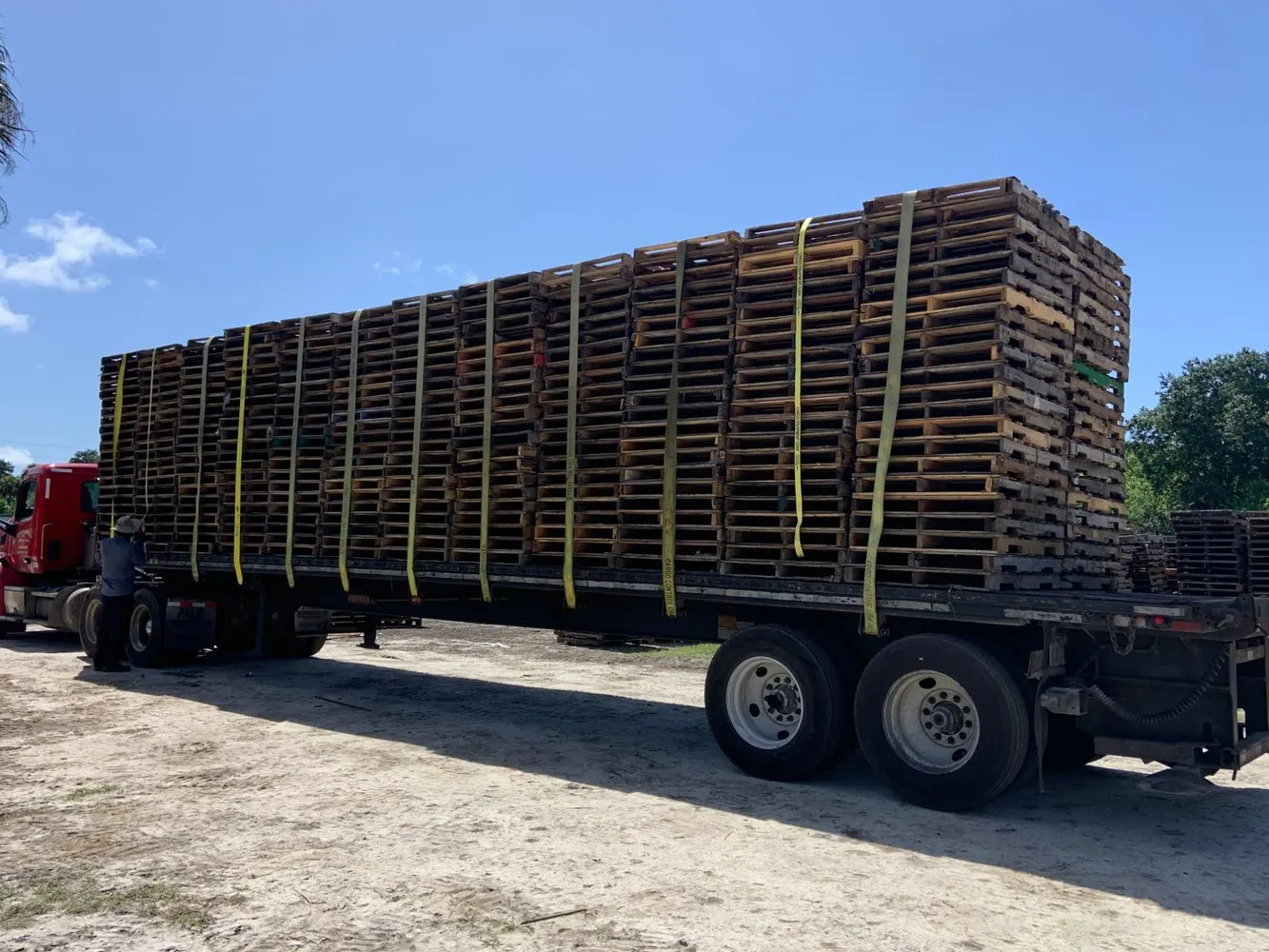
Detailed Definition
Hardwood is a botanical category for wood from angiosperms, the broadleaf trees, rather than a measure of hardness. Common pallet hardwoods include oak, maple, poplar, gum, ash, elm and hickory. Many of these are dense, which makes hardwood pallets heavier than softwood pallets of the same design. Mixed hardwood is common pallet stock in the Northeast, Midwest and Appalachian regions, where hardwood sawmills produce lower grade boards and cants suitable for pallets.
Hardwood properties that matter for pallets
Dense hardwoods resist denting, fork impact and edge wear well, and they hold nails firmly. The tradeoffs are weight, a greater tendency for boards to split when nailed near the ends, and slower drying. Lighter hardwoods such as yellow-poplar are easier to work and lighter, but less hard. Species vary enough that design and fastener choice matter as much as the hardwood label.
Hardwood vs softwood in practice
- Region: hardwood pallets dominate where hardwood mills are, while the Southeast and West rely more on pine, fir and other softwoods.
- Weight: hardwood pallets are usually heavier, which affects freight and manual handling.
- Moisture: most pallet hardwood is used green, so pallets can be heavy and prone to mold in warm, closed conditions.
- Export: hardwood and softwood need the same ISPM-15 treatment and mark.
When comparing quotes, ask which species are in the mix and what board thickness is used, rather than assuming hardwood means stronger.
Hardwood lumber for furniture and flooring is graded under rules from the National Hardwood Lumber Association, but pallet stock is usually lower grade material bought as cants or boards, so grade stamps are uncommon on pallet hardwood.
Authoritative Sources
- Hardwood Plywood & Veneer Association (HPVA): the Decorative Hardwoods Association (formerly the Hardwood Plywood and Veneer Association), the trade association for the hardwood plywood and decorative veneer industry; it does not set standards for pallet lumber.
- US Forest Service (USFS): the federal agency that manages the National Forest System and reports on US lumber supply used in pallet production.
Related Glossary Terms
Frequently Asked Questions
Is hardwood always stronger than softwood?
No. Hardwood and softwood are botanical groups, and strength varies widely within each. Oak and hard maple are stronger and harder than most softwoods, but some hardwoods such as aspen and basswood are softer and weaker than Southern Yellow Pine or Douglas fir. Pallet strength depends on the species, lumber grade, board dimensions, moisture and the pallet design, so compare actual designs rather than wood categories.
Which hardwoods are most used for pallets?
It depends on what local sawmills cut. Oak, maple, yellow-poplar, gum, ash, elm, hickory and beech commonly appear in mixed hardwood pallet stock in the eastern US. Pallet mills generally buy lower grade boards and cants that are not wanted for furniture, flooring or cabinetry, so the species mix in a given pallet can vary from load to load.