A maple pallet is a hardwood pallet built mostly or entirely from maple lumber. Hard maple is dense, stiff and wear resistant; soft maple species such as red and silver maple are lighter and easier to nail. Maple is usually sold within mixed hardwood pallet stock rather than as a separately priced species.
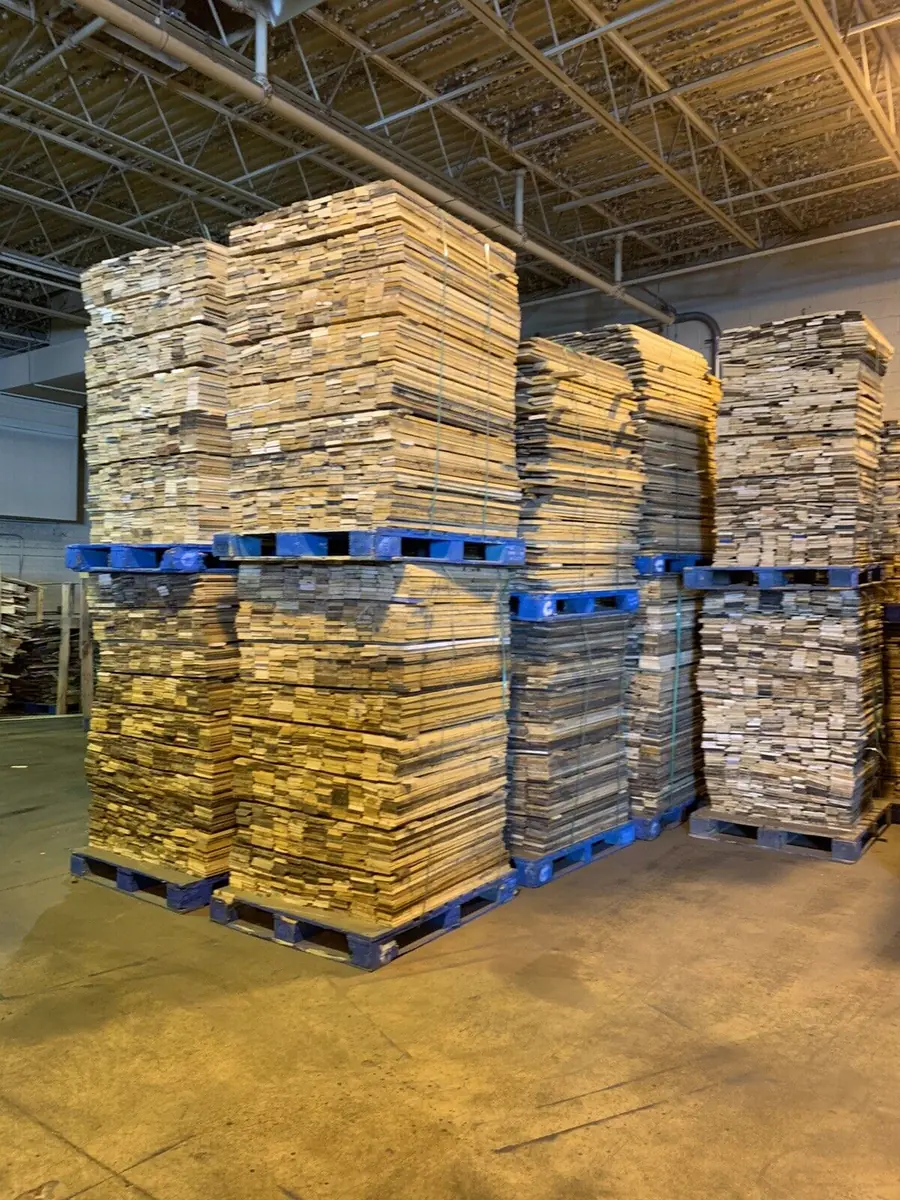
Hard maple vs soft maple
Hard maple (sugar and black maple) is among the denser and harder commercial North American hardwoods, which gives good resistance to fork impact and edge wear but makes it heavier and more prone to splitting when nailed close to board ends. Soft maple is lighter and machines easily, with strength between typical softwoods and hard maple. Both are diffuse porous hardwoods with fairly uniform grain.
Where maple pallets come from
Most maple pallet lumber is a by-product of grade lumber sawing in hardwood regions of the Northeast, Midwest and Appalachians, where lower grade boards and cants go to pallet mills. That is why buyers in those regions often receive mixed hardwood pallets containing maple, oak, poplar and other species.
Buyer implications
Maple and other hardwood pallets weigh more than softwood pallets of the same design, which can matter for freight and manual handling. They are a good fit for heavy loads and rough handling. For export they need the same ISPM-15 treatment as any wood pallet, and hardwood can take longer to dry, so moisture content and mold risk are worth checking for food and pharma shipments.
Related Terms
- Hardwood Pallet
- Mixed Hardwood Pallet
- Hardwood
- Oak
- Softwood Pallet
- Lumber Species
- Moisture Content (MC)
- Heat Treatment
- Browse all glossary terms
Frequently Asked Questions
Is a maple pallet stronger than a pine pallet?
Hard maple is denser and harder than Southern Yellow Pine, so a maple pallet of the same design usually resists wear and fork damage well and can carry similar or greater loads. Actual capacity depends on board thickness, stringer size, fastener pattern and lumber grade as much as species. Pallet design software and testing, not species alone, should be used to set a rated load.
Can I order a pallet built only from maple?
It is possible from mills that cut maple, but most hardwood pallet stock is sold as mixed hardwood because species availability changes day to day. Specifying a single species can raise cost and lead time. If a load or customer requirement truly needs one species, state it on the purchase order and confirm the mill can supply it consistently.