Weigh-out is the trailer loading scenario where weight limit is reached before physical volume.
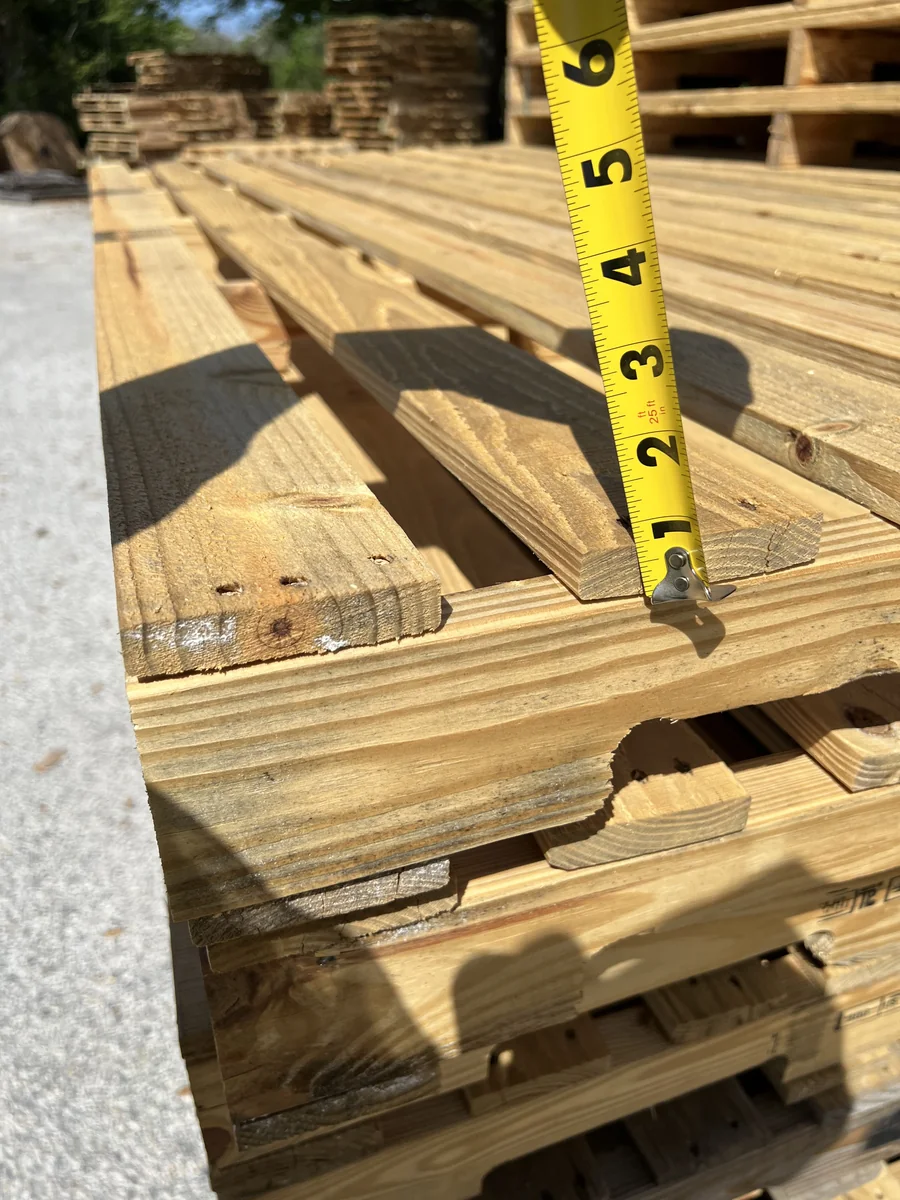
Detailed Definition
A weigh-out happens when a trailer reaches its legal weight limit before its floor or cube is full. It is common with dense products such as beverages, liquids in drums, paper, metal parts and building materials. On the US Interstate system the federal limit is generally 80,000 pounds gross vehicle weight, together with axle weight limits, and that total includes the tractor, trailer, fuel, pallets and packaging. Pallet count and weight per pallet are the main levers for planning these loads.
Why weigh-out limits payload, not just gross weight
The 80,000 pound figure covers the whole vehicle. The tractor, trailer and fuel take a large share, and what remains is the payload for product, pallets and packaging. Axle limits also apply: federal rules generally allow 20,000 pounds on a single axle and 34,000 pounds on a tandem axle group, subject to the federal bridge formula. A load under the gross limit can still be overweight on one axle group. Some states allow heavier loads by permit or on other roads.
Planning a weigh-out load
- Spread heavy pallets along the trailer rather than clustering them, and use sliding trailer axles where available to balance weight.
- Expect empty floor positions; a weigh-out trailer often looks half full.
- Check pallet capacity, since dense products concentrate weight on small areas of the deck.
- Use known pallet weights or scale the loaded truck to avoid overweight violations.
The pallet's share of the weight
Every pound of pallet is a pound not available for product. For weigh-out freight, shippers sometimes compare designs by tare weight, but a lighter pallet must still carry the load safely, and wet wood weighs more than dry wood. See pallet weight and cube-out for the opposite case.
Authoritative Sources
- Material Handling Institute (MHI): the largest US trade association for material handling, logistics, and supply chain technologies.
- American Trucking Associations (ATA): the largest national trade association for the US trucking industry.
Related Glossary Terms
Frequently Asked Questions
How do I know if my shipment will weigh out?
Multiply the gross weight per pallet, including the pallet itself, by the number of pallets that would fit on the floor, and compare the result with the payload your carrier can legally haul with its equipment. If the weight limit is reached before the floor is full, the load weighs out. Ask the carrier for its maximum payload, because it depends on the tractor, trailer and fuel.
Is weigh-out or cube-out more expensive?
Neither is always more expensive. Both mean you pay for a full trailer while one limit leaves some capacity unused. With a weigh-out you pay for unused space, and with a cube-out you pay for unused weight capacity. The fixes differ: weigh-out shippers look at product density, packaging and pallet tare weight, while cube-out shippers look at load height, stacking and package dimensions.