Trailer loading is the process of placing pallets in a truck trailer for shipping.
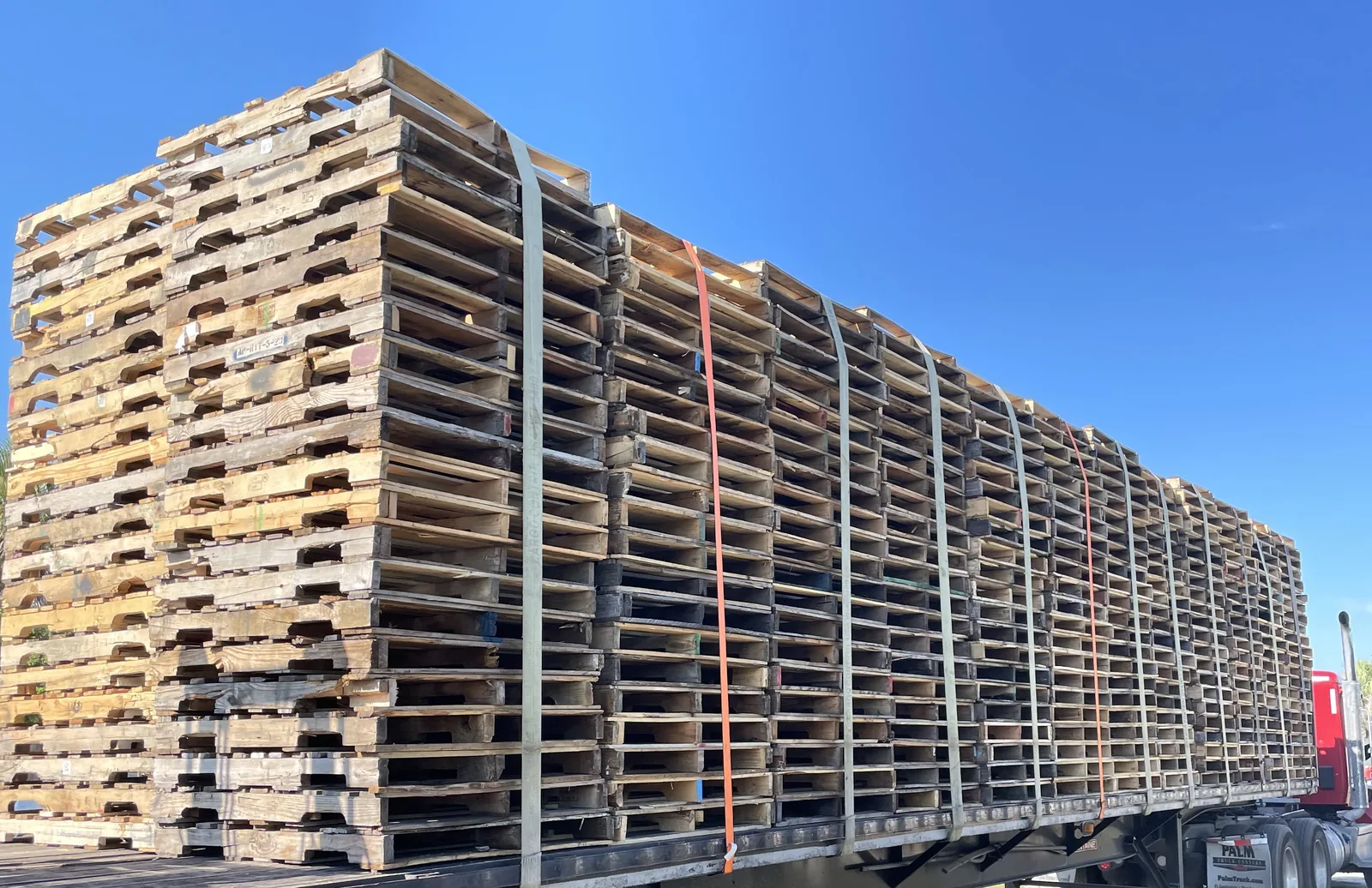
Detailed Definition
Trailer loading covers the load pattern, weight distribution and securement of pallets in a trailer. How many pallets fit depends on footprint, orientation, whether pallets are double stacked and the weight limit. A common rule of thumb is 26 single-stacked 48x40 pallets in a 53-foot dry van when loaded straight and 30 when turned, but product height, weight and receiver rules can change that. Good load planning reduces product damage and wasted trailer space.
Straight, turned and pinwheel patterns
A 48x40 pallet loaded straight has its 48-inch side along the trailer length, two pallets side by side. Turned, the 40-inch side runs lengthwise, which fits more positions in the same length but presents the 48-inch side to the door, so the pallet must allow entry from that side. A pallet jack cannot use stringer notches, so turned stringer pallets usually need a forklift. Pinwheel loading alternates orientation to tighten the load.
Weight distribution and securement
Spread weight along the trailer so no axle group is overloaded, and keep heavy pallets low. Close gaps with load bars, airbags, blocking or straps so pallets cannot shift under braking. Federal cargo securement rules are in 49 CFR Part 393, Subpart I. Before loading food or paper goods, check the trailer floor, walls and roof for holes, moisture, odors and protruding fasteners.
What to confirm before loading
- The customer routing guide rules on pallet type, height, double stacking and orientation.
- Whether the product can be double stacked and how the top tier is protected.
- Total weight against the legal limit, which may cause a weigh-out, or volume, which may cause a cube-out.
- Seal number and pallet count recorded on the bill of lading.
Authoritative Sources
- Material Handling Institute (MHI): the largest US trade association for material handling, logistics, and supply chain technologies.
- American Trucking Associations (ATA): the largest national trade association for the US trucking industry.
Related Glossary Terms
Frequently Asked Questions
How many pallets fit in a 53-foot trailer?
For 48x40 pallets loaded single high, a common rule of thumb is 26 when loaded straight, with the 48-inch side along the trailer, and 30 when turned. Double stacking can double those counts if the product, pallets and receiver allow it. Heavy products often hit the weight limit first, and other footprints change the math, so plan each load with real dimensions and weights.
Should heavy pallets go at the front of the trailer?
Not all of them. The goal is to balance weight across the tractor drive axles and the trailer axles so each axle group stays within legal limits and the vehicle handles safely. Very heavy pallets are usually spread along the floor rather than concentrated in one area. Many shippers use load planning software or a simple weight map to set the loading sequence.