A standard enclosed trailer for general freight without temperature control.
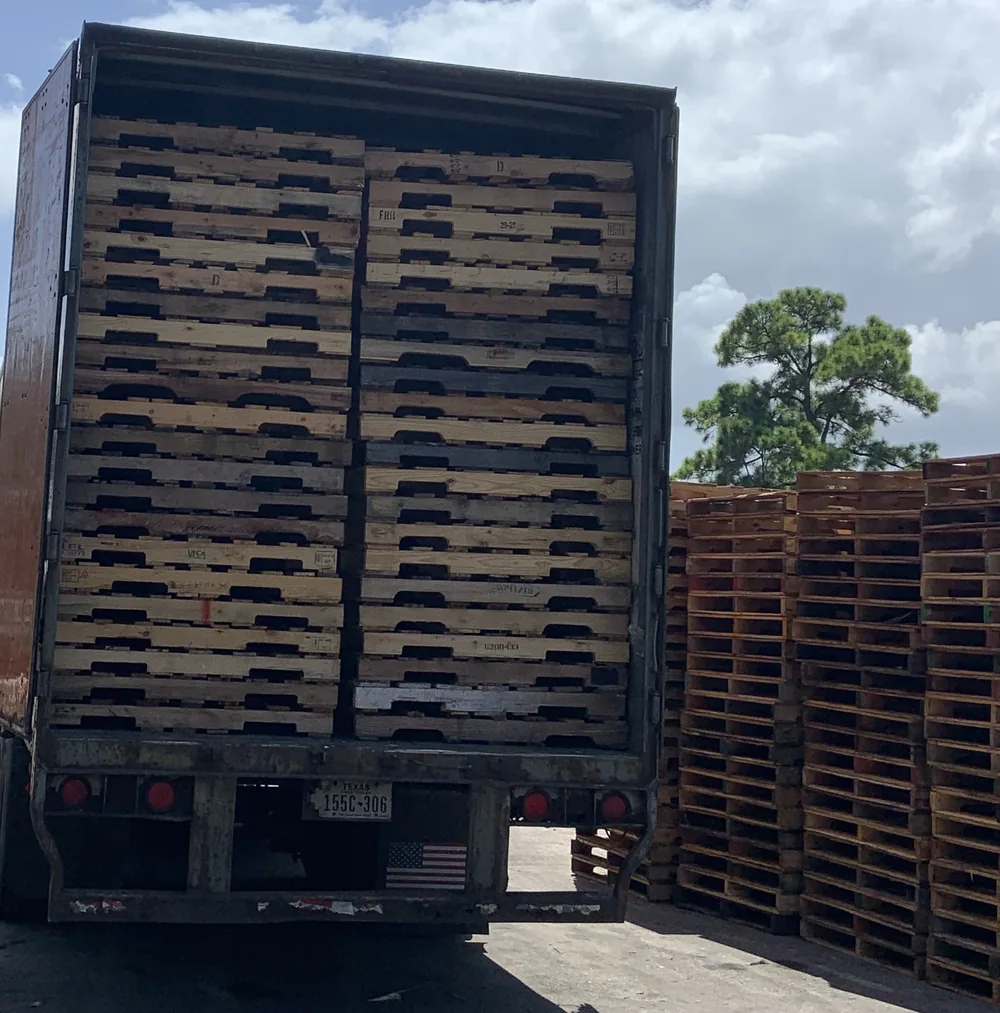
Detailed Definition
A dry van is the most common type of semi-trailer in US over the road freight. It is a fully enclosed box with rear swing or roll-up doors, a wood or composite floor, and no heating or cooling. The 53 ft length is the most common for truckload freight, with shorter vans used in some LTL and regional work. Dry vans carry palletized and floor-loaded general freight that does not need temperature control, as opposed to a reefer, and are loaded at dock doors.
How many pallets fit in a dry van
Capacity depends on pallet footprint, how pallets are oriented, whether they can be stacked, and the weight allowed. A common rule of thumb for single stacked 48 x 40 inch pallets in a 53 ft trailer is 26 when loaded straight and 30 when turned so the 40 inch side runs along the trailer length. Inside dimensions vary by trailer make and wall type, so confirm the usable width and length with the carrier for tight loads. Heavy freight may reach the weight limit before the floor is full, which is called weigh-out.
Pallet and loading checks for dry van shipments
- Inspect the trailer before loading for holes, leaks, damaged floor boards and odors, especially for food.
- Use pallets in good condition. Broken bottom boards and protruding nails damage trailer floors and can catch on other pallets.
- Secure loads with stretch wrap, load bars or airbags so pallets cannot shift under braking.
- Check that the dock plate and floor can bear the forklift and load weight.
Dry vans are not insulated, so heat and condensation can still affect sensitive products in summer or across climates.
Related Glossary Terms
Frequently Asked Questions
What is the difference between a dry van and a reefer?
A dry van is an enclosed, unrefrigerated trailer for freight that does not need temperature control. A reefer is an insulated trailer with a refrigeration unit that can keep freight chilled, frozen or within a set range. Reefers usually cost more per mile and have slightly less interior space because of the insulation. Shelf stable food, packaging, building materials and general merchandise typically ship in dry vans.
Can food be shipped in a dry van?
Yes, many shelf stable foods ship in dry vans. For food covered by the FDA sanitary transportation rule, shippers and carriers must make sure the vehicle is suitable and clean, and that product is protected from contamination during transport. In practice this means agreeing on trailer inspection, cleaning and prior load requirements, and using clean pallets that are suitable for food contact or for the packaged product being shipped.